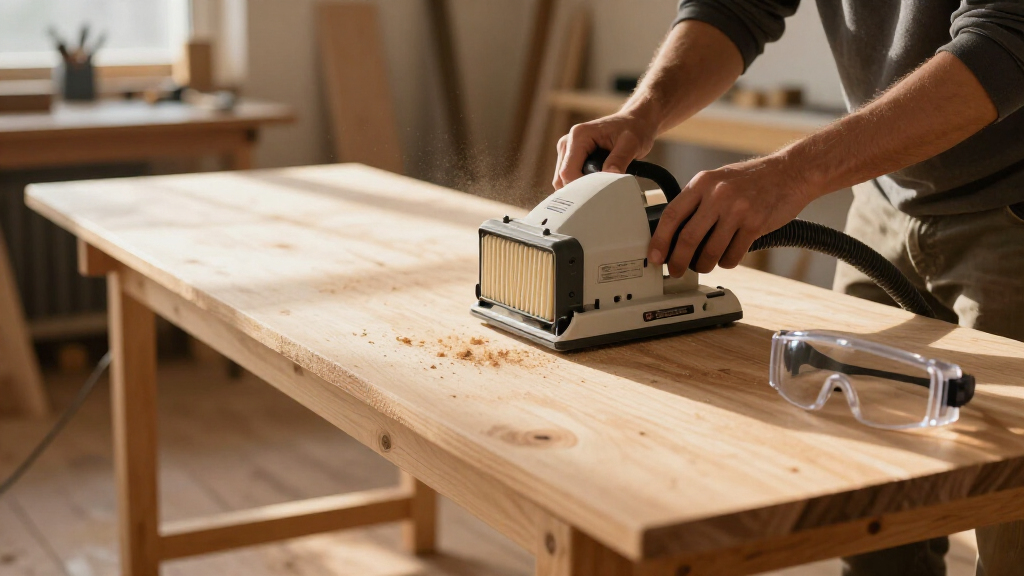
This checklist is for DIY woodworkers setting up or improving dust control in a home workshop. It covers equipment for collecting dust at tools, separating debris, filtering shop air, and managing cleanup.

Get business pricing on tools and workshop supplies
- Business-only prices and quantity discounts
- Tax-exempt purchasing
- Multiple users, one account, clear invoices
The sections follow the path dust can take through a shop: from tool connections and hose to separation, extraction, and room air. A respirator section rounds out the checklist with selection and fit guidance rather than a specific product.
Use the picks as a starting point, then check connections and compatibility against your tools and workspace. Before buying, confirm the needed hose diameter, port sizes, available room, and the respirator’s fit for its intended use.
Dust Collector
A dust collector is the central collection point for tools that produce a steady stream of larger wood chips and dust. The listed pick is the WEN DC1300 1,300 CFM Woodworking Dust Collector. Before choosing a collector, map the machines you expect to connect and determine whether they will run one at a time or need simultaneous collection. The product name alone does not establish which tools or duct layouts it will support, so verify the specifications for your setup. A common mistake is to focus on the collector while overlooking the path between it and each machine. Long runs, restrictive fittings, small ports, and improvised adapters can complicate a setup. Check each tool’s port size and the collector’s inlet and included connections; plan suitable ducting and blast gates if needed. Also measure the unit’s footprint and the route for moving it into position. Confirm that the collection arrangement suits the debris your machines produce, and check what filter and collection bag configuration is included before purchase. A careful layout makes it easier to connect tools consistently and keep hoses from crossing walkways.What to look for:
- Confirm collector inlet and machine port sizes before buying.
- Check the layout, ducting, and fittings needed for each tool.
- Decide whether tools will run individually or together.
- Measure the unit footprint and clearance around it.
- Review the included filter and collection bag configuration.
WEN DC1300 1,300 CFM Woodworking Dust Collector

This woodworking dust collector circulates up to 1,300 cubic feet of air per minute and can connect to two tools through its dual 4-inch inlets. Its 14-amp motor drives a 10-inch steel impeller, while the 50-gallon collection bag and four-caster mobile base support dust collection and portability.
Pros:
- Circulates up to 1,300 CFM
- Connects to two tools at once
- Large 50-gallon collection bag
- Mobile base has four swivel casters
Cons:
- Requires space for a large collection bag
- Limited to tools compatible with 4-inch inlets
Best for: Woodworkers planning a central collector for connected machines
Not ideal for: Shops that need a compact cleanup vacuum for benches and floors
Bottom line: Match the collector’s connections and layout to your machines before planning the rest of the system.
Dust Separator
A separator sits between a dust-producing tool and a vacuum or collector, helping keep collected debris in a separate container. The pick here is the Festool CT CYCLONE Dust Separator CT-VA-20. This slot matters when you want to consider how chips and dust move through your collection setup and how often the main collection container may need attention. Check the product’s specified use and compatible equipment before deciding where it belongs in your system. A frequent buying mistake is assuming every separator connects directly to every vacuum or hose. Verify the required interfaces, included adapters, container arrangement, and any space needed to connect and empty it. Compare the separator’s compatible models with the extractor or collector you already own, and check whether your intended tool has a workable hose connection. Consider where the assembly will sit during use: a tight shelf or crowded cart can make access and hose routing awkward. Also review the manufacturer’s instructions for the material and dust types involved. A separator is one part of a setup, so check how it fits with the whole path from tool port to collection container.What to look for:
- Verify compatibility with your vacuum or dust collector model.
- Check the inlet, outlet, and adapters required for connection.
- Confirm how the collection container is accessed and emptied.
- Measure clearance for the assembled separator and hose routing.
- Review manufacturer guidance for intended use and materials.
Festool CT CYCLONE Dust Separator CT-VA-20
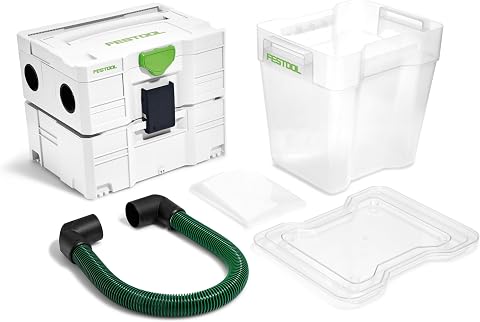
The Festool CT CYCLONE Dust Separator enhances dust extraction efficiency by pre-separating large debris and coarse dust before reaching the main filter. Compact and portable, it fits seamlessly into the Festool Systainer system and is compatible with all CT dust extractors, reducing filter and bag replacements while maintaining high suction power.
Pros:
- Increases dust extraction efficiency and reduces filter/bag replacements
- Compact, lightweight, and easy to transport
- Compatible with all CT dust extractors and fits in Festool Systainer system
- Meets OSHA Table 1 compliance when used with certified extractors
Cons:
- Requires compatible HEPA-certified dust extractor for OSHA compliance
- May be less effective with very fine dust without proper filtration
Best for: Owners checking separator compatibility for a connected extraction setup
Not ideal for: Buyers who have not identified their vacuum and connection sizes
Bottom line: Confirm model compatibility and connection details before adding a separator to your setup.
Air Filtration Unit
An air filtration unit addresses dust suspended in the workshop air, complementing collection at the tool. The listed product is the Aprilaire 5000 Air Cleaner. This section matters because a tool-connected collector and cleanup vacuum serve different roles from equipment intended to treat room air. Check the product documentation to establish whether and how this model can be used in your workshop; the product name alone does not specify installation requirements or suitability for a particular space. One common mistake is buying an air cleaner without considering where it will be installed and what the room requires. Measure the workspace and check the unit’s documented capacity, mounting or placement instructions, electrical needs, and filter replacement requirements. Verify whether it is designed for the installation context you have in mind, and follow the manufacturer’s guidance rather than assuming it can be placed anywhere. Keep its intake and outlet clear according to the instructions, and consider how doors, walls, and large equipment affect placement. Air filtration is not a substitute for capturing dust at the tool or using appropriate personal protection. Treat it as one layer in a broader dust-control plan.What to look for:
- Check documented suitability and capacity for your workspace.
- Review placement or mounting instructions and required clearances.
- Confirm electrical and installation requirements.
- Check filter type, replacement process, and maintenance guidance.
- Plan room-air filtration alongside tool collection and cleanup.
Aprilaire 5000 Air Cleaner

The Aprilaire 5000 is a highly efficient whole-home electronic air cleaner that removes up to 94% of respirable dust, 98% of airborne bacteria-sized particles, and 99% of pollen, mold, and spores. It features electronically charged filtration using 72 square feet of specialized media, delivering high-performance air purification for spaces up to 500 square feet.
Pros:
- Highly effective at removing dust, pollen, mold, and bacteria
- High filtration efficiency with 72 sq ft of media
- Rated #1 by a leading product ratings magazine for three years
Cons:
- Very lightweight weight (0.27 g) may indicate a data error or need for clarification
- No specific price information available
- Limited details on maintenance or replacement parts
Best for: Workshop owners evaluating a dedicated air-cleaning layer
Not ideal for: Buyers seeking a tool-connected collector or portable cleanup vacuum
Bottom line: Check the installation instructions and documented room suitability before choosing this air cleaner.
Shop Vacuum
A shop vacuum is useful for cleanup and for tools that connect to an extractor, but the exact role depends on the equipment and fittings. This pick is the Festool 577876 Dust Extractor CLEANTEC CT 48 EI AC HEPA. Before selecting it, identify the machines and cleanup tasks it will serve, then verify its documented capabilities and compatible accessories. The product name includes HEPA, but check the supplied filter configuration and operating instructions to understand what is included for your intended use. A common mistake is treating a vacuum connection as universal. Measure tool ports and hose ends, and confirm which adapters are necessary; do not infer fit from brand alone. Check the extractor’s dimensions, mobility, storage needs, electrical requirements, and how its collection system is serviced. Review the manual for approved uses and maintenance intervals. If you plan to connect a separator, verify that the exact models and connection arrangement are compatible. Also consider whether the hose length and routing work at your bench without snagging or restricting movement. A thoughtful match between extractor, tool, hose, and accessories helps avoid a setup that is difficult to use day to day.What to look for:
- Confirm the extractor’s documented uses and included filter setup.
- Match hose and tool ports using verified sizes and adapters.
- Check compatibility with any planned separator.
- Measure storage space and route for moving the extractor.
- Review collection, filter, and maintenance instructions.
Festool 577876 Dust Extractor CLEANTEC CT 48 EI AC HEPA

The Festool 577876 Dust Extractor CLEANTEC CT 48 EI AC HEPA features automatic filter cleaning, adjustable suction power, and smart Bluetooth technology for automatic operation with compatible tools. It is designed for efficient dust extraction in professional settings.
Pros:
- Automatic filter cleaning maintains high suction power
- Smart Bluetooth technology enables automatic start with compatible tools
- Adjustable suction levels for versatile use
- Intuitive touch controls
Cons:
- Complex features may require some learning curve
- Likely high price point for professional equipment
Best for: Shops evaluating a dedicated dust extractor for connected tools
Not ideal for: Buyers who need a central collector for multiple machines
Bottom line: Verify the filter setup, connections, and intended uses against your tools before buying.
Dust Collection Hose
The connection between a machine and collection equipment can shape how practical the whole setup feels. The listed pick is the 25 Ft. Urethane Dust Collection Vacuum Hose with 4″ Diameter. Hose length and diameter are useful starting details, but they do not guarantee that the hose will fit a particular machine, collector, or vacuum. This slot matters because an otherwise suitable system still needs a workable route between its components. A common mistake is ordering by length or diameter alone. Measure each tool port and the collection inlet, then determine whether the hose ends match or require adapters. Check whether the hose is intended for the kind of equipment and material you will connect, and review manufacturer guidance for bend radius and use. Plan the route with the machine in its working position: a long run may reach, but it can also cross a walkway or interfere with movement. Consider storage and how the hose will be supported when not in use. Confirm that fittings, clamps, and any reducers are included or available separately. These checks help you choose a hose that can be routed and connected cleanly in your actual shop.What to look for:
- Verify the 4-inch diameter against every connection point.
- Confirm hose-end style and required adapters or reducers.
- Measure the actual path, including machine movement and bends.
- Check manufacturer guidance for intended use and routing.
- Plan storage and support to keep the hose out of walkways.
25 Ft. Urethane Dust Collection Vacuum Hose with 4" Diameter

This 25-foot urethane vacuum hose features a 4-inch diameter, offering superior puncture and abrasion resistance. Suitable for dust collection, cold air supply, vapor recovery, and woodworking applications, it performs well in various temperature environments.
Pros:
- High puncture and abrasion resistance
- Suitable for multiple industrial applications
- Made in the USA
Cons:
- Specific to 4-inch diameter hoses, limited size options
- No detailed price information
- No customer ratings provided
Best for: Setups where a 4-inch hose connection matches the planned route
Not ideal for: Tools with smaller ports unless suitable adapters are confirmed
Bottom line: Measure the complete connection path and verify fitting compatibility before ordering.
Respirator
A respirator is a personal-protection choice that should be made for the work and exposure involved. This checklist does not name a specific product, so use the manufacturer’s guidance and applicable workplace or safety guidance to identify an appropriate type. Dust collection at the tool and filtration in the room do not replace a properly selected respirator when one is needed. Avoid choosing by appearance or assuming one size fits everyone. A respirator must be compatible with the hazard and fit the wearer; facial hair, eyewear, and other protective equipment can affect the seal or comfort. Review the product’s intended use, limitations, filter or cartridge requirements, and replacement instructions. Follow the stated fit-testing and user-seal-check directions where applicable, and make sure the wearer can use it consistently for the task. If the dust or coating materials are uncertain, consult the relevant safety documentation before work. Store the respirator and its filters as directed so they remain in suitable condition. Treat fit and suitability as essential checks, not optional accessories.What to look for:
- Identify the dust or material exposure before selecting a type.
- Check the respirator’s stated use and limitations.
- Confirm fit and compatibility with eyewear and other gear.
- Follow fit-testing, seal-check, and filter replacement instructions.
- Consult safety documentation when material hazards are unclear.
Build the setup in a practical order: first identify the dust-producing tools and their ports, then choose the collection approach, hose, and any separator that fits those connections. Next plan room-air filtration and cleanup around the space, and select personal protection for the materials and tasks. Compatibility checks before purchase can prevent avoidable adapters and awkward routing.
Dust control is easier to manage when each part has a clear role and fits the way you work. Measure carefully, read the product instructions, and adjust the checklist to your shop. A thoughtful setup is a good foundation for a cleaner, more comfortable workspace.
Fall yard work Picks
leaf blowers
As an affiliate, we earn on qualifying purchases.