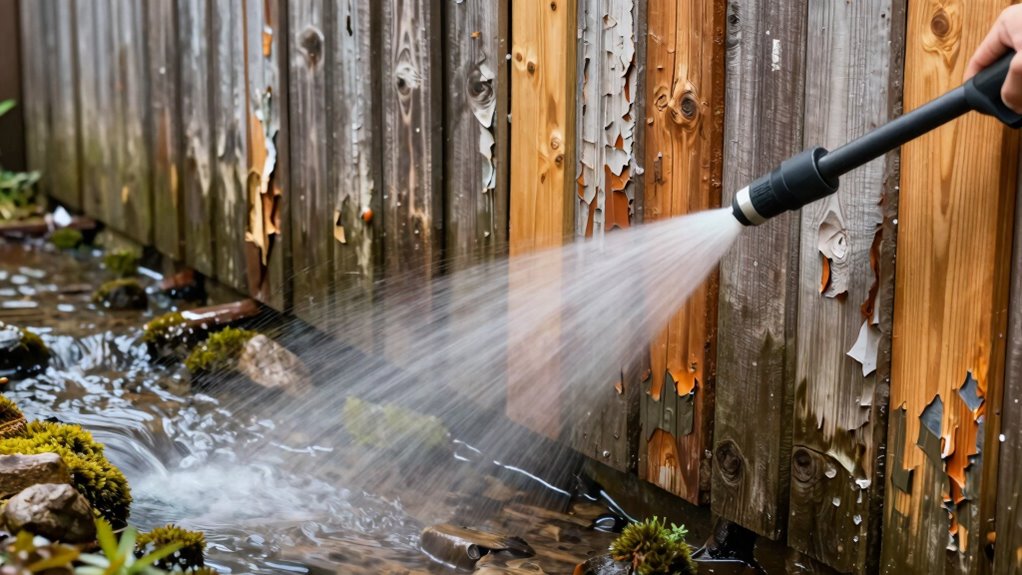
To choose the right method, consider your surfaces. Soft washing uses gentle, eco-friendly solutions and low pressure, ideal for delicate materials like siding, shingles, or paint. Pressure washing applies high-pressure water suited for tough surfaces like concrete or stone, but it can damage softer surfaces or strip paint. Picking the wrong method risks damage or costly repairs. Keep exploring to discover which approach keeps your home clean without causing harm.
Key Takeaways
- Use soft washing for delicate surfaces like siding and shingles to prevent paint stripping and surface damage.
- Choose pressure washing for hard surfaces like concrete and stone that can handle high-pressure cleaning.
- Soft washing employs eco-friendly solutions with low pressure, reducing the risk of paint peeling.
- Pressure washing can damage softer materials or paint if high pressure is misused.
- Assess your surface material and condition to select the safest, most effective cleaning method.
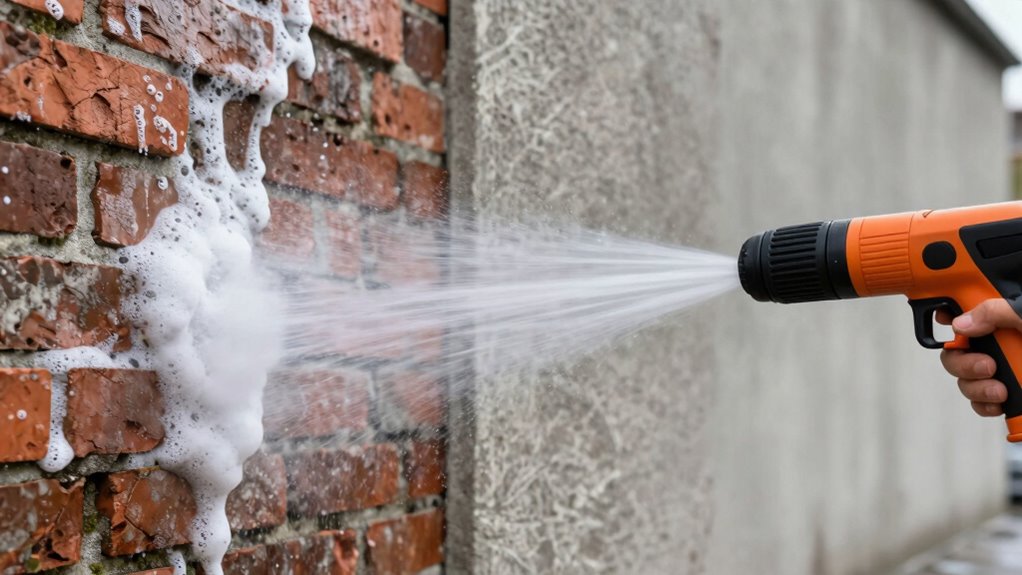
Are you unsure whether to choose a soft wash or a pressure wash for your cleaning needs? Making the right choice depends on understanding the differences between these methods and how they suit your surfaces. Soft washing is a gentle yet effective cleaning technique that uses eco-friendly methods, typically low-pressure water combined with specialized cleaning solutions. This approach is perfect for delicate surfaces that could be damaged by high-pressure streams, such as vinyl siding, roof shingles, or painted surfaces. It guarantees thorough cleaning without risking surface damage or stripping paint, which is vital if you’re concerned about preserving the integrity of your home’s exterior.
Soft washing provides gentle, eco-friendly cleaning for delicate surfaces like siding and shingles.
On the other hand, pressure washing employs high-pressure water jets to blast away dirt, grime, mold, and algae. This method is highly effective for hard surfaces like concrete driveways, stone patios, or wooden decks. However, because of the force involved, pressure washing can sometimes harm softer materials or cause paint to peel if not done carefully. That’s why surface suitability is key to choosing the right method. You need to evaluate whether your surfaces can withstand the pressure or if a softer approach is better suited to maintain their condition.
When considering eco-friendly methods, soft washing often comes out ahead. The cleaning solutions used are typically biodegradable and less invasive, reducing the environmental impact compared to some pressure washing detergents or chemicals. Additionally, because soft washing relies on lower water pressure, it conserves water and minimizes runoff, making it a more sustainable choice. This is especially important if you’re eco-conscious or want to reduce your water bill while still achieving a deep clean.
Understanding surface suitability helps prevent costly mistakes. For example, using a pressure washer on your roof may strip away shingles or loosen tiles, leading to expensive repairs. Conversely, soft washing can safely remove moss, algae, and stains from roofing materials without causing damage. Similarly, delicate paint or siding might flake or peel under high pressure, but soft washing gently cleans these surfaces while maintaining their appearance. Recognizing surface compatibility can save you time and money in the long run.
Ultimately, selecting between a soft wash and a pressure wash hinges on what you’re cleaning and the material involved. If you want an eco-friendly method that’s gentle on delicate surfaces, soft washing is your best bet. If you need to tackle sturdy, hard surfaces with stubborn grime, pressure washing will do the trick—just ensure you adjust the pressure to suit the material. Knowing your surface’s suitability and prioritizing eco-friendly options guarantees your cleaning is not only effective but also safe for your home and the environment.
Frequently Asked Questions
Can Soft Washing Remove Stubborn Stains Effectively?
Yes, soft washing can effectively remove stubborn stains through gentle cleaning. Unlike pressure washing, it uses low pressure combined with specialized solutions to break down stains without damaging the surface. You’ll find it especially useful for delicate surfaces or stubborn stains that resist traditional cleaning methods. By targeting the stain’s root, soft washing offers thorough stain removal while preserving your property’s integrity.
Is Pressure Washing Safe for All Types of Siding?
Pressure washing isn’t safe for all types of siding, especially if you’re concerned about surface damage. High pressure can strip paint or damage delicate materials like vinyl or wood. Always consider chemical safety and the siding material before you proceed. For fragile surfaces, soft washing is a better option, as it uses lower pressure and safe cleaning solutions, reducing the risk of damage while still effectively cleaning your exterior.
How Long Does Each Cleaning Method Typically Last?
You’ll find that soft wash treatments typically last longer, often around 3 to 5 years, thanks to gentle cleaning that preserves surface durability. Pressure washing, while effective for deep cleaning, usually lasts about 1 to 3 years because it can be harsher on surfaces. Both methods’ cleaning duration depends on the surface type, environmental conditions, and maintenance, so regular upkeep keeps your surfaces looking their best longer.
Are There Environmental Concerns With Either Method?
You should consider environmental concerns with both methods. Soft wash typically uses biodegradable solutions, reducing chemical runoff and lowering environmental impact. Pressure washing can cause more chemical runoff, especially if harsh chemicals are used, potentially harming plants and waterways. To minimize impact, choose eco-friendly biodegradable solutions and guarantee proper containment of runoff. Always check the products used and opt for methods that prioritize environmental safety to protect your surroundings.
Can I Use These Methods on Delicate or Historic Surfaces?
You can use gentle techniques like soft washing on delicate or historic surfaces to prevent damage while cleaning. Soft wash methods are ideal for historic preservation because they use low-pressure water combined with eco-friendly detergents, safeguarding the integrity of older materials. Avoid high-pressure washing, which can erode or harm fragile surfaces. Always consult with preservation experts to guarantee you’re choosing the safest, most effective cleaning approach for delicate historic surfaces.
Conclusion
Choosing between soft wash and pressure wash depends on your surface and cleaning needs. Soft washing uses low pressure and eco-friendly solutions, making it ideal for delicate areas, while pressure washing is more powerful for tough grime. Did you know that pressure washing can use up to 80% more water than soft washing? So, pick wisely to protect your surfaces and conserve water. Making the right choice guarantees a thorough clean without damage or waste.