
To keep your spray gun operating smoothly, regularly lubricate the trigger with a lightweight, compatible lubricant to prevent sticking and reduce wear. Check the seals for signs of cracks or tears, and replace them promptly to prevent leaks and maintain proper pressure. Disassemble and reassemble the gun carefully, ensuring all parts are clean and correctly aligned. Proper maintenance helps you achieve consistent finishes and avoid costly repairs—continue to discover how to optimize your spray gun’s performance.

Get business pricing on tools and workshop supplies
- Business-only prices and quantity discounts
- Tax-exempt purchasing
- Multiple users, one account, clear invoices
Key Takeaways
- Regularly lubricate the trigger with lightweight, compatible oil to maintain smooth, responsive operation.
- Inspect seals frequently for cracks, tears, or dryness, replacing them promptly to prevent leaks and pressure issues.
- Clean seal seats thoroughly during maintenance to remove debris and ensure proper sealing performance.
- Follow manufacturer guidelines for disassembling and reassembling the spray gun to avoid damaging components.
- Perform routine maintenance to prevent clogs, leaks, and wear, ensuring consistent spray quality and prolonging tool lifespan.

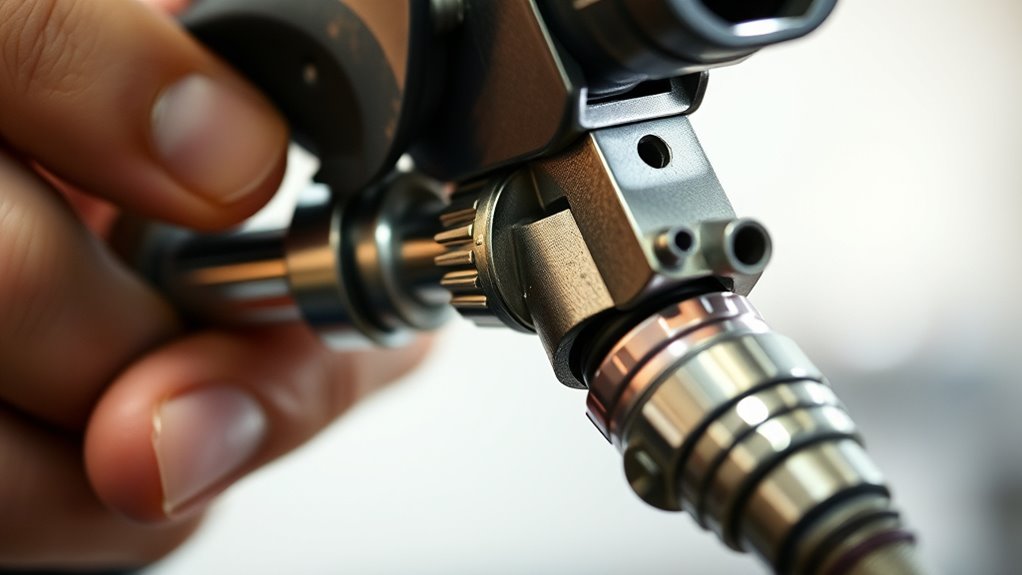
Keeping your spray gun in top condition begins with proper maintenance of the trigger and seals. The trigger is the main component that controls the spray flow, so ensuring it operates smoothly is crucial for consistent results. Regular trigger lubrication prevents sticking and reduces wear, making the trigger easier to pull and ensuring it responds instantly when you need it. Use a lightweight, spray-gun-compatible lubricant to coat the trigger mechanism lightly. Avoid over-lubricating, as excess oil can attract dust or debris, which may cause clogging or jamming over time. A quick spray and a wipe-down after each use will keep the trigger functioning properly and extend its lifespan. Proper trigger maintenance also helps maintain consistent spray patterns, ensuring quality finishes on every project.
Regular trigger lubrication ensures smooth operation and extends the lifespan of your spray gun.
Seal maintenance is equally essential. The seals inside your spray gun prevent paint or coating from leaking and help maintain proper pressure during operation. Over time, seals can degrade, crack, or become brittle, leading to inconsistent spray patterns or paint leakage. Seal replacement is a straightforward process but requires attention to detail. When inspecting your spray gun, look for signs of wear or damage around the seals—cracks, tears, or dried-out rubber are common indicators that they need replacing. Regularly changing seals ensures your gun maintains ideal pressure and prevents costly repairs caused by leaks or pressure drops.
To effectively perform seal replacement, start by disassembling the spray gun according to the manufacturer’s instructions. Carefully remove the old seals, taking care not to damage the surrounding components. Clean the seal seats thoroughly to remove any residual paint, dirt, or debris that might interfere with the new seals fitting properly. Before installing the new seals, lubricate them lightly with the appropriate grease or lubricant recommended by the manufacturer. This step allows for easier installation and helps create a better seal, preventing future leaks. After replacing the seals, reassemble the gun carefully, ensuring all parts are aligned correctly and tightened to the specified torque.
Maintaining your spray gun’s trigger and seals might seem routine, but it’s the key to consistent performance and longevity. Trigger lubrication keeps the mechanism responsive, while timely seal replacement prevents leaks and pressure loss. When you stay on top of these simple maintenance tasks, you’ll experience smoother operation, fewer clogs, and a more professional finish on every project. Regular inspections and prompt attention to wear signs will save you time and money in the long run, ensuring your spray gun remains a reliable tool in your arsenal.
As an affiliate, we earn on qualifying purchases.
Frequently Asked Questions
How Often Should I Replace Spray Gun Seals?
You should replace spray gun seals whenever you notice leaks, reduced spray quality, or difficulty maintaining consistent pressure. Regular seal replacement is vital for trigger maintenance, preventing air or fluid leaks that impair performance. Check seals periodically, especially after extensive use or exposure to harsh chemicals. Prompt seal replacement keeps your spray gun functioning smoothly, ensuring ideal operation and preventing costly repairs down the line.
Can I Use Any Lubricant on the Trigger?
Did you know that improper trigger lubrication causes 30% of spray gun malfunctions? You can’t just use any lubricant on the trigger; it’s essential to select lubricant compatibility specifically designed for spray guns. Using the wrong trigger lubrication can damage seals and affect performance. Always opt for manufacturer-recommended lubricants to ensure smooth operation and avoid costly repairs. Proper trigger lubrication keeps your spray gun functioning at its best.
What Signs Indicate Trigger or Seal Failure?
You might notice trigger or seal failure if the trigger becomes sticky or if you see seal leaks. Trigger stickiness makes it hard to control spray, while seal leaks cause uneven application or drips. Keep an eye out for these signs, and address them promptly to prevent further damage. Regular inspection helps catch issues early, ensuring your spray gun operates smoothly and efficiently.
Are There Specific Cleaning Products Recommended?
In an age when arcades were all the rage, choosing the right cleaning products mattered. For your spray gun, use cleaning agents that are compatible with your seals and trigger components. Avoid harsh solvents that could cause damage. Instead, opt for gentle, non-abrasive cleaners and compatible lubricants to keep everything functioning smoothly. Regular cleaning with these recommended products helps prevent leaks and guarantees consistent spray performance.
How Do I Troubleshoot Inconsistent Spray Patterns?
To troubleshoot inconsistent spray patterns, start by checking for nozzle clogging, which can disrupt spray quality. Clean the nozzle thoroughly with appropriate tools and solutions. Next, verify your air pressure settings—insufficient or uneven air pressure often causes uneven spray patterns. Adjust the pressure according to the manufacturer’s specifications. Regularly inspecting and maintaining these components guarantees consistent spray patterns and better overall performance of your spray gun.
Conclusion
Regularly maintaining your spray gun trigger and seals keeps it working smoothly and extends its lifespan. Some believe that neglecting this maintenance can lead to uneven spray patterns or equipment failure, but recent studies suggest that proper care actually prevents these issues. By cleaning and inspecting your spray gun often, you ensure consistent results and avoid costly repairs. So, don’t skip your maintenance routine—your spray gun will thank you with reliable, efficient performance every time.
Halloween Picks
halloween
As an affiliate, we earn on qualifying purchases.