
TL;DR

Get business pricing on tools and workshop supplies
- Business-only prices and quantity discounts
- Tax-exempt purchasing
- Multiple users, one account, clear invoices
A Hunker report describes replacing a bench grinder’s standard abrasive wheel with a suitable wire wheel to remove rust from tools. It advises matching the brush material to the tool and wearing hand and eye protection; it does not provide independent testing or detailed grinder-safety instructions.
Hunker has published a guide describing how to use a bench grinder fitted with a wire wheel to remove rust from tools. The report says the attachment is better suited to brushing corrosion from metal than the grinder’s standard abrasive wheel, while warning users to wear eye and hand protection because wires or debris can fly off during use.
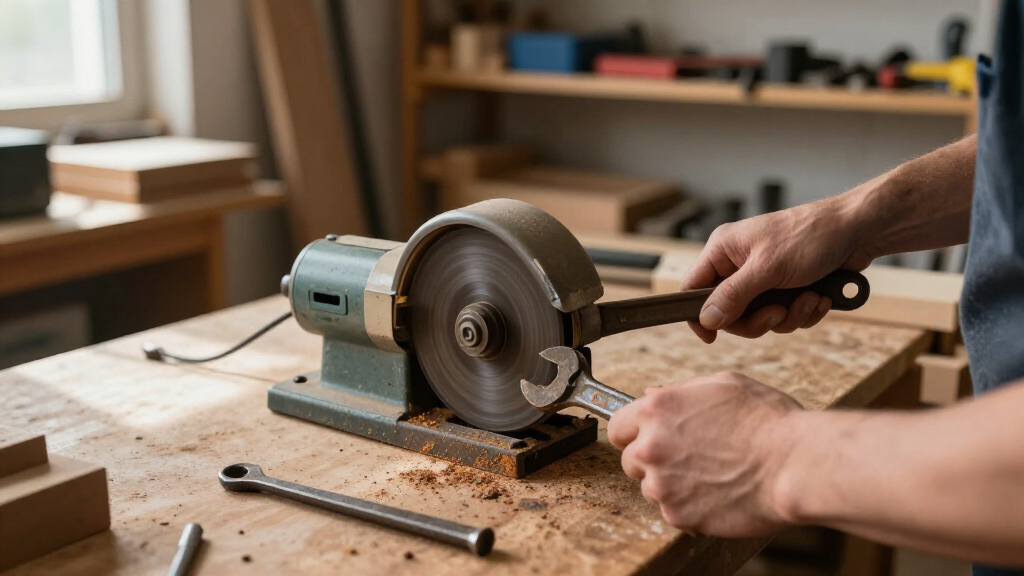
A bench grinder uses a motor to spin wheels and is commonly used to sharpen tools such as chisels, shovels and garden hoes. Hunker’s report says a standard grinding wheel, typically made from abrasive grains held in a binding material, is designed for cutting and sharpening rather than removing a thin layer of rust. For the task described, it recommends fitting a wire wheel instead.
The report identifies steel, brass and nylon as common wire-brush materials. It recommends steel for hard metals such as iron and brass for softer metals such as copper or aluminum. Nylon, it says, is suited to materials including wood, furniture or shoes, rather than metal rust removal. The guide does not name particular products or specify a wheel size or grinder speed.
To change the attachment, Hunker says to remove the wheel cover, loosen the nuts and washers securing the existing wheel to the spindle, and install the wire wheel. It then describes running the grinder and moving the rusty tool gently from side to side against the wheel. The report warns that small pieces of wire can break away, and calls for eye and hand protection. The time required depends on how much rust is present.
A Different Wheel for Rust Removal
The practical distinction is between grinding and brushing. A conventional abrasive wheel can remove metal as it sharpens an edge; a wire wheel is intended to scrub corrosion from a surface. Choosing an attachment suited to the task can help reduce unnecessary metal removal, though the source does not quantify that risk or establish that a wire wheel is appropriate for every tool or condition.
Rust forms when iron reacts with water and oxygen, according to the source report. Corrosion left untreated can damage a tool’s metal over time. For readers restoring garden or workshop tools, the method offers a powered alternative to household rust treatments such as vinegar, but it also involves a fast-spinning machine and flying debris. Protective equipment and careful handling are part of the process, not optional details.
bench grinder wire wheel attachment
As an affiliate, we earn on qualifying purchases.
As an affiliate, we earn on qualifying purchases.
Why Standard Wheels Differ
Hunker frames the bench grinder as a stationary alternative to the more mobile angle grinder. Its usual uses include sharpening bladed tools, while rust removal calls for changing the wheel rather than using the grinder in its standard configuration. The report’s central instruction is to use a wire attachment selected for the metal being cleaned.
The material choice matters because metals vary in hardness. The report recommends a steel brush for iron and other hard metals and a brass brush for softer metals. It discusses nylon brushes for nonmetal surfaces, but does not recommend them for removing rust from iron tools. It also notes that vinegar is another commonly used rust-removal option, without comparing the methods’ cost, effectiveness or effect on tool finishes.
“You’ll want to use a wire wheel instead to remove rust from your tools.”
— Hunker report
Safety Details the Guide Omits
The supplied report does not give a publication date, identify a specific grinder or wire-wheel model, or state recommended operating speeds. It also does not provide detailed instructions for checking that an attachment is compatible, securing the tool, maintaining a safe distance from the wheel, or responding to a damaged wheel. Readers should consult the grinder and wheel manufacturers’ instructions for those requirements rather than assume the steps in the report cover every setup.
The source does not compare wire-brushing with chemical rust removal, nor does it establish how much metal may be removed or whether a heavily corroded tool can safely be restored. The tool’s material, coating, shape and condition may affect the appropriate approach. The report’s suggestion that a cleaned tool may look fresh is not a guarantee of its structural condition or safe function.
Check Equipment Before Use
Anyone following the method should first check the grinder and attachment manufacturers’ directions, confirm the wire wheel is intended for that machine and material, and inspect the wheel and tool for damage. Wear suitable eye and hand protection, keep loose clothing and hair away from rotating parts, and do not force the tool against the wheel. Stop if the setup vibrates, looks damaged or behaves unexpectedly; the source does not give a troubleshooting procedure.
After brushing, inspect the tool for remaining corrosion or damage before putting it back into service. Hunker’s report describes rust removal, not repairs to cracks, deep pitting or weakened metal. Whether a particular tool is usable after cleaning depends on its condition, which the guide does not assess.
Key Questions
Can I remove rust with a standard bench-grinder wheel?
Hunker recommends changing the standard abrasive wheel for a wire wheel. The report says ordinary grinding wheels are intended for sharpening and cutting, not brushing away rust.
Which wire wheel should I use on an iron tool?
The report recommends a steel wire brush for hard metals such as iron. It does not specify a particular wheel model, size or speed, so check the equipment makers’ instructions for compatibility.
What protective equipment does the guide recommend?
Hunker says to wear eye and hand protection because small pieces of wire can fly off the wheel. The supplied guide does not set out a complete list of safety precautions for bench-grinder use.
Will cleaning the rust make a damaged tool safe to use?
Not necessarily. The report explains a rust-removal method but does not assess cracks, deep pitting or weakened metal. Inspect the tool after cleaning; removal of surface rust alone does not confirm that it is structurally sound.
Source: rss
Halloween Picks
halloween
As an affiliate, we earn on qualifying purchases.