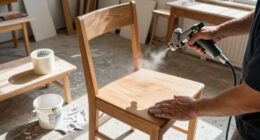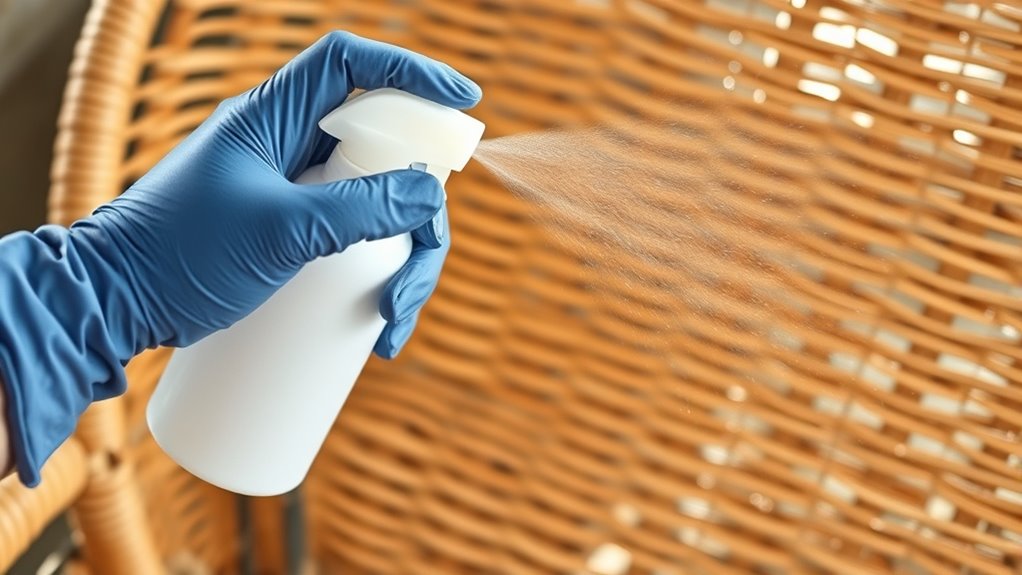

To spray wicker and cane without clogging, start by cleaning the surface thoroughly with gentle soap and letting it dry completely. Lightly sand to create a smooth base, then wipe away dust. Use spray paints formulated for outdoor or furniture use, and do a test spray first. Keep your can or spray gun about 6-12 inches from the surface, moving in smooth, even strokes, overlapping slightly. For cleaner results, continue exploring tips to master this technique.
Key Takeaways
- Use a spray paint formulated for outdoor or furniture use to prevent clogging.
- Maintain a consistent distance of 6-12 inches from the wicker or cane surface during application.
- Regularly clean the spray nozzle and clear any buildup to ensure smooth spray flow.
- Apply multiple thin coats with proper drying time to avoid overloading the surface and clogging the spray gun.
- Test spray on a small area first to check for compatibility and adjust technique accordingly.
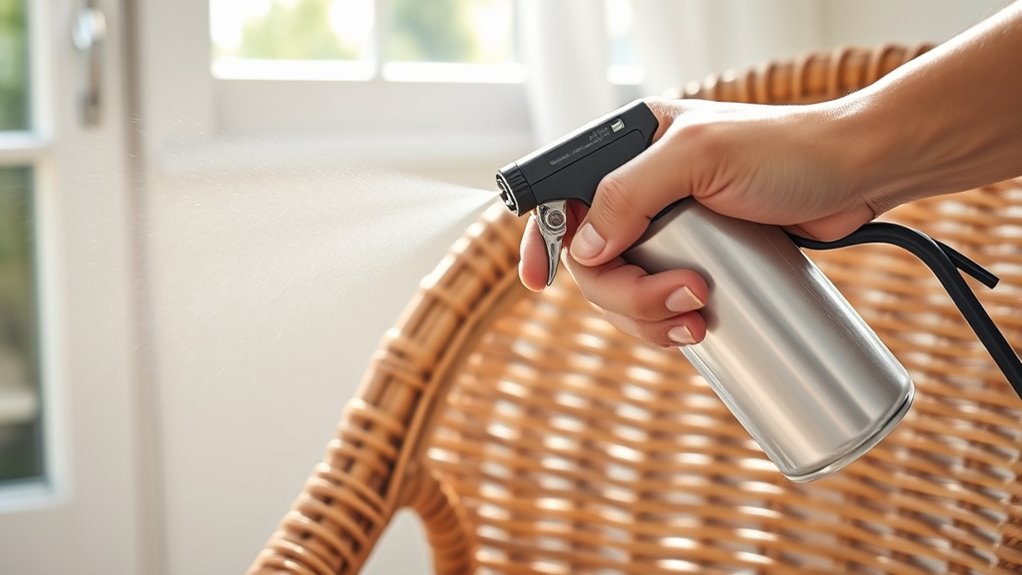
Have you ever wondered how to effectively refresh your wicker or cane furniture? The key lies in proper paint preparation and mastering spray techniques. When you’re ready to give your furniture a new look, starting with paint preparation ensures the best results. First, clean the surface thoroughly to remove dirt, dust, and grease, which can interfere with paint adhesion. Use a gentle cleaner or soapy water, and let it dry completely. Sanding the surface lightly with fine-grit sandpaper can help create a smooth, even base, especially if the existing finish is rough or peeling. This step improves paint adhesion and reduces the risk of drips and clogs. Always wipe away dust afterward with a damp cloth, and let everything dry before moving on.
Next, choose the right type of paint; spray paints formulated for outdoor or furniture use work best for wicker and cane. Before applying, do a test spray on a small, inconspicuous area to check for compatibility and desired coverage. When you’re ready to spray, set up your workspace in a well-ventilated area, ideally outdoors, and use a drop cloth or newspapers to catch overspray. Proper spray technique is essential to avoid clogging your spray gun or nozzle. Keep the spray can or gun at a consistent distance—about 6 to 12 inches from the surface—and move it in smooth, even strokes. Overlapping each pass slightly ensures even coverage and minimizes runs or drips.
To prevent clogging, don’t spray too thickly in one pass. Instead, apply multiple thin coats, allowing each layer to dry fully before adding the next. Thin coats help the paint dry faster and reduce the chance of clogs. If you’re using a spray gun, ensure it’s clean before starting and clear the nozzle regularly during use to avoid buildup. Always follow the manufacturer’s instructions regarding drying times and reapplication. Using proper spray techniques, like maintaining a steady hand and consistent speed, will give you a smooth, professional finish. Remember, patience is key—rushing the process can lead to uneven coverage or clogged nozzles. Additionally, understanding the paint formulation can help you choose the best product for your project, ensuring optimal results and durability.
As an affiliate, we earn on qualifying purchases.
Frequently Asked Questions
Can I Use a Regular Spray Paint on Wicker and Cane?
You can use regular spray paint on wicker and cane, but it’s better to follow proper painting techniques. First, prepare the surface by cleaning and lightly sanding to guarantee good adhesion. Use thin, even coats and hold the spray can at the right distance to avoid drips and clogging. Applying a primer designed for porous surfaces can also help achieve a smooth finish and prevent clogging during painting.
How Long Should I Wait Between Spray Coats?
Think of spray coats as a gentle rain—patience is your best friend. You should wait about 15 to 30 minutes between coats, allowing each layer to dry thoroughly. Maintain a steady spray distance of about 10-12 inches to prevent drips and clogs. Rushing this process can cause uneven coverage, so let each coat dry completely before applying the next, ensuring your finish is smooth and flawless.
Is It Necessary to Prime Wicker Before Spraying?
You don’t need to prime wicker before spraying, but applying a primer can improve adhesion and finish quality. Before priming, verify surface preparation by cleaning thoroughly and removing dust or loose fibers. Use a suitable primer designed for outdoor or wicker surfaces, applying it evenly. This step helps prevent clogging, ensures even coverage, and results in a smoother, longer-lasting finish. Always follow the primer manufacturer’s instructions for best results.
What Type of Protective Gear Should I Wear?
You should wear protective gloves and a respirator mask when spraying wicker and cane. Gloves keep your hands safe from chemicals, while a respirator mask prevents inhaling fumes and particles that can irritate your lungs. Always choose gear rated for spray painting, and guarantee it fits snugly. This way, you protect yourself from potential health hazards and enjoy a safer, cleaner spraying process.
How Do I Prevent Overspray on Surrounding Areas?
Like a skilled painter, you should keep a steady spray distance to prevent overspray on surrounding areas. Use protective masking tape and plastic sheeting to shield nearby surfaces, ensuring precise coverage. Maintain a consistent spray distance, about 8-12 inches, and move slowly to avoid excess paint drifting. This approach helps you control the spray, avoiding messes and achieving a clean, professional finish on your wicker or cane furniture.
Conclusion
Spraying wicker and cane can refresh their look without causing clogs if you follow these tips. Remember, using light coats and proper techniques guarantees a smooth finish. Did you know that wicker furniture can last up to 20 years with proper care? So, take your time, enjoy the process, and keep your furniture looking beautiful for years to come. With just a little patience, you’ll achieve professional-looking results every time.