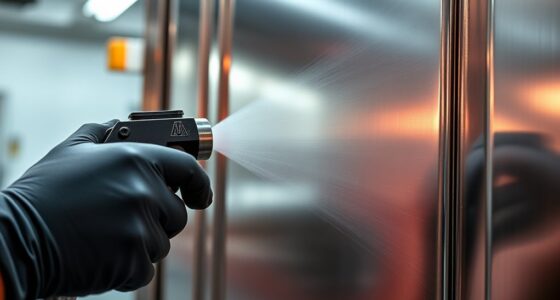
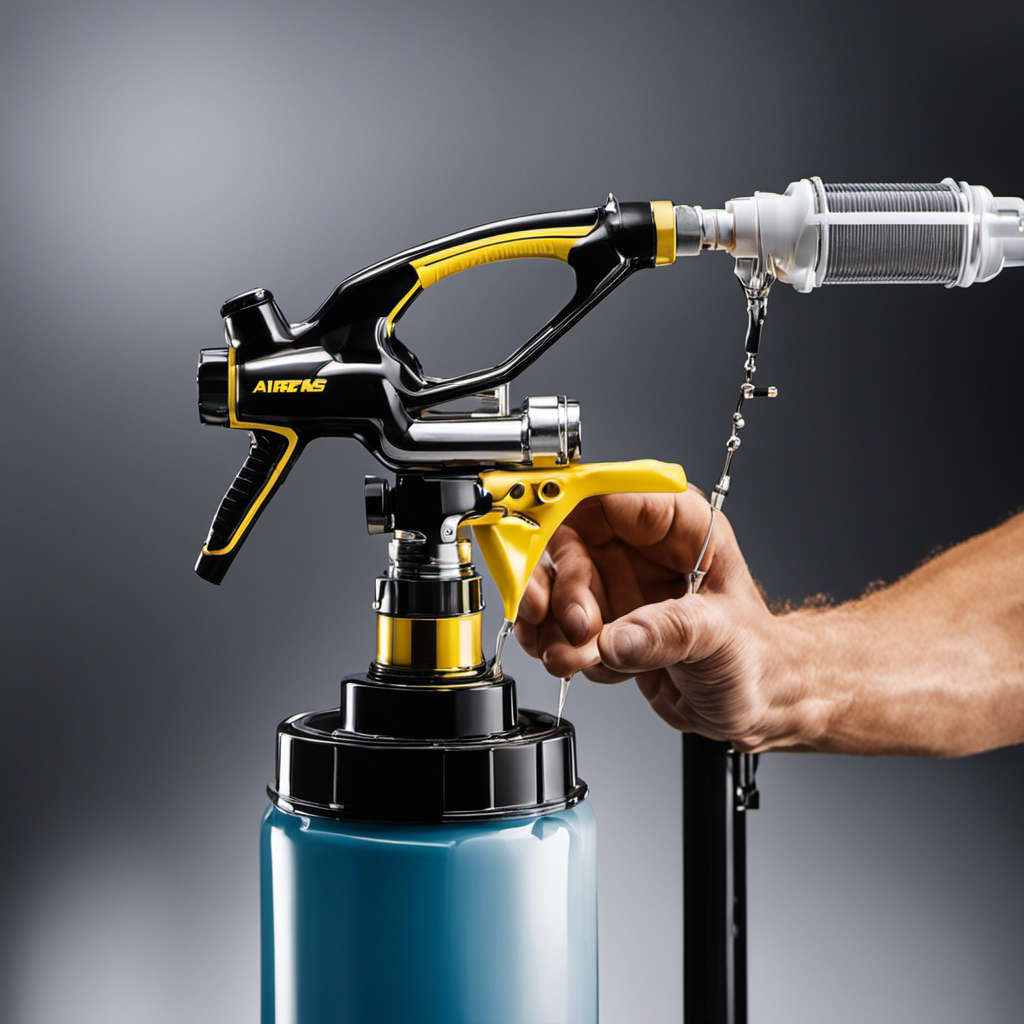
To control overspray indoors, you should focus on maximizing ventilation by opening windows or using exhaust fans and air purifiers to disperse airborne particles. Wear protective gear like masks, goggles, and gloves to safeguard yourself from chemicals. Set up your workspace with masking tape, plastic sheeting, and physical barriers to contain overspray and prevent it from settling on unintended surfaces. Keep vents closed and work in a well-ventilated area to guarantee safety and cleaner results—more tips are ahead to help you succeed.

Get business pricing on tools and workshop supplies
- Business-only prices and quantity discounts
- Tax-exempt purchasing
- Multiple users, one account, clear invoices
Key Takeaways
- Use physical barriers like plastic sheeting and masking tape to contain overspray within the work area.
- Maximize natural and mechanical ventilation to disperse airborne particles effectively.
- Wear proper protective gear, including masks, goggles, and gloves, to prevent inhalation and contact.
- Position the workspace away from vents, fans, or HVAC systems to reduce particle circulation.
- Seal doors, windows, and vents to isolate the area and prevent overspray from spreading to other spaces.

Controlling overspray indoors can be challenging, but with the right precautions, you can keep your space clean and safe. The key is to implement effective ventilation strategies and always wear the appropriate protective gear. Proper ventilation helps to disperse airborne particles, reducing the risk of overspray settling on surfaces or being inhaled. Before starting, open windows and doors to create cross-ventilation, and consider using exhaust fans or portable air purifiers to enhance airflow and remove overspray particles from the environment. This not only minimizes the spread of paint or spray substances but also improves overall air quality during and after your project. Additionally, maintaining good mental clarity and health can help you stay focused and attentive to safety procedures throughout your project.
In addition to maximizing ventilation, your choice of protective gear is essential. Wearing a well-fitting mask or respirator designed for spray painting protects your lungs from inhaling fine particles that can cause respiratory issues. Safety goggles or glasses shield your eyes from splatters, while gloves keep your skin protected from chemical exposure. Coveralls or old clothing prevent overspray from staining your clothes and skin, and a hat or hood can offer extra coverage, especially if you’re working in a confined space. Always verify that your protective gear is in good condition and properly fitted to provide the best defense against overspray.
When setting up your workspace, use masking tape and plastic sheeting to cover non-target surfaces and fixtures. This acts as a physical barrier, reducing the chances of overspray landing where it shouldn’t. Position your work area away from vents, fans, or heating and cooling systems that could circulate overspray throughout the space. If possible, isolate the area you’re working in by closing doors and sealing off vents, further limiting the spread of overspray.
paint overspray containment plastic sheeting
As an affiliate, we earn on qualifying purchases.
As an affiliate, we earn on qualifying purchases.
Frequently Asked Questions
Can Overspray Be Completely Eliminated Indoors?
Overspray can’t be completely eliminated indoors, but you can minimize it substantially. Use precise paint techniques like spraying at the right distance and speed to reduce splatter. Ventilation strategies, such as opening windows and using fans, help clear airborne particles quickly. Wearing protective gear and sealing off adjacent areas also cut down on overspray spread. These steps keep your workspace cleaner and make your painting project more efficient.
What Tools Are Best for Detecting Invisible Overspray?
You should use dust detection tools and spray sensors to find invisible overspray effectively. Dust detection equipment helps identify fine particles that you can’t see, ensuring thorough assessment. Spray sensors detect residual spray in real-time, alerting you to areas needing attention. Combining these tools gives you a holistic approach to monitoring overspray, allowing you to take corrective actions quickly and maintain a cleaner, safer indoor environment.
How Long Does Overspray Typically Stay Airborne?
Overspray typically stays airborne for a few minutes to an hour, depending on spray distance and the size of airborne particles. When you spray at a closer distance, smaller particles linger longer in the air, increasing the risk of inhalation. To mitigate this, maintain proper spray distance and ensure good ventilation. Airborne particles settle faster with proper airflow, reducing overspray‘s duration indoors and protecting your environment.
Are There Eco-Friendly Methods to Reduce Overspray?
Imagine a cleaner, greener world—eco-friendly options make it possible. You can reduce overspray using natural remedies like homemade barriers or eco-safe paints. These methods not only protect your indoor air but also support environmental health. By choosing eco-friendly options, you actively contribute to a sustainable future. Think of it as giving your home a gentle, natural hug—safe, effective, and kind to the planet.
Does Overspray Affect Indoor Air Quality Long-Term?
Yes, overspray can affect your indoor air quality long-term. Paint fumes and fine particles from overspray can linger in the air, potentially impacting your health over time. Using air filtration systems helps remove these pollutants, reducing risks. Proper ventilation and sealing off the area during painting also minimize overspray spread, keeping your indoor environment safer and healthier in the long run.
Conclusion
Don’t let overspray ruin your indoor space. By taking simple precautions like sealing vents and using drop cloths, you can keep your project neat and mess-free. Some might think it’s too much effort, but the truth is, a little prep saves you time and frustration afterward. So, stay proactive, follow these tips, and enjoy a clean, professional-looking finish without the hassle of cleanup or damage. Your space will thank you for it!
Fall yard work Picks
leaf blowers
As an affiliate, we earn on qualifying purchases.