
TL;DR
There is no specific age at which someone must stop using a chainsaw on private property, according to the source report. Physical ability—including grip strength, balance, eyesight, coordination and stamina—is a better guide, and experts advise hiring a professional when those abilities are in doubt.
There is no fixed age at which a person must stop using a chainsaw on private property, according to a Family Handyman report featuring physical therapist Dr. Ron Miller and manual therapist Doug Bertram. The experts say grip strength, balance, eyesight, coordination, stamina and mental acuity are more relevant than a person’s age, because losing control of a saw can cause severe injury.

Get business pricing on tools and workshop supplies
- Business-only prices and quantity discounts
- Tax-exempt purchasing
- Multiple users, one account, clear invoices
The report cites the Centers for Disease Control and Prevention for an estimate of roughly 36,000 chainsaw injuries each year. It says injuries can occur quickly when an operator loses control and may include severe cuts, traumatic brain injuries, limb loss or death. The source provides no year or further details about the estimate, so it should be understood as a reported annual figure rather than a current-year count.
Miller says age-related changes in balance, grip strength, reaction time, eyesight and stamina can make safe operation harder. The report does not say that every older adult experiences these changes to the same degree. Bertram’s guidance is that operators need adequate grip and balance as well as sound mental acuity.
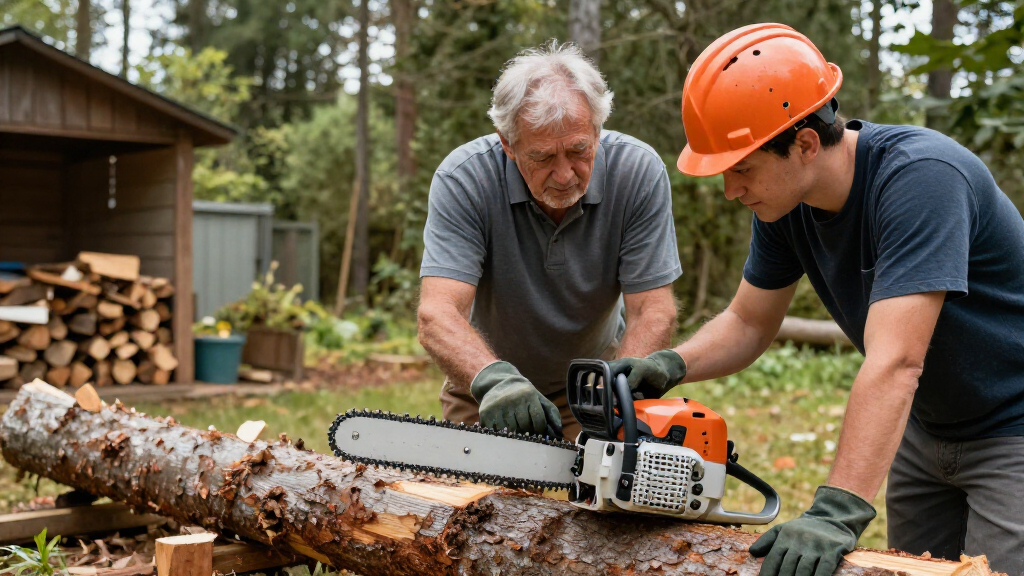
For people who continue to use a saw, the report recommends limiting work to small branches and logs on the ground, avoiding ladders and tree-felling, and hiring professionals for larger jobs. It also suggests considering a lighter electric saw, wearing protective equipment—including eye and hearing protection, gloves, sturdy footwear and chainsaw chaps—and keeping the chain sharp and properly tightened. Operators should not work alone or continue when fatigued.
Ability Matters More Than Age
The advice shifts the decision from an age cutoff to an honest assessment of whether someone can control the equipment consistently. A chainsaw can cause serious harm in a short time, and a lapse in balance, grip or alertness may leave little room to recover. The report’s central point is not that older people should automatically stop, but that personal capability and the task’s difficulty should guide the choice.
That distinction matters for homeowners deciding whether to do yard work themselves or call for help. A modest job on the ground presents a different challenge from cutting overhead limbs, working at height or felling a tree. When a person is unsure about their physical ability—or the work exceeds a small, controlled task—the report advises hiring a professional rather than relying on age alone as a measure of safety.
Products Worth Considering

Dyson V8 Cyclone Cordless Vacuum

Shark IY143H Cordless Pet Stick Vacuum

Shark Pet Cordless Stick Vacuum with 40-Minute Runtime, Grey, IX141
As an affiliate, we earn on qualifying purchases.
Private Use Has No Age Cutoff
The Family Handyman report distinguishes private residential use from chainsaw operation in a workplace. It says federal law prohibits anyone under 18 from operating a chainsaw in a work setting, while it identifies no age limit for private use on residential property. The report does not provide legal citations or explain state and local rules, so readers should check applicable requirements for their location and circumstances.
The report also points to lower-risk tools for some small jobs: a bow saw or a reciprocating saw with a pruning blade for limbs and logs up to 12 inches in diameter. These are alternatives, not a guarantee that a task is safe; the job, tool condition and operator’s ability still matter.
“There’s no age that makes you too old to use a chainsaw.”
— Doug Bertram, manual therapist, as quoted in Family Handyman
No Individual Fitness Threshold
The report does not set a specific test score or medical threshold that determines whether someone can safely operate a chainsaw. It suggests at-home checks of grip, balance, leg and back strength, coordination and endurance, but does not provide enough detail in the supplied material to interpret results as a formal clearance. A person’s ability can also vary with health, medication, fatigue and the demands of a particular job.
The reported injury estimate is attributed to the CDC, but the source material gives no year, methodology or breakdown by age, so it cannot show how many injuries involve older operators. It is also unclear from the material whether additional state or local restrictions apply to a particular reader.
Decide Before Starting the Saw
Before beginning a job, operators should weigh their current strength, balance, vision and alertness against the work involved. The source report recommends keeping personal projects small and grounded, using protective gear, working with a nearby partner and stopping at the first signs of fatigue. If the task involves a ladder, tree-felling or larger cutting, or if safe control is uncertain, its advice is to call a professional.
The article supplies no new regulation, product recall or scheduled policy change; it is practical safety guidance. Any legal questions about work use or local requirements remain a matter for the relevant authorities.
Key Questions
Is there a maximum age for using a chainsaw at home?
The Family Handyman report says there is no age limit for private chainsaw use on residential property. It emphasizes the operator’s physical and mental ability rather than a birthday-based cutoff.
What abilities matter most for safe chainsaw use?
The report’s experts point to grip strength, balance, eyesight, coordination, stamina and mental acuity. A person should also be alert enough to control the saw and stop if tired.
What jobs should older operators avoid?
The report advises against cutting from a ladder or felling trees and recommends hiring out larger jobs. It suggests limiting personal work to smaller branches or logs safely on the ground.
What are alternatives for small branches and logs?
For limbs and logs up to 12 inches in diameter, the report lists a bow saw or a reciprocating saw fitted with a pruning blade as lower-risk alternatives. Tool choice does not remove the need to assess the task and use the tool safely.
What safety steps does the report recommend?
It recommends eye and hearing protection, gloves, sturdy footwear and chainsaw chaps, along with a sharp, properly tightened chain. Do not work alone, take breaks, stay hydrated and stop when fatigue affects alertness.
Source: rss