Your hose diameter and length substantially affect pressure and flow. A narrower or longer hose increases resistance, causing pressure drops that reduce efficiency. To maintain ideal flow, larger diameters help lower resistance, especially over long distances, but they can be costlier or less practical. Shorter hoses also lessen pressure loss. If you want insights on balancing these factors for your system, keep exploring how to maximize hose size and length effectively.
Key Takeaways
- Increasing hose length raises resistance and causes greater pressure drops, reducing flow efficiency.
- Larger hose diameters decrease resistance, helping maintain pressure over longer distances.
- Pressure loss is directly proportional to hose length and inversely proportional to diameter.
- Using shorter hoses or bigger diameters minimizes pressure drops and improves system performance.
- Fluid viscosity also affects resistance; higher viscosity fluids increase pressure loss regardless of hose size.
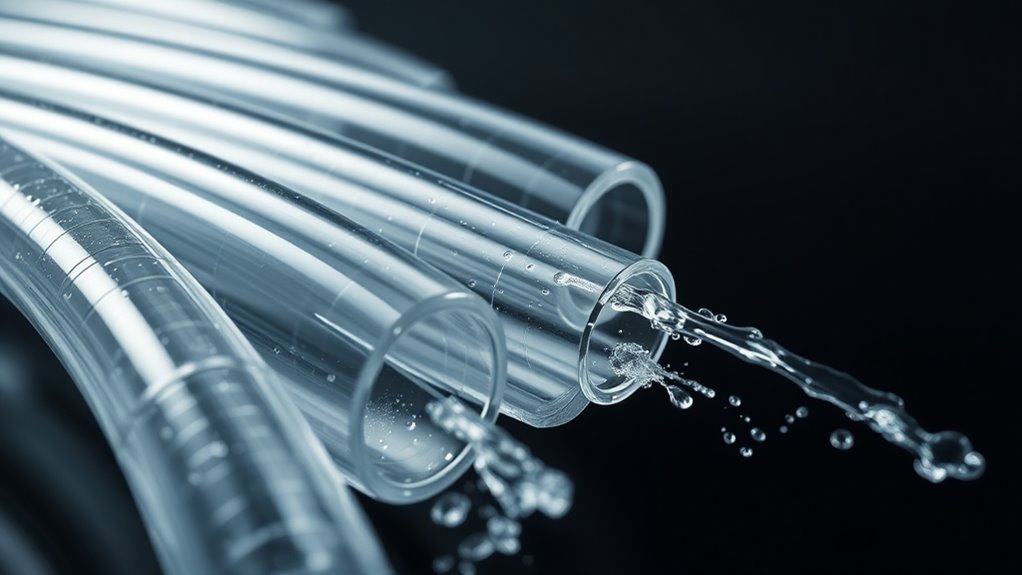
Choosing the right hose diameter and length is vital to guarantee efficient flow and prevent pressure loss. When you select a hose that’s too narrow or too long, you risk experiencing notable pressure drops that can hinder performance. The flow rate, or the amount of fluid moving through the hose per unit time, heavily depends on these factors. A hose with an inadequate diameter increases resistance, causing a pressure drop that reduces flow efficiency. Conversely, a larger diameter decreases resistance but might be impractical or costly for your setup. The length of the hose also plays an essential role: longer hoses naturally increase resistance, which again leads to a pressure drop. This means that as your hose length extends, you’ll likely see a drop in flow rate unless you compensate with higher pressure or a larger diameter.
To optimize your system, consider that pressure loss is directly proportional to the length of the hose and inversely proportional to its diameter. This means that doubling the hose length roughly doubles the pressure drop, while increasing the diameter reduces it. If you need a high flow rate over a long distance, opting for a larger diameter hose will help maintain consistent pressure and flow. On the other hand, if the hose is short, a smaller diameter might suffice without causing notable pressure drops. It’s also important to recognize that the type of fluid and pressure you’re working with influence these choices. For example, fluids with higher viscosity generate more resistance, amplifying the effects of hose diameter and length on pressure drop. Additionally, understanding system requirements can help you select the most appropriate hose to ensure optimal performance and efficiency.
When selecting your hose, consider the system’s pressure requirements and the desired flow rate. If you notice a pressure drop beyond acceptable limits, check whether the hose diameter is suitable for your needs. Upgrading to a larger diameter can considerably improve flow rate and reduce pressure loss, especially over extended distances. Also, avoid unnecessarily long hoses, as they add resistance without providing any benefit. If you must run a long distance, look for hoses specifically designed to minimize resistance or consider installing booster pumps to compensate for pressure loss.
Frequently Asked Questions
How Does Hose Material Affect Pressure Loss?
You’ll find that hose material directly influences pressure loss through its flexibility and durability. Flexible hoses made from softer materials may bend easily, increasing resistance and pressure loss, while durable materials resist kinks and wear, maintaining steady pressure. When choosing a hose, consider how the material’s flexibility impacts flow, and opt for durable options to guarantee consistent performance without frequent replacements. This way, you minimize pressure drops and maximize efficiency.
Can Hose Diameter and Length Influence Flow Rate?
Absolutely, hose diameter and length directly influence your flow rate and hose capacity. A wider hose allows more water to flow freely, increasing flow rate, while a longer hose can cause more resistance, reducing flow. You’ll notice that choosing the right diameter and keeping hose length minimal helps maintain ideal flow rate, ensuring your setup works efficiently. Remember, a well-sized hose maximizes capacity and keeps your system flowing smoothly.
What Safety Precautions Are Needed for High-Pressure Hoses?
You should always prioritize hose safety when working with high-pressure hoses. Wear appropriate protective gear, inspect hoses regularly for damage, and guarantee fittings are secure. Conduct pressure testing before use to identify leaks or weaknesses. Never exceed the rated pressure, and avoid kinks or sharp bends that could compromise integrity. Proper training on hose handling and safety protocols helps prevent accidents, keeping you safe during high-pressure operations.
How Do Temperature Changes Impact Hose Pressure?
Imagine a hose stretching as it heats up under the sun. Temperature changes cause thermal expansion, making the hose expand and pressure fluctuate. When it’s hot, the pressure inside rises, risking bursts or leaks. Cold temperatures contract the hose, lowering pressure and potentially reducing flow. You need to observe these fluctuations carefully, adjusting your system to prevent accidents and guarantee consistent performance despite temperature variations.
Are There Specific Hose Specifications for Different Liquids?
Yes, you should select hoses based on chemical compatibility to guarantee safety and durability. Different liquids require specific materials to prevent degradation or leaks. Additionally, consider flexibility, especially if your setup involves tight bends or frequent movement. Choosing a hose with the right specifications ensures reliable performance and longer lifespan, preventing issues like cracks or chemical reactions that could compromise your system’s integrity.
Conclusion
Remember, choosing the right hose diameter and length is like tuning a musical instrument—you need the perfect fit for *ideal* performance. A wider hose allows more flow, while a longer one creates more pressure loss, like a gentle breeze fading into a whisper. By understanding how size impacts pressure, you can avoid the pitfalls of a weak stream or excessive strain. Make smart choices, and your system will sing smoothly, delivering just the right pressure every time.

Franz came aboard the Paint Sprayer Zone team with a background in both journalism and home renovation. His articulate writing style, combined with a passion for DIY projects, makes him an invaluable asset. Franz has a knack for breaking down technical jargon into easy-to-understand content, ensuring that even the most novice of readers can grasp the complexities of paint sprayers.