TL;DR

Get business pricing on tools and workshop supplies
- Business-only prices and quantity discounts
- Tax-exempt purchasing
- Multiple users, one account, clear invoices
A Hunker DIY report describes converting a disconnected old chandelier into a hanging bird feeder by removing its electrical parts and attaching small bowls to its arms. The project uses household or thrifted materials, but the report does not provide tested information about bird species attracted, long-term durability or safe load limits.
Hunker has published a do-it-yourself guide for turning an old chandelier into a hanging bird feeder, replacing the fixture’s bulbs with small bowls for seed. The project offers a way to reuse an unwanted light fixture, but requires removing its electrical components and securing bowls to the chandelier’s arms before hanging it outdoors.
The guide says to start with a chandelier that is disconnected from power. Remove the bulbs, sockets and wiring with wire cutters, while leaving the dish-like fittings at the ends of the arms, called bobeches. Those fittings provide places to attach the seed bowls. The fixture should then be cleaned before painting or other decoration.
Small bowls can be thrifted, chosen to match or mixed for an eclectic appearance. The report also suggests teacups as an alternative. After washing and drying the bowls, attach them to the bobeches with a heavy-duty adhesive, such as epoxy. Place objects in the bowls to add pressure while the adhesive sets, and let the assembly sit for at least a day before moving on, according to Hunker.
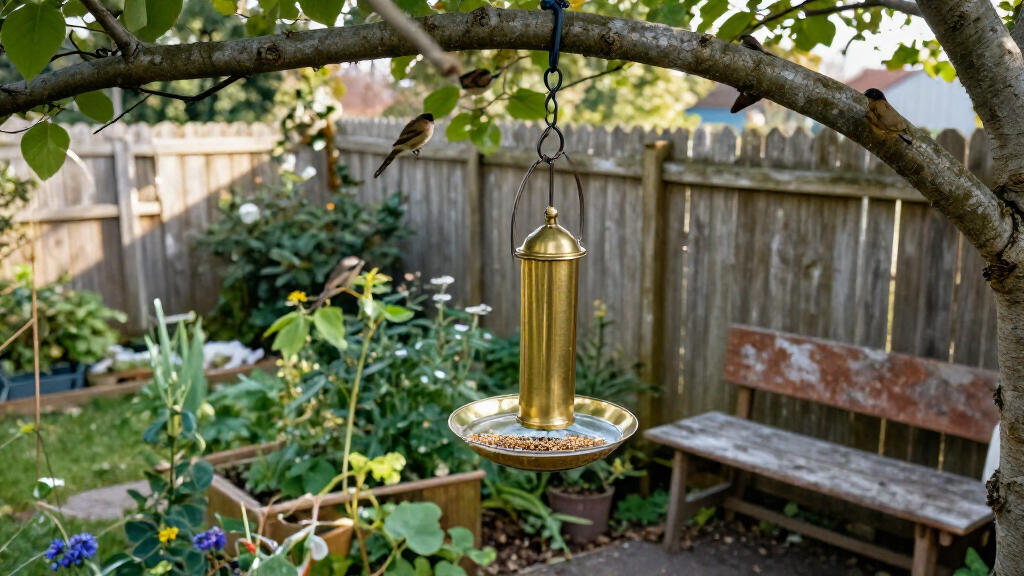
Once the feeder is ready, hang it by its chain in a place where it can be observed, such as a tree visible from a patio, and add birdseed to the bowls. Hunker suggests using different seed types, but does not state that a particular mix will attract specific birds. The report also advises moving the fixture if heavy rain is forecast to help protect the seed.
A Second Use for Old Fixtures
The project combines reuse and backyard bird feeding: a fixture that might otherwise be donated or discarded can become a multi-bowl feeder. Its several arms provide multiple spots for seed, while the chandelier’s familiar shape gives the feeder a decorative role in a garden or yard.
For readers, the practical appeal is that the guide describes a relatively direct conversion using a chandelier, small dishes, wire cutters, paint and adhesive. The result is not presented as a professionally tested product, however. The attachment strength, the fixture’s resistance to outdoor exposure and its suitability for different birds will depend on the materials and construction chosen.
Products Worth Considering

Philips Hue Festavia Globe Outdoor String Lights, 32 Bulbs, 91 ft

Philips Hue Festavia 130-Foot Indoor/Outdoor Smart String Lights, 500 LEDs

Bose TV Speaker (2nd Gen) Compact Soundbar with Bluetooth and HDMI
As an affiliate, we earn on qualifying purchases.
From Light Fixture to Seed Bowls
The source is a Hunker DIY report about repurposing an old chandelier. It notes that readers without a fixture at home might look for one at a thrift store, where chandeliers are often grouped with lamps and other light fixtures. The report says broken electrical components are not needed for the finished feeder because the wiring and sockets are removed.
The design leaves the chandelier’s arms in place and uses their bobeches as mounting points. Bowls can be attached in all available positions or only to some of them. Hunker also suggests optional decoration, including a strand of ordinary beads, while cautioning that reflective crystal chains may scare birds. Solar lights or battery-operated lights are suggested for viewing the feeder at night, when birds are away.
““The birds are in luck!””
— Hunker DIY report
Durability and Bird Use
The report does not give load limits, adhesive curing specifications or outdoor durability tests for the finished feeder. It also does not identify which bowl sizes, seed types or chandelier designs work best, or confirm which birds may use the feeder. Readers will need to check that their fixture is stable, the bowls are firmly attached and the hanger can support the assembled weight.
The guide’s decoration suggestions are recommendations rather than documented findings about bird behavior: it says reflective crystal chains can sometimes scare birds, but provides no supporting study or detail about how often that occurs. It also does not specify how frequently to clean the bowls or replace damp seed.
Before Hanging the Feeder
Before putting the feeder outdoors, follow the guide’s sequence: disconnect the chandelier, remove its electrical parts, clean it, attach washed and dried bowls, and allow the adhesive to set for at least 24 hours. Check that each bowl is secure and that the chain and fixture are in sound condition before hanging it. Keep the feeder where it can be observed and move it if heavy rain is expected, as Hunker recommends.
After filling the bowls, readers can monitor whether birds use the feeder and whether seed stays dry. The supplied report does not announce a follow-up test or provide measured results, so the project’s performance will depend on the individual fixture, materials, placement and local conditions.
Key Questions
What parts of the chandelier should be removed?
Hunker says to remove the bulbs, sockets and wires after disconnecting the fixture from power. Leave the dish-like bobeches at the ends of the arms to serve as mounting points for bowls.
How long should the bowls sit before the feeder is moved?
The guide says to leave the chandelier undisturbed for at least a day after gluing the bowls in place. Follow the adhesive maker’s instructions as well, since the report does not specify a product’s cure time.
Can I use teacups instead of small bowls?
Yes. Hunker suggests teacups as an alternative to bowls for holding seed, provided they can be securely attached to the chandelier’s fittings.
Will the feeder attract a particular type of bird?
The report does not identify specific species or promise particular results. It suggests trying different kinds of birdseed, but the birds that visit may vary by seed, location and local conditions.
Can the chandelier feeder stay outside in the rain?
Hunker advises moving it when heavy rain is forecast to help preserve the seed. The report does not establish that the fixture or adhesive is weatherproof.
Source: hunker.com