Yes, you can spray elastomeric paint, but it requires proper preparation and the right equipment. Make sure to clean and repair your surface first, then choose a suitable spray gun and adjust the pressure as recommended. Apply multiple thin coats for the best coverage, and follow safety precautions like wearing goggles and masks. Proper technique and preparation will give you a smooth, durable finish—keep going to discover more tips for successful application.
Key Takeaways
- Yes, elastomeric paint can be sprayed using a high-quality spray gun designed for thick coatings.
- Proper surface preparation and equipment setup are essential for achieving a smooth, durable finish.
- Applying multiple thin coats via spraying improves coverage and long-term protection.
- Safety precautions, including protective gear and ventilation, are critical during spraying elastomeric paint.
- Testing spray patterns and maintaining equipment ensure consistent application and quality results.

Spraying elastomeric paint is an effective way to protect and enhance the exterior of your building. If you’re considering tackling this project yourself, it’s vital to understand some DIY techniques to guarantee a smooth application and long-lasting results. First, prepare your surface carefully. Clean the area thoroughly, removing dirt, loose paint, and any mildew. Repair cracks or damaged spots with an appropriate filler, and let everything dry completely before you start spraying. Proper surface preparation is key to achieving a uniform finish and maximizing the protective qualities of the elastomeric coating.
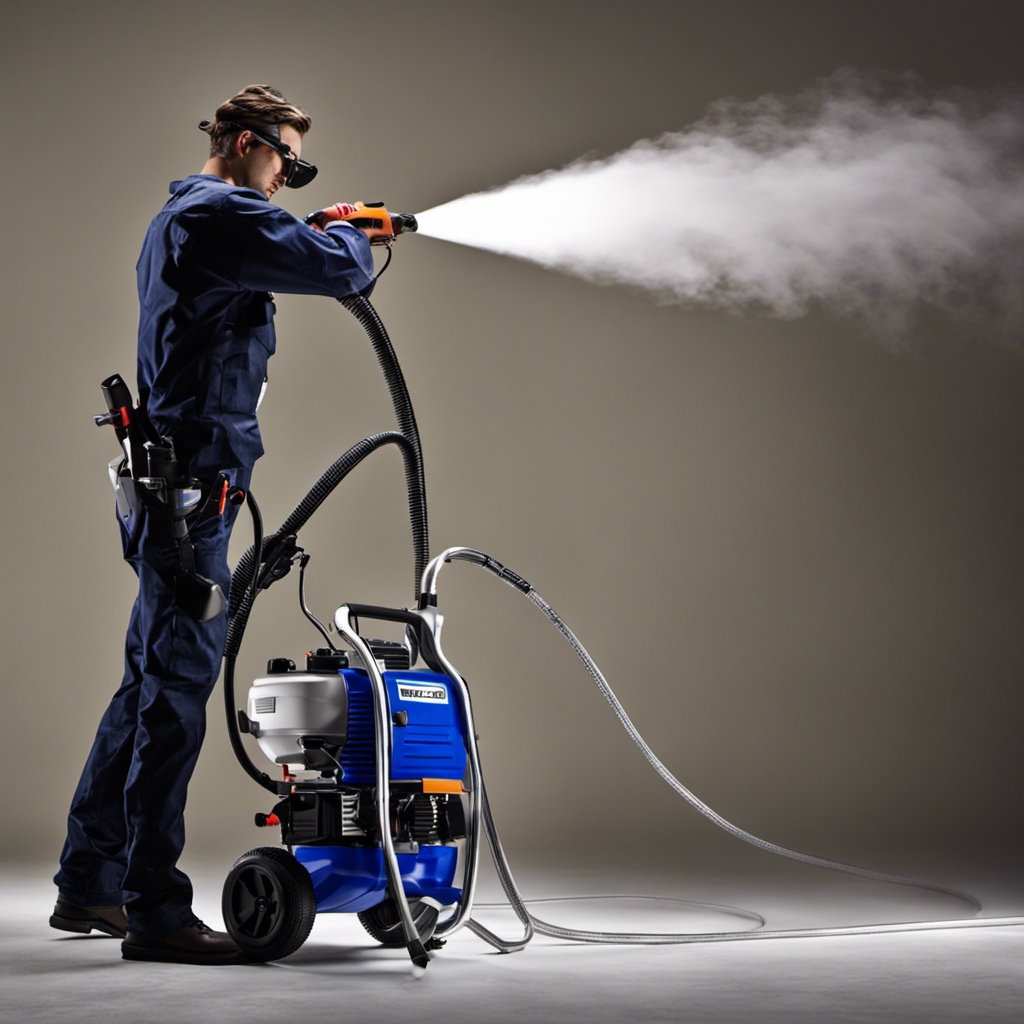
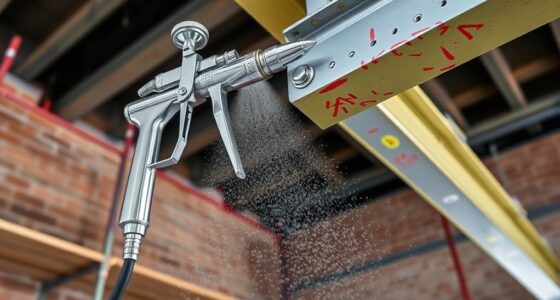
When it comes to DIY techniques, setting up your equipment correctly makes all the difference. Use a high-quality spray gun suited for elastomeric paint, and adjust the pressure according to the manufacturer’s instructions. Thin the paint if needed, but only as recommended, to prevent clogging and ensure smooth flow. Test your spray pattern on a scrap surface first to get a feel for the spray and make any necessary adjustments. Keep your hand steady and maintain a consistent distance from the wall—usually around 12 inches—to avoid drips and uneven coverage. Apply multiple thin coats rather than one thick coat, allowing each layer to dry thoroughly before adding the next. This approach provides better coverage and durability.
Safety precautions are vital when spraying elastomeric paint. Always wear protective gear, including goggles, a mask or respirator, and gloves, to prevent inhalation of fumes and contact with skin. Work in a well-ventilated area, ideally with open windows and fans to disperse airborne particles. Keep a clean workspace to avoid tripping over hoses or equipment. If you’re working on an elevated surface like a ladder or scaffolding, secure it properly and avoid overreaching. It’s also wise to read the manufacturer’s safety instructions on the paint can, as some formulations contain strong chemicals that require proper handling. Don’t rush the job—take your time to guarantee safety and quality.
Frequently Asked Questions
Can Elastomeric Paint Be Applied on Interior Walls?
Yes, you can spray elastomeric paint on interior walls. It’s great for interior decorating because it provides a durable, flexible coating that can cover wall textures and imperfections. Just guarantee proper surface prep and ventilation during application. Elastomeric paint offers excellent water resistance and crack-bridging properties, making it ideal for interior walls that need extra protection. Always follow the manufacturer’s instructions for the best results.
Is Special Equipment Necessary for Spraying Elastomeric Paint?
Yes, special spray equipment is necessary for spraying elastomeric paint. You’ll want to choose high-quality spray equipment that handles thick, elastic coatings with ease. Proper application techniques, like maintaining consistent pressure and distance, guarantee smooth, seamless coverage. Using the right tools helps you achieve a professional finish while preventing waste and drips. So, invest in suitable spray equipment and master the application techniques for maximum elastomeric paint results.
How Long Does Elastomeric Paint Last After Spraying?
Elastomeric paint typically lasts 10 to 20 years, offering excellent paint durability and surface protection. Its flexible, waterproof coating resists cracking and weathering, making it ideal for exterior surfaces. Proper surface preparation and application guarantee maximum longevity. You should expect it to maintain its protective qualities and appearance over time, especially if applied correctly and maintained periodically. This makes elastomeric paint a durable choice for long-term surface protection.
Can Elastomeric Paint Be Used on Wood Surfaces?
You can definitely use elastomeric paint on wood surfaces. It’s a smart choice because it offers excellent flexibility, which helps prevent cracking as the wood expands and contracts. To guarantee good paint adhesion, start with proper wood preparation—clean, sand, and prime the surface. When you follow these steps, the elastomeric coating will seal and protect your wood effectively, making your project durable and weather-resistant.
Does Spraying Elastomeric Paint Require a Primer?
Spraying elastomeric paint usually requires a primer application to guarantee proper adhesion and durability. You should prepare your surface first and use suitable spray equipment to apply the primer evenly. Once the primer is dry, you can proceed with spraying the elastomeric paint. This process helps prevent cracking and peeling, especially on surfaces like stucco, concrete, or wood, ensuring a smooth, long-lasting finish.
Conclusion
Spraying elastomeric paint is an effective way to protect and beautify your surfaces, just like a strong shield guards a castle. I once watched a homeowner transform their crumbling brick wall into a vibrant fortress with a simple spray. Remember, proper preparation and technique make all the difference. When you choose to spray elastomeric paint, you’re not just applying a coating—you’re investing in long-lasting protection that stands up to the elements, much like a fortress endures storms.

Franz came aboard the Paint Sprayer Zone team with a background in both journalism and home renovation. His articulate writing style, combined with a passion for DIY projects, makes him an invaluable asset. Franz has a knack for breaking down technical jargon into easy-to-understand content, ensuring that even the most novice of readers can grasp the complexities of paint sprayers.