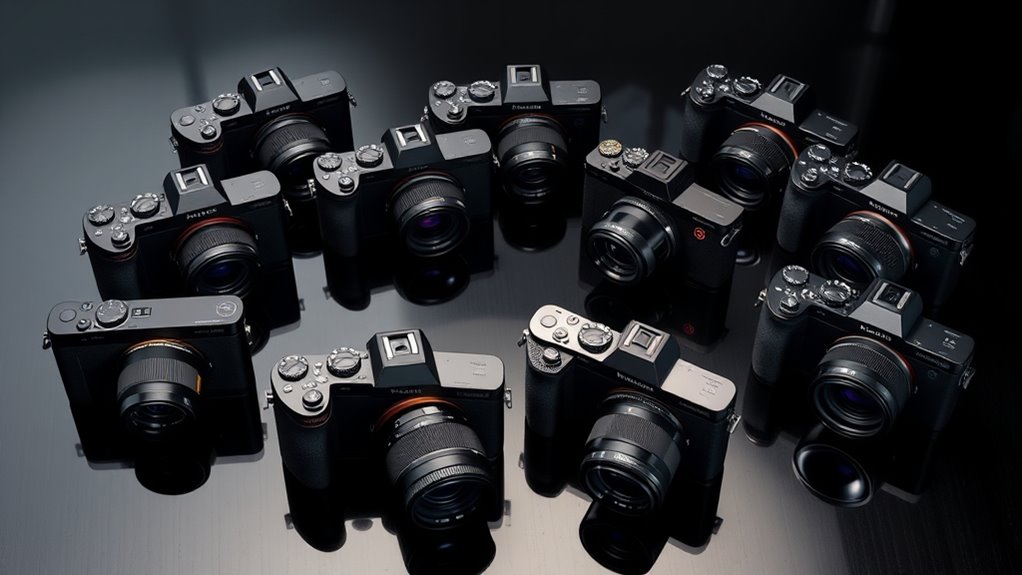

Fullframe mirrorless cameras offer a compelling combination of image quality, compact design, and advanced features, making them ideal for both enthusiasts and professionals. The Canon EOS R6 Mark II stands out as the overall best for its versatile performance and strong autofocus system. For budget-conscious buyers, the Nikon Z 5 provides excellent value without sacrificing core fullframe capabilities. Meanwhile, Sony’s Alpha a7 IV balances high-end features with user-friendly operation. These cameras differ mainly in performance focus, ease of use, and price point, creating tradeoffs that matter depending on your needs. Continue reading to see a detailed breakdown of the top options in 2026.

Get business pricing on tools and workshop supplies
- Business-only prices and quantity discounts
- Tax-exempt purchasing
- Multiple users, one account, clear invoices
Complete the kit



Key Takeaways
- The top-ranked cameras excel in autofocus and image stabilization, crucial for handheld shooting and fast action.
- Price and feature sets vary widely, with premium models offering advanced video and build quality, while entry-level options focus on core photography performance.
- Size and weight differences influence portability; compact models are better for travel, while larger bodies often include more controls.
- Sensor resolution ranges from around 24MP to over 45MP, impacting detail, cropping ability, and file size.
- The selection reveals a pattern: brands differentiate themselves through autofocus speed, video features, and ecosystem compatibility.
| Canon EOS R8 Mirrorless Camera (Body Only) |  | Best Overall Full-Frame Mirrorless Camera | Sensor Type: CMOS | Sensor Size: Full Frame (35mm) | Resolution: 24.2 MP | VIEW ON AMAZON | See Our Full Breakdown |
| Canon EOS R50 Mirrorless Camera with 18-45mm Lens Bundle |  | Best for Vloggers and Beginners | Model: EOS R50 | Lens: 18-45mm | Video Resolution: 4K | VIEW ON AMAZON | See Our Full Breakdown |
| Canon EOS RP Full Frame Mirrorless Camera with 26.2MP, 4K Video, Wi-Fi, Bluetooth, Vari-Angle Touch LCD |  | Best Compact Full-Frame for Versatility | Sensor Type: CMOS | Sensor Resolution: 26.2 MP | Sensor Size: Full Frame (35mm) | VIEW ON AMAZON | See Our Full Breakdown |
| Canon EOS R6 Mark II Mirrorless Camera RF24-105mm F4-7.1 IS STM Lens Kit |  | Best for Enthusiast and Professional Shooting | Sensor: 24.2 MP full-frame CMOS | Processor: DIGIC X | ISO Range: 100-102400, expandable to 204800 | VIEW ON AMAZON | See Our Full Breakdown |
| Canon EOS R100 Mirrorless Camera with RF-S 18-45mm Lens Bundle |  | Best Entry-Level Full-Frame for Beginners | Sensor: 24.1 MP APS-C CMOS | Processor: DIGIC 8 | Lens: RF-S 18-45mm | VIEW ON AMAZON | See Our Full Breakdown |
| Nikon Z 6II Mirrorless Full-Frame Camera |  | Best Overall Full-Frame Mirrorless Camera | Resolution: 24.5MP | Video Resolution: 4K UHD at 60p | Continuous Shooting Speed: 14 FPS | VIEW ON AMAZON | See Our Full Breakdown |
| Nikon Z 5 Full-Frame Mirrorless Camera |  | Best Value Full-Frame Mirrorless Camera | Sensor Resolution: 24.3MP | Video Recording: 4K/30p | Autofocus: Eye-Detection Autofocus | VIEW ON AMAZON | See Our Full Breakdown |
| Canon EOS R6 Mark II Mirrorless Camera (Body Only) |  | Best for High-Speed Action and Professional Video | Sensor: Full-Frame CMOS, 24.2 MP | Processor: DIGIC X | Continuous Shooting: Up to 40 fps | VIEW ON AMAZON | See Our Full Breakdown |
| Sony Alpha a7 IV Mirrorless Camera with 28-70mm Lens |  | Best for Versatile Professional-Grade Imaging | Sensor: 33MP Exmor R CMOS | Image Processor: BIONZ XR | Video Resolution: 4K 60p | VIEW ON AMAZON | See Our Full Breakdown |
| Canon EOS R100 Mirrorless Camera with RF-S 18-45mm F4.5-6.3 IS STM Lens Kit |  | Best for Beginners and Travel Shooting | Sensor: 24.1 MP APS-C CMOS | Video Recording: 4K at 24 fps | Autofocus: Dual Pixel CMOS AF | VIEW ON AMAZON | See Our Full Breakdown |
| Sony Alpha a7 III Mirrorless Camera with 28-70mm Lens |  | Best Overall Full-Frame Mirrorless Camera | Sensor Type: 35mm full-frame Exmor R CMOS | Resolution: 24.2MP | ISO Range: 50 to 204,800 | VIEW ON AMAZON | See Our Full Breakdown |
| Canon EOS RP Mirrorless Camera RF24-105mm F4-7.1 IS STM Lens Kit |  | Best Compact Full-Frame Mirrorless for Versatility | Sensor Type: CMOS | Sensor Size: Full Frame (35mm) | Image Stabilization: Digital | VIEW ON AMAZON | See Our Full Breakdown |
| Sony Alpha 7 IV Full-frame Mirrorless Interchangeable Lens Camera |  | Best for High-Resolution Photography and Video | Sensor: 33MP full-frame Exmor R CMOS | Video Recording: 4K 60p 10-bit 4:2:2 | Image Processor: BIONZ XR | VIEW ON AMAZON | See Our Full Breakdown |
| Nikon Z5 II Full-Frame Mirrorless Camera |  | Best for All-Around Photography with Stabilization | Sensor Type: BSI CMOS | Sensor Size: Full Frame (35mm) | Resolution: 24.5 MP | VIEW ON AMAZON | See Our Full Breakdown |
More Details on Our Top Picks
Canon EOS R8 Mirrorless Camera (Body Only)
The Canon EOS R8 stands out as a versatile full-frame mirrorless option with a balanced mix of portability and advanced features. Its 24.2 MP CMOS sensor delivers sharp, detailed images, surpassing the resolution of the EOS R100 but not quite matching the high-end sensors of the R6 Mark II. The compact design makes it ideal for travel and street photography, while the advanced autofocus system with deep learning technology ensures accurate subject tracking, even in challenging conditions. Its 4K video capabilities are robust, matching those of pricier models like the Sony A7 IV, but without the bulk. The absence of a built-in flash and limited ISO range details are minor issues for most users. Overall, this model is perfect for enthusiasts who want a lightweight yet capable full-frame camera without the complexity of professional gear.
Pros:- Lightweight and highly portable for travel and street photography
- High-resolution 24.2 MP sensor for sharp images
- Advanced autofocus with deep learning subject detection
- Excellent 4K video recording capabilities
Cons:- ISO range details are not fully specified, limiting low-light understanding
- No built-in flash, which may inconvenience event shooters
Best for: Enthusiast photographers seeking a lightweight, high-performance full-frame camera for travel and everyday shooting
Not ideal for: Professional photographers needing extensive customization options and higher ISO performance for low-light work
- Sensor Type:CMOS
- Sensor Size:Full Frame (35mm)
- Resolution:24.2 MP
- Max Shutter Speed:1/4000 seconds
- Video Recording:4K up to 60 fps
- Viewfinder:0.39” OLED EVF, 2.36 million dots
Our verdict“This camera is ideal for dedicated enthusiasts who want a compact, capable full-frame mirrorless for versatile shooting scenarios.”
Canon EOS R50 Mirrorless Camera with 18-45mm Lens Bundle
The Canon EOS R50 makes a compelling choice for newcomers and content creators, offering a user-friendly interface combined with solid 4K video performance. Its lightweight build and included 18–45mm lens make it highly portable and versatile, perfect for vlogging or casual photography. The Dual Pixel AF, face and eye detection, along with vertical video support, directly target vloggers aiming for quick, high-quality content. Compared with the EOS R100, it adds more advanced autofocus features, but it still lacks the professional-level controls or extensive lens options seen in higher-tier models. Its simplicity and affordability make it ideal for beginners, although it might fall short for those requiring more manual control or creative flexibility.
Pros:- Lightweight and easy to operate for new users
- Reliable 4K video with in-camera stabilization
- Versatile 18–45mm lens suited for multiple shooting styles
- In-camera creative tools and vertical video support
Cons:- Limited advanced features for professional photographers
- Bundled lens offers less aperture flexibility for low-light situations
Best for: Vloggers and beginner photographers starting their full-frame journey
Not ideal for: Experienced professionals needing extensive customization and a broader lens ecosystem
- Model:EOS R50
- Lens:18-45mm
- Video Resolution:4K
- Features:Dual Pixel AF, face/eye detection, vertical video, creative assist
- Suitable for:Vloggers, beginners
Our verdict“This camera is perfect for entry-level content creators looking for an approachable, portable full-frame option with strong video features.”
Canon EOS RP Full Frame Mirrorless Camera with 26.2MP, 4K Video, Wi-Fi, Bluetooth, Vari-Angle Touch LCD
The Canon EOS RP offers a lightweight, full-frame experience at a more accessible price point, making it a favorite for those transitioning into full-frame photography. Its 26.2 MP CMOS sensor provides high-resolution images that rival more expensive models like the Sony A7 III, though it lacks some of the speed and advanced autofocus features. The vari-angle touchscreen enhances vlogging and creative angles, and its compatibility with RF and EF/EF-S lenses broadens versatility. However, the camera’s very low weight—possibly a typo—raises questions about durability and battery life, which are typical tradeoffs for its size. Overall, it’s well-suited for hobbyists and travel photographers who prioritize size and image quality over relentless speed or ruggedness.
Pros:- Compact and lightweight, easy to carry
- High-quality 26.2 MP sensor for detailed images
- Vari-angle touchscreen ideal for vlogging
- Broad lens compatibility with RF and EF/EF-S lenses
Cons:- Potentially questionable weight measurement (4.54 g) suggests a typo
- Limited info on battery life and durability
- Requires an adapter for EF/EF-S lenses, adding complexity
Best for: Travel enthusiasts and hobbyists wanting a lightweight, full-frame camera with flexible lens options
Not ideal for: Action shooters or professionals needing rugged build quality and long battery life
- Sensor Type:CMOS
- Sensor Resolution:26.2 MP
- Sensor Size:Full Frame (35mm)
- Maximum Video Resolution:4K UHD
- Viewfinder:Electronic
- Screen Size:3 inches
Our verdict“This camera fits hobbyists seeking a portable full-frame with flexible lens options and good video features, though it may lack durability for intense use.”
Canon EOS R6 Mark II Mirrorless Camera RF24-105mm F4-7.1 IS STM Lens Kit
The Canon EOS R6 Mark II combines a robust 24.2 MP full-frame sensor with fast autofocus and high-speed shooting, making it suitable for serious enthusiasts and professionals. Its dual pixel CMOS AF II with 1053 zones, including animal and vehicle detection, outperforms many entry-level options like the EOS R8 in autofocus precision and speed. The camera’s ability to shoot up to 12 fps with mechanical shutter and 40 fps electronically makes it a versatile choice for action and wildlife photography. While its price is steep compared to more beginner-friendly models, the feature set justifies it for those who need speed, reliability, and advanced subject tracking. However, its bulk and complexity mean it’s less suitable for casual shooters or those new to full-frame gear.
Pros:- High-resolution 24.2 MP sensor for detailed images
- Fast continuous shooting up to 12 fps
- Advanced autofocus with deep learning subject detection
- Excellent for action, wildlife, and event photography
Cons:- High price point may deter amateurs
- Complex features require learning curve
- Bulkier design compared to compact models
Best for: Professional or enthusiast photographers needing fast, reliable autofocus and high-speed shooting
Not ideal for: Casual users or hobbyists who prefer lightweight, simple cameras for occasional shooting
- Sensor:24.2 MP full-frame CMOS
- Processor:DIGIC X
- ISO Range:100-102400, expandable to 204800
- Continuous Shooting:12 fps with mechanical shutter
- Autofocus:Dual Pixel CMOS AF II with 1053 zones
- Special Features:Automatic subject detection including animals and vehicles
Our verdict“This camera excels for serious shooters demanding speed, precision autofocus, and full-frame quality, though it may be overkill for casual use.”
Canon EOS R100 Mirrorless Camera with RF-S 18-45mm Lens Bundle
The Canon EOS R100 is tailored for newcomers stepping into full-frame photography, combining a 24.1 MP APS-C sensor with user-friendly controls. While technically not full-frame, its APS-C sensor offers a similar look and is a practical choice for beginners. Its DIGIC 8 processor supports decent image quality and 4K video, though with some crop in video mode, similar to the R50. The included RF-S 18–45mm lens makes it versatile for everyday shooting, especially for those just starting out. Its straightforward interface and Wi-Fi connectivity make it accessible for new users, but its limited low-light performance and absence of in-body stabilization can be drawbacks for those seeking more creative control or better low-light results. Overall, it provides a gentle entry into full-frame photography without overwhelming new users.
Pros:- User-friendly interface suitable for beginners
- Versatile 18-45mm zoom lens with image stabilization
- High-quality 24.1 MP APS-C sensor with a full-frame look
- Supports 4K video recording
Cons:- Limited low-light performance due to sensor and aperture
- No in-body image stabilization
- Cropping in 4K video reduces field of view
Best for: Beginners and casual photographers wanting an easy-to-use full-frame or near-full-frame experience
Not ideal for: Advanced shooters requiring extensive manual controls and superior low-light capabilities
- Sensor:24.1 MP APS-C CMOS
- Processor:DIGIC 8
- Lens:RF-S 18-45mm
- Video:4K 24p, Full HD 60p
- Connectivity:Wi-Fi, Bluetooth
- Viewfinder:2.36m-Dot OLED EVF
Our verdict“This camera offers an approachable entry point into full-frame style photography for new users, despite some limitations in advanced features.”
Nikon Z 6II Mirrorless Full-Frame Camera
The Nikon Z 6II stands out for its balanced combination of high-resolution imaging, fast shooting, and superior video quality, making it suitable for professionals who need both stills and video capabilities. Compared with the Sony a7 IV, the Z 6II offers slightly better low-light performance and dual card slots, but it comes at a higher price and with a more complex learning curve. Its 24.5MP sensor provides excellent detail, especially in low-light settings, while the 14 FPS burst speed suits fast-paced photography. The 4K UHD 60p video with full pixel readout is a major advantage for videographers, though the need for an FTZ adapter for F-mount lenses adds an extra step. This camera’s versatility makes it a strong choice for hybrid shooters willing to invest in its ecosystem.
Pros:- High-resolution 24.5MP sensor with excellent low-light performance
- Fast continuous shooting at 14 FPS
- Outstanding 4K UHD 60p video quality with full pixel readout
- Dual card slots for flexible storage options
Cons:- Price may be prohibitive for casual users
- Requires separate purchase of FTZ mount adapter for F-mount lenses
- Complex features may have a steep learning curve for beginners
Best for: Professional photographers and videographers seeking a versatile, high-performance full-frame mirrorless camera.
Not ideal for: Casual users or beginners who may find the complex features and higher price overwhelming.
- Resolution:24.5MP
- Video Resolution:4K UHD at 60p
- Continuous Shooting Speed:14 FPS
- Sensor Type:BSI CMOS
- Mount Compatibility:NIKKOR Z, F-mount with FTZ adapter
- Buffer Capacity:3.5x more than Z 6
- Card Slots:CFexpress/XQD and UHS-II SD
- Connectivity:USB-C for power and charging
- Vertical Grip Compatibility:Yes
Our verdict“This camera is best suited for experienced enthusiasts and professionals who need robust photo and video capabilities without compromise.”
Nikon Z 5 Full-Frame Mirrorless Camera
The Nikon Z 5 offers impressive image quality in a compact package, making it ideal for enthusiasts stepping up to full-frame without a hefty price tag. It provides a 24.3MP sensor, in-body 5-axis stabilization, and solid 4K video—features comparable to the Sony a7 IV but at a lower cost. While it lacks the high burst rate of the Z 6II and doesn’t support professional-grade video at higher frame rates, it still delivers reliable performance for everyday shooting and casual videography. The camera’s lighter body and in-body stabilization make it accessible for travel and daily use, though its limited video frame rate options might disappoint advanced videographers. Overall, the Z 5 is a compelling choice for those wanting quality without paying for premium features they won’t use daily.
Pros:- Compact, lightweight design for portability
- Excellent image quality with vibrant colors
- Effective in-body stabilization for steady photos and videos
- Affordable entry into full-frame mirrorless
Cons:- Limited to 4K/30p video, not suitable for high-frame-rate needs
- No built-in flash for spontaneous shooting
- Price may still be high for casual users
Best for: Amateur to enthusiast photographers seeking a full-frame camera with great features at an affordable price.
Not ideal for: Pro photographers or videographers demanding high-speed burst shooting and advanced video options.
- Sensor Resolution:24.3MP
- Video Recording:4K/30p
- Autofocus:Eye-Detection Autofocus
- Image Stabilization:In-body 5-Axis
- Connectivity:WiFi, Bluetooth
- Build:Compact and lightweight
Our verdict“This camera makes the most sense for enthusiasts wanting full-frame quality without the high-end price or features they won’t utilize regularly.”
Canon EOS R6 Mark II Mirrorless Camera (Body Only)
The Canon EOS R6 Mark II excels in fast-paced shooting thanks to its 24.2 MP sensor and 40 fps burst rate, surpassing the Sony a7 IV’s speed for action photography. Its advanced autofocus, with eye and face detection for humans and animals, rivals Nikon’s Z 6II but adds the benefit of a versatile 6K/4K video recording suite. While its weight and complexity may challenge beginners, professionals will appreciate the seamless connectivity and robust build. Compared to the Sony Alpha a7 IV, the R6 II offers more extensive video options, but at a premium price and increased bulk. This camera’s balance of speed, autofocus, and video makes it a top choice for sports, wildlife, and videography professionals who demand versatility.
Pros:- High-resolution full-frame sensor for sharp images
- Fast autofocus with subject detection
- Excellent video options including 6K and high-frame-rate 4K
- Seamless wireless and wired connectivity
Cons:- High-end price point may be prohibitive
- Heavy and bulky for portable use
- Complex features can be overwhelming for beginners
Best for: Professional sports, wildlife photographers, and videographers seeking high-speed capture and advanced video features.
Not ideal for: Casual shooters or those prioritizing ultra-compact form factors.
- Sensor:Full-Frame CMOS, 24.2 MP
- Processor:DIGIC X
- Continuous Shooting:Up to 40 fps
- Autofocus:Eye and face detection for people and animals
- Video Recording:Up to 6K and 4K at 60 fps
- Connectivity:Wi-Fi 5GHz, Bluetooth 5, USB Type-C
Our verdict“This camera is best suited for professionals who need rapid shooting, exceptional autofocus, and versatile video capabilities in a single package.”
Sony Alpha a7 IV Mirrorless Camera with 28-70mm Lens
The Sony Alpha a7 IV offers a 33MP sensor and advanced BIONZ XR processor, delivering exceptional detail and color accuracy. Its real-time Eye-AF for humans, animals, and birds ensures sharp focus across a variety of subjects, making it a favorite for portrait, wildlife, and general photography. Compared to the Canon R6 Mark II, the a7 IV emphasizes higher resolution and more extensive lens options, but it may require a slightly steeper learning curve due to its menu system. While it doesn’t match the R6 II’s burst speed, its image quality and autofocus capabilities make it a flexible all-rounder. The included 28-70mm lens adds convenience for everyday shooting, though professional users may prefer to upgrade to faster primes for specific needs.
Pros:- High-resolution 33MP sensor for detailed images
- Real-time Eye-AF for humans, animals, and birds
- Professional-grade 4K 60p video
- Variety of lens options and focus features
Cons:- Premium price may be steep for hobbyists
- Menu system can be complex for newcomers
- Burst speed lower than some competitors
Best for: Photographers who want high-resolution images with versatile autofocus for a variety of subjects.
Not ideal for: Those needing ultra-high burst speeds or advanced video features like 6K recording.
- Sensor:33MP Exmor R CMOS
- Image Processor:BIONZ XR
- Video Resolution:4K 60p
- Autofocus:Real-time Eye-AF
- Lens:28-70mm kit lens included
Our verdict“This camera is perfect for enthusiasts and professionals prioritizing image detail and autofocus versatility over speed.”
Canon EOS R100 Mirrorless Camera with RF-S 18-45mm F4.5-6.3 IS STM Lens Kit
The Canon EOS R100 is an approachable and lightweight full- or APS-C format camera designed for newcomers and casual shooters. Its 24.1MP sensor captures sharp, vibrant images, while the 4K video at 24 fps offers solid video performance for everyday use. The Dual Pixel CMOS AF provides fast, accurate focus on faces and objects, making it ideal for travel and family moments. Compared to the higher-end EOS R6 II, the R100’s simplified controls and smaller size make it more portable, but it sacrifices some advanced features like high-speed burst shooting and higher-quality video. The included RF-S 18-45mm lens is versatile for general shooting, though the narrower aperture limits low-light performance. This camera’s ease of use and compact form make it a practical choice for beginners stepping into full or APS-C mirrorless systems.
Pros:- Compact, lightweight design for portability
- High-quality 24.1 MP sensor for sharp images
- Versatile 4K video and fast autofocus
- Includes a practical kit lens for everyday shooting
Cons:- Limited aperture range (f/4.5-6.3), affecting low-light performance
- No built-in flash for quick shots
- Battery life may be limited for extended use
Best for: Beginner photographers and travelers seeking a simple, lightweight full- or APS-C mirrorless option.
Not ideal for: Advanced users or videographers needing high frame rates or professional-grade features.
- Sensor:24.1 MP APS-C CMOS
- Video Recording:4K at 24 fps
- Autofocus:Dual Pixel CMOS AF
- Lens:RF-S 18-45mm F4.5-6.3 IS STM
- Shooting Speed:6.5 fps
Our verdict“This camera is well-suited for beginners and travelers who want an easy-to-carry, capable mirrorless system without complex controls.”
Sony Alpha a7 III Mirrorless Camera with 28-70mm Lens
The Sony Alpha a7 III stands out for its high-resolution 24.2MP full-frame sensor, delivering exceptional detail that surpasses many competitors like the Nikon Z5 II, especially in dynamic range. Its fast autofocus with 693 phase-detection points means sharp images across a wide scene, ideal for both stills and action. However, its complexity and weight may challenge beginners or those seeking a lighter package. Compared to the Canon EOS RP, which is more beginner-friendly and lighter, the a7 III offers better image quality but at a higher price and with a steeper learning curve.
Pros:- High-resolution 24.2MP full-frame sensor for detailed images
- Fast autofocus with extensive coverage for sharp shots
- High ISO range enabling versatile shooting in low light
- Includes a versatile 28-70mm lens for all-around photography
Cons:- Relatively complex interface for new users
- Heavier and bulkier compared to compact models like the Canon EOS RP
Best for: Professional photographers or serious enthusiasts seeking top-tier image quality and fast autofocus.
Not ideal for: Beginners or travelers who prefer a lighter, more straightforward camera setup.
- Sensor Type:35mm full-frame Exmor R CMOS
- Resolution:24.2MP
- ISO Range:50 to 204,800
- Shutter Speed:Up to 10fps
- Autofocus Points:693 phase-detection, 425 contrast
- Included Lens:28-70mm
Our verdict“This camera is best suited for experienced photographers who prioritize image quality and autofocus speed over size and weight.”
Canon EOS RP Mirrorless Camera RF24-105mm F4-7.1 IS STM Lens Kit
The Canon EOS RP offers a remarkably lightweight and compact design, making it perfect for everyday photography and travel, especially next to bulkier options like the Sony a7 IV. Its 26.2MP sensor captures high-quality images with good detail, and the 4K video capabilities add versatility. The variable aperture (f/4-7.1) may limit low-light performance compared to fixed apertures, and the limited shutter speed range could affect fast-action shots. Compared with the Nikon Z5 II, the EOS RP’s smaller size and easier handling make it more accessible, but it compromises slightly on low-light capability and lens selection.
Pros:- Compact, lightweight design enhances portability
- Versatile 24-105mm zoom lens suitable for various scenes
- High-quality 4K video recording with effective image stabilization
- Macro mode with 0.5x magnification adds creative options
Cons:- Variable maximum aperture (f/4-7.1) limits low-light shooting
- Shutter speed range appears limited to 1/4000 seconds, possibly affecting fast-action captures
Best for: Travelers and casual photographers wanting a lightweight, all-in-one full-frame kit.
Not ideal for: Photographers needing advanced low-light performance or fast action capabilities in sports or wildlife photography.
- Sensor Type:CMOS
- Sensor Size:Full Frame (35mm)
- Image Stabilization:Digital
- Maximum Aperture:f/4-7.1
- Photo Sensor Resolution:26.2 MP
- Video Capture Resolution:4K UHD 2160p
Our verdict“Ideal for casual users and travelers who want a portable, versatile full-frame camera with good video features.”
Sony Alpha 7 IV Full-frame Mirrorless Interchangeable Lens Camera
The Sony Alpha 7 IV pushes further with a 33MP sensor, providing more detail than the a7 III and surpassing the Nikon Z5 II in resolution. Its support for 4K 60p with 10-bit color makes it a favorite for videographers, rivaling the Canon EOS R8, with richer color profiles like S-Cinetone. While it offers impressive versatility, its complexity and high price make it less appealing for casual users or those on a budget. The a7 III remains a more balanced choice for many, but the IV’s advanced video features and higher resolution cater to professionals who need maximum image fidelity.
Pros:- High-resolution 33MP sensor for ultra-detailed images
- Supports 4K 60p recording with 10-bit color for professional-quality videos
- Advanced BIONZ XR processor improves overall image quality
- Rich color profiles like S-Cinetone enhance creative options
Cons:- High cost may deter casual users
- Complex menu system could overwhelm newcomers
Best for: Professional content creators and videographers demanding high-resolution images and advanced 4K video features.
Not ideal for: Beginners or hobbyists seeking a simpler, more affordable full-frame camera.
- Sensor:33MP full-frame Exmor R CMOS
- Video Recording:4K 60p 10-bit 4:2:2
- Image Processor:BIONZ XR
- Operating Temperature:0 to 40 °C
Our verdict“This camera is best suited for seasoned professionals who prioritize maximum resolution and top-tier video features.”
Nikon Z5 II Full-Frame Mirrorless Camera
The Nikon Z5 II combines a 24.5MP full-frame sensor with in-body stabilization, making it an appealing choice for those who want reliable performance in various conditions. Its autofocus system is advanced, supporting subject detection, and it offers 4K/60p video, rivaling Sony’s a7 IV. Compared to the Sony a7 III, which has a slightly lower resolution, the Z5 II’s in-body stabilization and user-friendly interface make it more appealing for videographers and hobbyists. However, its higher price and limited lens ecosystem compared to DSLR systems could be drawbacks for some users.
Pros:- 24.5MP sensor delivers excellent image quality
- In-body stabilization reduces camera shake in handheld shots
- Fast autofocus with subject detection improves focus accuracy
- Supports 4K/60p video for high-quality content creation
Cons:- Limited lens selection compared to established DSLR systems
- Premium price might be prohibitive for entry-level users
Best for: Enthusiasts who want a balanced mix of image quality, stabilization, and ease of use in a full-frame mirrorless body.
Not ideal for: Photographers who require extensive lens options or are on a tight budget, given the premium price.
- Sensor Type:BSI CMOS
- Sensor Size:Full Frame (35mm)
- Resolution:24.5 MP
- Maximum Shutter Speed:1/8000 seconds
- Maximum Aperture:f/2.8
- Video Capabilities:4K/60p
Our verdict“Best for those seeking a versatile, stabilized full-frame mirrorless camera that balances photo and video capabilities.”

How We Picked
These cameras were selected based on a combination of performance, usability, build quality, and value for money. We prioritized models that deliver reliable autofocus, good image stabilization, and strong overall image quality suitable for a broad range of shooting styles. Price was a consideration, but we favored cameras that justify their cost with features that match their target audiences—whether beginners, enthusiasts, or professionals. Our ranking also emphasizes ease of use, durability, and system versatility, ensuring each option fills a unique role within the fullframe mirrorless landscape.
Factors to Consider When Choosing Fullframe Mirrorless Cameras
Choosing the right fullframe mirrorless camera involves understanding your specific needs and balancing various factors. From sensor performance to system ecosystem, each decision impacts your workflow and results. Here are key considerations to help clarify what matters most for your photography journey.
Sensor Resolution and Image Quality
Higher resolution sensors offer more detail and cropping flexibility but often come with larger file sizes and potentially slower processing. Consider your primary use—print, online sharing, or professional work—and select a resolution that matches your output needs. Keep in mind that sensor quality, not just megapixels, influences low-light performance and dynamic range, which are vital for versatile shooting conditions.
Autofocus and Speed
Fast, accurate autofocus is critical for capturing fleeting moments, particularly in wildlife, sports, or event photography. Look for cameras with eye-tracking, subject detection, and quick focus acquisition. A camera with robust autofocus features can significantly reduce missed shots, especially in unpredictable environments or with moving subjects.
Video Capabilities
If video is part of your workflow, prioritize models with 4K or higher resolution, good autofocus during recording, and features like log profiles or high frame rates. Remember that some cameras excel in stills but fall short in video, so align your choice with your primary use case. Also, consider the availability of ports, in-body stabilization, and audio input options.
Size, Weight, and Ergonomics
Portability can influence your shooting experience, especially if you travel often. Compact models are easier to carry but may sacrifice some controls or battery life. Ergonomic design matters for prolonged shoots—look for comfortable grips and accessible controls. Balance these factors with your intended shooting style to avoid fatigue or frustration.
Ecosystem and System Compatibility
Consider the lens ecosystem, accessories, and existing gear compatibility. Investing in a system with a broad range of lenses and accessories can save money and hassle long-term. Some brands, like Sony and Canon, offer extensive options, while others may have limited choices that influence future expandability.
Frequently Asked Questions
Is it worth paying extra for a fullframe mirrorless camera over an APS-C model?
Investing in a fullframe mirrorless camera generally results in better image quality, especially in low-light conditions and with shallow depth of field. The larger sensor captures more light and detail, which can be a significant advantage for professional work or large prints. However, fullframe models tend to be bigger, heavier, and more expensive. If you prioritize portability or are just starting out, an APS-C camera might offer a better balance of features and cost, but for serious image quality and flexibility, a fullframe system usually justifies the higher investment.
How important is in-body stabilization in a fullframe mirrorless camera?
In-body stabilization (IBIS) is a valuable feature that helps keep images sharp at slow shutter speeds and during handheld video recording. It can be a game-changer for capturing clear shots without a tripod, especially in low-light scenarios. While not all fullframe mirrorless cameras include IBIS, those that do tend to be more versatile across different shooting conditions. If you often shoot in challenging lighting or want smoother video, prioritizing models with IBIS makes sense, though it usually adds to the cost.
Should I consider lens availability when choosing a fullframe mirrorless system?
Yes, lens ecosystem and future expandability are vital considerations. Some brands, like Sony and Canon, offer extensive, high-quality lens lineups that cover most shooting styles. Others may have more limited options, which could restrict your creative possibilities or force you to adapt third-party lenses. Think about your current needs and potential future projects—investing in a system with a broad selection of native lenses can save money and frustration down the line.
Are mirrorless cameras durable enough for outdoor or professional use?
Many fullframe mirrorless cameras are built with weather-sealing and robust materials suitable for challenging environments. However, durability varies across models; some are designed specifically for rugged use, while others are more lightweight and less resistant to elements. If outdoor or professional shooting is a priority, look for cameras with sealed bodies, reinforced construction, and proven reliability under tough conditions. It’s also wise to invest in protective accessories like weather-resistant bags and filters.
How do I balance features and budget when choosing a fullframe mirrorless camera?
Balancing features and budget involves identifying your core needs—whether it’s high-resolution images, advanced video, fast autofocus, or portability—and selecting a camera that offers those within your price range. Premium models tend to include the latest tech and more durable build, but you often pay a premium. Conversely, mid-range options can deliver excellent performance at a lower cost, but may lack some advanced features. Prioritize the features that will impact your work most, and consider whether investing in a slightly more expensive model now could save money and frustration later.
Conclusion
If you’re seeking the best overall performance and versatility, the Canon EOS R6 Mark II is the clear choice for most serious photographers. For those on a tighter budget, the Nikon Z 5 offers excellent value without sacrificing core fullframe capabilities. Beginners or casual shooters will find the Canon EOS R50 or EOS R100 straightforward and easy to use. Professionals needing top-tier video or durability might lean toward the Sony Alpha a7 IV or Canon EOS R6. Ultimately, your ideal pick depends on your specific priorities—whether it’s image quality, system ecosystem, portability, or cost. This guide aims to help you match your needs with the best fullframe mirrorless camera for 2026.
Fall yard work Picks
leaf blowers
As an affiliate, we earn on qualifying purchases.