For home projects, the choice between renting and buying an airless paint sprayer is mainly a question of how often you will use one and how much work you want to take on around the spraying itself. Renting can make a capable machine accessible for a weekend without a large purchase; buying gives you control over timing and another chance to use the tool later. Neither choice removes the need to mask surfaces, practice, and clean the equipment carefully.

Get business pricing on tools and workshop supplies
- Business-only prices and quantity discounts
- Tax-exempt purchasing
- Multiple users, one account, clear invoices

Graco Magnum X5 Airless Paint Sprayer, Interior & Exterior
- ✔ Maximum pressure: 3,000 PSI
- ✔ Stated project size: Up to 10 gallons
- ✔ Hose support: Up to 75 feet

Graco Magnum 257025 Project Painter Plus Paint Sprayer
- ✔ Maximum pressure: 3,000 PSI
- ✔ Stated project size: Up to 5 gallons
- ✔ Hose support: Up to 50 feet

InoKraft NEO Airless Paint Sprayer Kit, 3000 PSI 0.26 GPM, Lightweight
- ✔ Maximum pressure: 3,000 PSI
- ✔ Maximum output: 0.26 GPM
- ✔ Stated project size: Up to about 5 gallons
Renting generally suits a one-off fence, room, or exterior job when the rental period gives you enough time to prepare and spray. Buying suits homeowners with multiple projects ahead, or those who value having the machine on hand. The comparison below focuses on cost, access, capability, finish, preparation, cleanup, storage, and repeat use so you can choose based on the work you actually plan to do.
At a Glance
| Criteria | Renting an airless paint sprayer | Buying an airless paint sprayer | Winner |
|---|---|---|---|
| Upfront cost | Rental fee and any required deposit; no long-term purchase cost | Higher initial outlay; the machine remains yours | A |
| Access and timing | Subject to availability and the reserved rental window | Available when you are ready to work | B |
| Machine choice | Depends on the rental shop’s inventory | Choose a model to match expected tasks and budget | Depends |
| Finish and speed | Can provide fast coverage on suitable projects, with results dependent on technique and setup | Can provide fast coverage after practice and careful setup | Tie |
| Preparation and learning | Preparation and practice are still required; rental time can add pressure | Time to practice without a rental clock, but learning remains necessary | B |
| Cleanup | Must be completed within the rental terms, often on a firm schedule | Can clean at your own pace, though cleaning is still required after use | B |
| Storage and maintenance | No long-term storage, but return condition requirements apply | Requires storage and routine care according to the manual | A |
| Repeat-project value | Usually better for a single, well-planned project | Can be worthwhile across several projects | Depends |
Graco Magnum X5 Airless Paint Sprayer, Interior & Exterior
The X5 earns the top spot for homeowners who expect to tackle more than one small job. Its stated capacity of projects up to 10 gallons is double the Project Painter Plus’s stated five-gallon scope, while support for up to 75 feet of hose offers more flexibility for reaching second stories or distant areas. Both Graco models provide adjustable pressure control and draw paint from a one- or five-gallon bucket, so the X5’s advantage is primarily scale and reach rather than a wholly different workflow.That extra headroom is useful when a project spans several rooms, a deck and fence, or a small home’s exterior. The listed 25-foot hose is included, with the longer supported length giving owners room to configure for bigger spaces. The tradeoff is that the X5 is still a corded, 15-pound unit and requires careful masking and flushing, like other airless systems. If your plans stop at a single modest project, the Project Painter Plus may be enough; if carrying weight is the deciding factor, the NEO is listed as lighter. But for a flexible home sprayer with room to grow, the X5 makes the strongest all-around case.
Pros:
- Stated project capacity up to 10 gallons
- Supports up to 75 feet of paint hose
- Adjustable pressure for paints and stains
- Flexible suction tube draws from one- or five-gallon containers
Cons:
- At 15 pounds, it is heavier than the listed 10-pound NEO
- The included hose is 25 feet, so greater reach may require additional hose
- Airless spraying still calls for substantial masking and post-project flushing
Best for: Homeowners and remodelers planning multiple interior or exterior jobs, including projects that benefit from extended hose reach.
Not ideal for: People painting only a small occasional item, or buyers who prioritize the lightest unit and a kit of prep accessories.
Bottom line: We recommend the X5 for homeowners who need more project capacity and hose reach than the Project Painter Plus provides.
“We recommend the X5 for homeowners who need more project capacity and hose reach than the Project Painter Plus provides.”
Graco Magnum 257025 Project Painter Plus Paint Sprayer
For a homeowner looking at a handful of manageable jobs, the Project Painter Plus keeps the useful parts of the X5’s approach while matching a smaller stated project scale. It is specified for projects up to five gallons, draws directly from one- or five-gallon buckets, and includes adjustable pressure control. That combination can simplify moving between indoor walls and outdoor items such as a shed, fence, or deck without relying on a small onboard tank.Compared with the X5, it gives up some reach and capacity: hose support is listed at up to 50 feet, versus 75 feet for the X5. Its included 25-foot hose is the same listed length as the X5’s, so the distinction matters most if you intend to extend your setup. The unit is also listed at 15 pounds, while the NEO is lighter and bundles masking supplies. For many ordinary home projects, those may not be decisive drawbacks; for a larger exterior or frequent use, the X5 is the more future-ready choice. The Project Painter Plus is a sound fit when we want Graco’s bucket-fed setup without planning around the X5’s higher project capacity.
Pros:
- Stated project capacity up to five gallons
- Supports up to 50 feet of paint hose
- Adjustable pressure control
- Flexible suction tube works with one- or five-gallon buckets
Cons:
- Less project capacity and maximum hose support than the X5
- Listed at 15 pounds, heavier than the NEO
- The supplied information does not specify a flow rate
Best for: DIY homeowners who want one adjustable sprayer for occasional indoor and outdoor projects of moderate size.
Not ideal for: Buyers planning larger repeat jobs or long hose runs, for whom the X5’s stated capacity and reach offer more headroom.
Bottom line: We see the Project Painter Plus as the balanced pick for ordinary home jobs that do not call for the X5’s additional capacity and reach.
“We see the Project Painter Plus as the balanced pick for ordinary home jobs that do not call for the X5’s additional capacity and reach.”
InoKraft NEO Airless Paint Sprayer Kit, 3000 PSI 0.26 GPM, Lightweight
The NEO stands apart by treating the purchase as a starter package, not simply a sprayer. Its stated 10.1-pound weight is lighter than either Graco, and the listed kit includes masking film, painter’s tape, a strainer, touch-up brush, cleaning tools, and spraying accessories. That can reduce the extra preparation shopping a first-time user faces. The integrated Flush-Ease valve and supplied cleaning tools are also intended to streamline flushing, although they do not remove the need to clean an airless sprayer thoroughly.On the other hand, the supplied description places it in a different class of confidence for larger jobs. It lists a maximum output of 0.26 GPM and a 25-inch hose length, while the Graco options include 25-foot hoses and explicitly describe support for longer runs. The NEO’s specifications also list dimensions that appear unusually small, so we would confirm the exact configuration before relying on those measurements. Its stated five-gallon project scale is closer to the Project Painter Plus than the X5, but the two Gracos provide clearer hose and project details. Choose the NEO when compactness and included prep gear matter most; skip it if extended reach or a clearly documented setup is central to your project.
Pros:
- Listed weight of about 10.1 pounds
- Includes masking film, painter’s tape, strainer, touch-up brush, and cleaning tools
- Adjustable use for compatible paints and stains, subject to coating requirements
- Built-in storage for the gun, hose, tip, and wrench
Cons:
- Listed output is 0.26 GPM, with no basis here for direct performance comparison to the Graco models
- The supplied 25-inch hose figure is far shorter than the Graco included hoses and should be verified
- Product details provide less clear extended-hose information than either Graco
Best for: First-time DIYers who value a lighter unit and want masking and cleanup accessories included with the sprayer.
Not ideal for: Homeowners planning high-reach exterior work or larger repeat projects who want clearly stated hose support and capacity.
Bottom line: We would choose the NEO for a lighter, accessory-rich starting setup, while favoring either Graco for better-documented reach and larger project scope.
“We would choose the NEO for a lighter, accessory-rich starting setup, while favoring either Graco for better-documented reach and larger project scope.”
As an Amazon Associate we earn from qualifying purchases.
Key Differences
The strongest case for renting is avoiding a large upfront commitment for a tool that may otherwise sit unused. That is especially persuasive for a single job, provided the rental period fits the project and the machine available suits the coating and scale of the work. The cost comparison should include the full rental window, transport, supplies, and any fees tied to late return or cleaning, rather than just the advertised daily rate.
Buying is more compelling when more projects are already on the horizon. You can practice before the main job, work in shorter sessions, and use the sprayer when your schedule allows. Those benefits come with storage, care, and the possibility that the tool is used too rarely to justify its cost. In either case, an airless sprayer does not make prep optional: overspray can reach nearby surfaces, and a rushed setup can waste paint or leave uneven coverage. For one project, rent; for recurring home maintenance, buy a suitable model.
Detailed Comparison
Upfront cost (Renting an airless paint sprayer wins — major)
Renting wins by a major margin on initial outlay: you pay for access during a defined period instead of purchasing the machine. Buying requires more cash at the start, even if it may pay off over several projects. For a one-time job, compare the total rental expense with the purchase price and realistic future use, not with an imagined series of projects.
Access and timing (Buying an airless paint sprayer wins — moderate)
Buying wins moderately for schedule flexibility because the sprayer is on hand when weather, preparation, or a free weekend aligns. A rental can work well when you have planned the job and confirmed availability, but delays can consume paid time. If the project depends on a narrow weather window, ownership reduces one scheduling constraint.
Machine choice (moderate difference)
This depends on the local rental inventory and the buyer’s ability to choose an appropriate model. A rental shop may offer a capable unit without requiring you to research long-term ownership. Buying lets you select features and capacity for expected projects, but paying for capability you will not use is poor value. Match the machine to the coatings and jobs described by its manufacturer.
Finish and speed (minor difference)
Neither rental nor ownership guarantees a better finish, so this is a tie. Both can cover broad surfaces quickly when the equipment is suitable and the operator has practiced. Distance, movement, overlap, masking, and surface preparation affect the result. A first-time user may need time to learn, regardless of where the sprayer came from.
Preparation and learning (Buying an airless paint sprayer wins — moderate)
Buying has a moderate advantage for beginners who want to practice without a rental deadline. You can test the setup on scrap material and become familiar with the controls before committing to visible surfaces. Renting still works for a novice, but practice and masking need to happen within the booked period. Ownership does not remove the learning curve.
Cleanup (Buying an airless paint sprayer wins — minor)
Buying has a minor convenience advantage because you can take the time needed to follow the manual’s cleaning process. Rental equipment still needs thorough cleaning and may need to be returned by a set time, adding pressure at the end of a long project. Neither option is low-cleanup: leftover paint and residue must be handled appropriately, and shortcuts can affect future performance or rental charges.
Storage and maintenance (Renting an airless paint sprayer wins — moderate)
Renting wins moderately because the machine does not take up space between projects, and long-term care is not your responsibility. You do need to return it in the required condition. Buying means storing it safely and following the manufacturer’s instructions for maintenance, especially after use. If storage is scarce or you dislike tool upkeep, renting avoids an ongoing burden.
Repeat-project value (major difference)
This depends on actual use. Buying can become the better value when several suitable projects are likely and the combined rental fees approach the purchase cost. Renting is usually the sounder choice when the next project is only hypothetical. Include supplies, maintenance, and storage in the ownership calculation, and account for the value of having the machine available on your schedule.
Renting an airless paint sprayer: Pros and Cons
Pros:
- Lower initial commitment for a single job
- No long-term storage or ownership care
- Useful when a suitable machine is available locally
Cons:
- Availability and rental hours constrain timing
- The booked period can pressure setup, practice, and cleanup
- Repeated rental fees can outweigh buying
Buying an airless paint sprayer: Pros and Cons
Pros:
- Available whenever your schedule allows
- Time to practice and work in stages
- Potentially better value across several planned projects
Cons:
- Higher upfront cost
- Requires storage and ongoing care
- Can be poor value if it is rarely used
Who Should Choose What
Choose Renting an airless paint sprayer if:
- You have one clearly defined project and no likely follow-up jobs.
- You can prepare surfaces and supplies before the rental period begins.
- You lack storage or prefer not to maintain equipment.
Choose Buying an airless paint sprayer if:
- You expect several suitable projects over the next few years.
- Your schedule or weather windows make flexible access valuable.
- You want time to practice and can store and care for the machine.
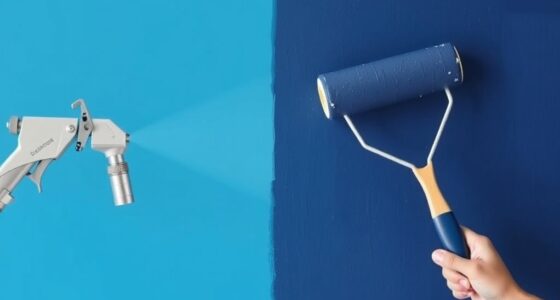
Skip both if: The area is small, has many intricate details, or is poorly suited to spraying; a brush or roller may be simpler once masking and cleanup are included.
Value for Money
Renting is usually the better value for a single, planned home project because it avoids paying for a tool that may see little future use. Check the full rental cost, including the time needed to prepare, spray, and clean, plus any transport or return requirements. If the rental window is too short, the low daily rate may not translate into a low-cost job.
Pay more to buy when repeat use is credible, not merely possible. Compare the purchase price and expected care costs with the rental fees for those specific future jobs. Ownership also brings schedule freedom and practice time, which matter to a first-time user or a homeowner coordinating work around weather. If you cannot name the next project or have nowhere to store the machine, renting remains the stronger value.
Final Verdict
For most homeowners tackling one project, rent an airless sprayer after confirming that the machine and rental period fit the job. Buy only if you have multiple suitable projects ahead or place real value on having the tool ready whenever you need it. The deciding factor is repeat use: renting saves money and space for occasional work, while buying earns its higher cost through regular use and flexible timing.
Frequently Asked Questions
Is renting an airless paint sprayer cheaper than buying?
For one project, renting usually costs less because there is no purchase outlay. Across repeated jobs, add the rental fees and related charges, then compare that total with the cost and care of owning a suitable model.
Should a beginner rent or buy an airless sprayer?
Rent if the job is a one-off and you can reserve enough time for preparation, practice, spraying, and cleanup. Buy if several projects are planned and practicing at your own pace is valuable enough to justify the upfront cost.
Does buying a sprayer produce a better finish?
No. Ownership alone does not improve the finish. Suitable equipment, careful surface preparation, masking, and practiced technique matter more than whether the sprayer is rented or owned.
When should I skip an airless sprayer?
Consider a brush or roller for small areas, detailed trim, or projects where extensive masking and cleanup outweigh faster coverage. The best tool depends on the surface and job size.