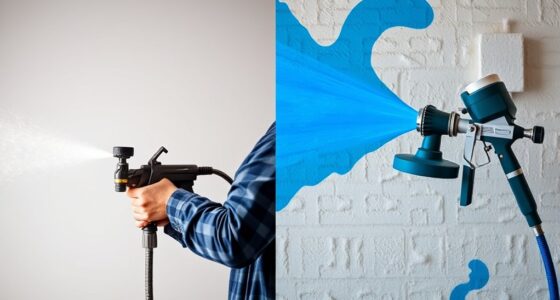
To prevent rust and corrosion in sprayers, choose models made from corrosion-resistant materials like stainless steel, and clean your equipment thoroughly after each use. Regularly rinse, dry, and inspect for signs of rust to catch problems early. Applying a protective oil or coating can add extra defense. Proper maintenance combined with quality materials guarantees your sprayer lasts longer. Keep going to discover more tips on keeping your sprayer in top shape.
Key Takeaways
- Select sprayers made from corrosion-resistant materials like stainless steel.
- Clean and thoroughly dry the sprayer after each use to prevent moisture buildup.
- Apply protective coatings or corrosion inhibitors to metal surfaces regularly.
- Inspect for rust signs early and address small spots with rust remover or sanding.
- Perform routine maintenance, including cleaning and inspection, to prolong sprayer lifespan.
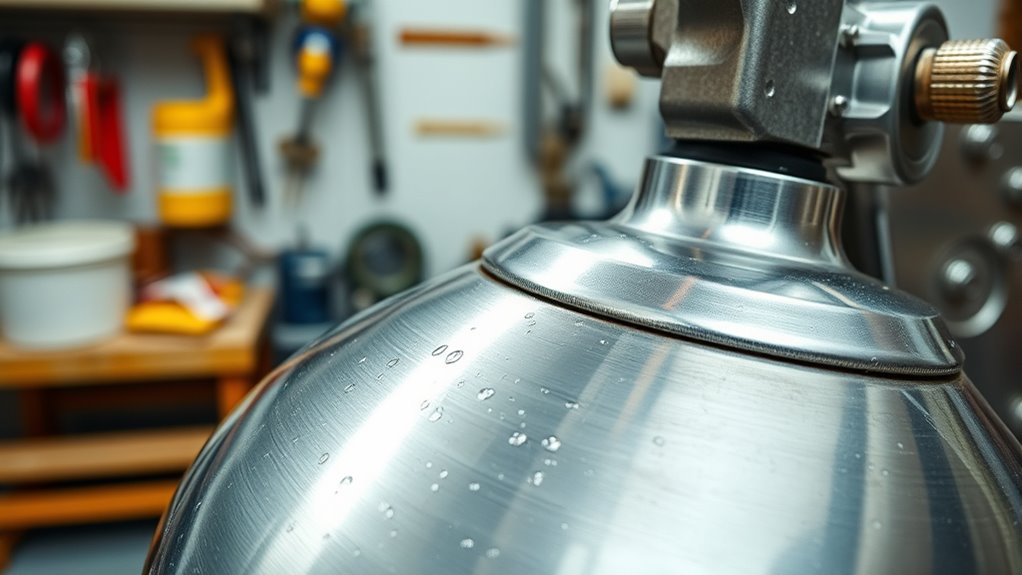
Rust and corrosion can quickly damage your sprayer if you don’t take proper precautions. To keep your equipment functioning efficiently and extend its lifespan, paying attention to maintenance tips and material selection is essential. The first step is understanding how the materials used in your sprayer influence its susceptibility to rust. Stainless steel, for example, is more resistant to corrosion compared to plain steel or aluminum. When choosing your sprayer, prioritize models made from corrosion-resistant materials, especially if you’ll be using it frequently or with liquids that promote rust formation. Investing in a high-quality sprayer with durable materials can save you time and money in repairs later on.
Regular maintenance is key to preventing rust buildup. After each use, thoroughly clean the sprayer, removing any residual chemicals or liquids that could accelerate corrosion. Use a soft brush or cloth to scrub away debris and rinse all parts with clean water. Dry every component meticulously, as moisture is a primary catalyst for rust. Applying a light coat of oil or a corrosion inhibitor on metal surfaces can further protect against moisture exposure. Periodically inspecting your sprayer for signs of rust or corrosion allows you to catch problems early before they become severe. Addressing small spots with a rust remover or gentle sanding can prevent the corrosion from spreading. Additionally, using corrosion-resistant materials can significantly enhance the durability and longevity of your sprayer, especially in challenging environments.
Frequently Asked Questions
How Often Should I Inspect My Sprayer for Rust?
You should inspect your sprayer for rust at least once a month. An inspection schedule like this helps catch early signs of rust or corrosion. During each check, clean all parts thoroughly and dry them well. Follow rust prevention tips such as applying a protective coating or storing the sprayer in a dry place. Regular inspections keep your sprayer in top shape and extend its lifespan considerably.
Can I Use Rust Inhibitors on Sprayer Components?
Yes, you can use rust inhibitors on sprayer components to prevent corrosion. Apply the rust inhibitors specifically designed for metal parts, ensuring you cover all vulnerable areas. Follow the manufacturer’s instructions for proper use and reapplication intervals. Regularly inspecting your sprayer and using rust inhibitors helps extend its lifespan and keeps it functioning efficiently. Just make sure to choose a compatible product for your sprayer’s materials.
What Types of Liquids Are Most Corrosive to Sprayers?
You might worry about damaging your sprayer, but certain liquids are more corrosive, especially those with strong acids or alkalis. These chemicals can compromise material compatibility and reduce chemical resistance, leading to rust and corrosion. For example, acidic pesticides or alkaline cleaning solutions attack sprayer components quickly. Always check the chemical resistance of your sprayer’s materials to make sure of compatibility, and consider using corrosion-resistant materials for highly corrosive liquids.
Are There Eco-Friendly Options to Prevent Corrosion?
Yes, you can use eco-friendly options like biodegradable coatings and natural rust preventatives to stop corrosion. These products are designed to protect your sprayers without harming the environment. You simply apply the biodegradable coatings to the metal surfaces, creating a protective barrier, or use natural rust preventatives like vegetable oils or plant-based oils. These options are safe, effective, and sustainable, helping you maintain your sprayer’s longevity responsibly.
How Does Temperature Affect Rust Formation in Sprayers?
A stitch in time saves nine. Temperature plays a vital role in rust formation in sprayers. When temperatures fluctuate, they cause condensation, increasing moisture levels inside your equipment. This moisture promotes rust development, especially if the sprayer isn’t thoroughly dried after use. To prevent this, store your sprayer in a stable, dry environment and avoid exposing it to extreme temperature changes, which can accelerate corrosion.
Conclusion
So, after all that effort to prevent rust and corrosion, it’s almost funny how a little rinse and proper storage can save your sprayer from a rusty demise. You’d think neglect would be the only culprit, but nope—simple habits make all the difference. Irony of it all? The best way to keep your sprayer shiny and new is to treat it like a delicate treasure, not a forgotten tool gathering dust. Keep it clean, and it’ll thank you!

Franz came aboard the Paint Sprayer Zone team with a background in both journalism and home renovation. His articulate writing style, combined with a passion for DIY projects, makes him an invaluable asset. Franz has a knack for breaking down technical jargon into easy-to-understand content, ensuring that even the most novice of readers can grasp the complexities of paint sprayers.