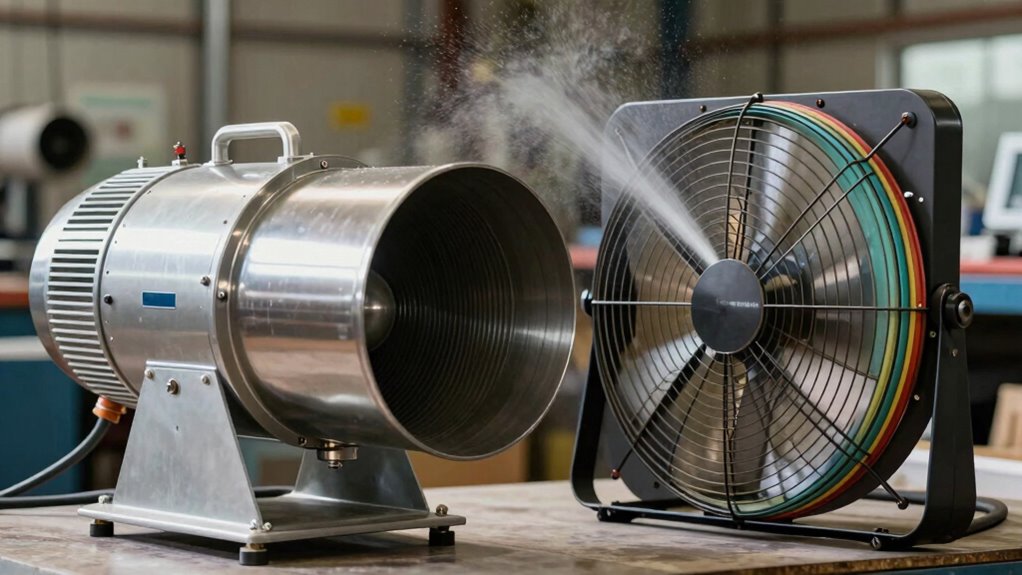
If you want to remove overspray effectively, air scrubbers are your best choice. They’re designed for larger or ongoing projects and feature HEPA filters or activated carbon that trap tiny particles and airborne contaminants. Box fan filters are more budget-friendly and work for quick, small tasks but aren’t as effective for persistent overspray. To discover which option suits your needs best and how they compare, keep exploring the details.
Key Takeaways
- Air scrubbers use HEPA filters or activated carbon for more effective removal of overspray particles.
- Box fan filters are less efficient at capturing tiny overspray particles compared to dedicated air scrubbers.
- Air scrubbers are designed for continuous, large-scale air purification, ensuring sustained overspray removal.
- Box fan filters are suitable for quick, small-scale projects but may not fully eliminate overspray.
- Overall, air scrubbers provide more reliable and comprehensive overspray removal than DIY box fan filters.
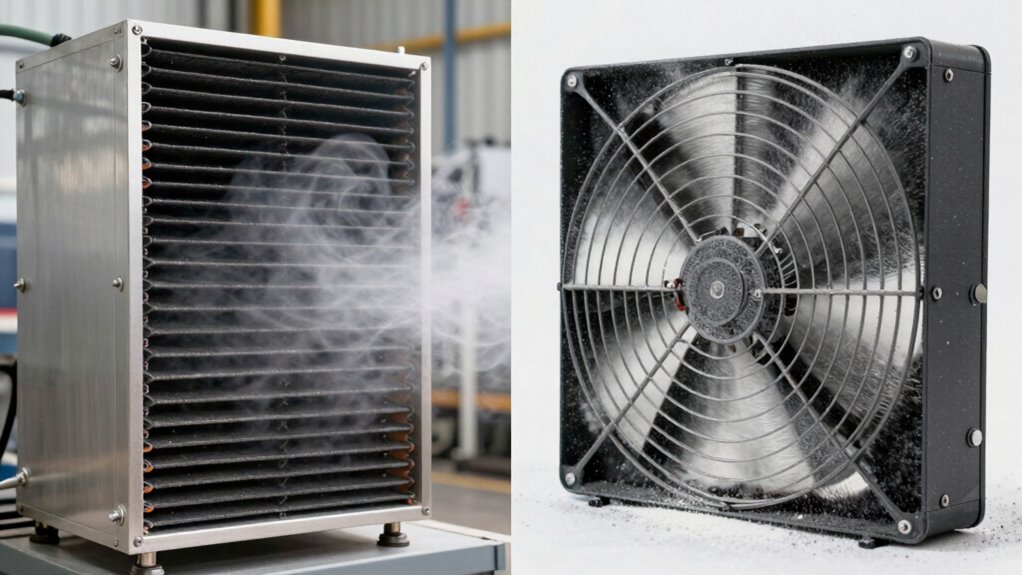
When it comes to improving indoor air quality, many people wonder whether air scrubbers or box fan filters are more effective. If you’re trying to reduce overspray and airborne particles, understanding the strengths and limitations of each option is essential. Air quality plays a significant role in your comfort and health, especially if you’re working on projects that generate dust, paint fumes, or other pollutants. Cost effectiveness also matters because you want a solution that delivers results without breaking the bank.
Air scrubbers are designed specifically for air purification. They use HEPA filters or activated carbon to trap tiny particles, including overspray, mold spores, and dust. Because they’re built for continuous operation, they often provide higher air quality over time, especially in larger spaces. While the upfront cost of a good air scrubber can be higher, they tend to be more cost-effective in the long run because they require less frequent filter replacement and maintenance. Plus, their capacity to filter out a broad range of airborne contaminants makes them a reliable choice for maintaining cleaner indoor air, especially during prolonged projects. Additionally, they typically feature higher CADR ratings, which indicates their efficiency at removing airborne pollutants.
Air scrubbers provide continuous, high-quality filtration for larger spaces, making them a cost-effective choice over time.
Box fan filters, on the other hand, are a more budget-friendly and DIY approach. You attach a high-quality filter—often a MERV-rated filter—to a standard box fan. When turned on, the fan pulls air through the filter, trapping overspray and dust particles. This option is highly portable and easy to set up, making it a popular choice for quick, short-term tasks. However, box fan filters generally have lower filtration capacity compared to dedicated air scrubbers. They might not effectively remove the tiniest particles or provide the same level of continuous air purification, especially in larger or poorly ventilated spaces.
In terms of cost effectiveness, box fan filters are attractive because of their low initial investment and simple operation. But if you’re working on a large project or need a consistent, high-quality air filtration, investing in an air scrubber could save you money over time by reducing the need for additional cleanup or health-related issues caused by lingering pollutants. Air scrubbers also tend to be more durable and capable of filtering a wider spectrum of airborne contaminants, making them a better long-term investment for maintaining good air quality.
Ultimately, your choice depends on your specific needs, budget, and the size of the space you’re working in. If you’re tackling a small project or need a quick fix, a box fan filter might suffice. For ongoing or larger-scale work where air quality is critical, an air scrubber offers better performance and overall cost effectiveness.
Frequently Asked Questions
Can Air Scrubbers Handle Heavy Overspray During Large Projects?
Yes, air scrubbers can handle heavy overspray during large projects, especially if they’re HVAC compatible and have high filtration efficiency. You should choose models with HEPA filters to effectively eliminate fine particles. Proper placement and continuous operation ensure maximum overspray removal. Keep in mind, their effectiveness depends on the unit’s capacity and filtration quality, so investing in a professional-grade air scrubber will give you the best results for heavy overspray situations.
How Loud Are Air Scrubbers Compared to Box Fan Filters?
Air scrubbers tend to be louder than box fan filters, especially at higher fan speeds. You’ll notice increased noise levels as you boost the airflow, which can be disruptive during quiet tasks. Box fan filters usually operate more quietly at lower speeds, making them a better choice if noise is a concern. If you need powerful filtration without much noise, consider adjusting the fan speed or choosing a quieter model.
What Is the Maintenance Requirement for Each Device?
You’ll need to replace filters every 3 to 6 months to keep air scrubbers and box fan filters effective. Air scrubbers tend to be more durable, often lasting several years with proper maintenance, while box fans require regular cleaning of filters and blades. Regular filter replacement ensures peak performance and prolongs device life, so check manufacturer guidelines and stay consistent with maintenance to get the best results.
Are Air Scrubbers Effective in Removing Chemical Odors?
Yes, air scrubbers are effective in removing chemical odors through their filtration systems, which capture and neutralize airborne pollutants. Their effectiveness in chemical odor mitigation depends on the unit’s filter quality, such as activated carbon layers, designed specifically for odor removal. You’ll notice improved air quality quickly, making air scrubbers a reliable choice for tackling persistent chemical smells, especially in enclosed or poorly ventilated spaces.
Which Option Is More Cost-Effective Long-Term?
Think of choosing between air scrubbers and box fan filters like planting a garden. While the initial investment in an air scrubber may be higher, it’s like planting a sturdy tree that offers long-term benefits, making it more cost-effective over time. A box fan filter is like a quick-bloom flower—cheaper upfront but less durable. For lasting value, the air scrubber’s cost comparison favors it in the long run.
Conclusion
When deciding between air scrubbers and box fan filters, consider their effectiveness for overspray removal. Air scrubbers, with HEPA filters, can remove up to 99.97% of airborne particles, making them highly efficient. Box fans with filters are more affordable but less effective, capturing fewer particles. If you want cleaner air quickly, investing in an air scrubber is the smarter choice. Remember, choosing the right tool can make all the difference in maintaining a healthier environment.