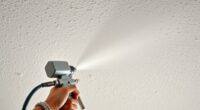
To tackle air bubbles in your paint line, start by checking your paint’s viscosity—too thick or thin can trap air. Make certain your equipment, like spray guns and hoses, is clean and well-maintained, with no worn seals or blockages. Handle the paint gently during mixing and transfer to prevent air from entering. Adjust spray pressure if needed, and perform small tests to spot issues early. For more tips on avoiding bubbles, keep exploring to get your finish flawless.

Get business pricing on tools and workshop supplies
- Business-only prices and quantity discounts
- Tax-exempt purchasing
- Multiple users, one account, clear invoices
Key Takeaways
- Maintain proper paint viscosity to prevent air entrapment during application.
- Regularly clean and inspect spray equipment to avoid debris and worn seals that introduce air.
- Use gentle mixing techniques to minimize air incorporation during paint transfer.
- Adjust spray pressure settings to reduce agitation and bubble formation.
- Conduct small test runs to identify and address bubbles before full-scale application.
Air bubbles in a paint line can cause serious issues, compromising the finish quality and durability of your coating. These tiny pockets of air disrupt the smooth application of paint, leading to an uneven surface and potential defects that can be costly to correct. To effectively address this problem, you need to understand its root causes, especially how paint viscosity and equipment maintenance play essential roles. When paint viscosity is too low, the paint becomes too thin, making it easier for air to become trapped during spraying or brushing. Conversely, if the viscosity is too high, it can create resistance within the equipment, increasing the chances of air incorporation as the paint is pumped through the lines. Striking the right balance in paint viscosity is key to minimize air entrapment and achieve a flawless finish.
Proper paint viscosity balance is essential to prevent air bubbles and achieve a smooth, durable finish.
Equipment maintenance is equally critical in preventing air bubbles. Dirty or poorly maintained spray guns and hoses are common culprits, as residual paint, debris, or worn seals can introduce air into the system. Regular cleaning and inspection of your equipment ensure that no obstructions or leaks develop, which could cause air to be drawn into the line. Pay close attention to seals, filters, and nozzles, replacing worn parts promptly to maintain a tight system that minimizes air intake. Properly maintained equipment also helps maintain consistent paint flow and pressure, reducing the likelihood of air becoming trapped during application. Additionally, proper equipment calibration ensures that the spray system operates at optimal pressure and flow rates, further reducing the risk of air bubbles.
Another factor to consider is how you handle the paint during mixing and transfer. Shaking or stirring the paint vigorously can introduce air bubbles, which then get carried into the line. Instead, mix the paint gently and allow any trapped air to escape before pouring it into the spray gun or container. Using a paint strainers can also help remove larger air pockets and debris that could cause foaming or bubbling during application. Additionally, adjusting the pressure settings on your spray equipment can make a difference; too high pressure can cause paint to agitate excessively, trapping air in the process.
Lastly, always test your setup before committing to a full coat. Run a small amount of paint through the system and observe for bubbles. If you notice foam or bubbles forming, stop and troubleshoot by adjusting your paint viscosity, cleaning your equipment, or reducing pressure. By paying close attention to these details and maintaining a disciplined approach to equipment care, you’ll greatly reduce air bubbles, ensuring a smoother, more durable finish.
paint spray gun with adjustable pressure
As an affiliate, we earn on qualifying purchases.
As an affiliate, we earn on qualifying purchases.
Frequently Asked Questions
Can Using Different Paint Types Reduce Air Bubble Formation?
Using different paint types can help reduce air bubble formation because paint formulation markedly affects coating consistency. Some formulations are more prone to trapping air, especially those with high viscosity or poor flow properties. By selecting paints designed for smooth application, you improve coating consistency and minimize air bubbles. Switching to the right type of paint tailored to your specific project can make a noticeable difference in achieving a bubble-free finish.
How Does Ambient Temperature Affect Air Bubble Emergence?
You should know that ambient temperature markedly impacts air bubble emergence in your paint. Fluctuations in temperature can cause the paint to expand and contract, trapping air bubbles. Maintaining consistent temperature and humidity control helps reduce these issues. When the environment stays stable, the paint flows smoothly, and fewer bubbles form. Avoid sudden temperature changes to keep your coating flawless and prevent the need for quick fixes later on.
Are There Specific Tools to Detect Hidden Air Bubbles?
Detecting hidden air bubbles can feel like searching for a needle in a haystack, but you have powerful tools at your disposal. Ultrasonic testing is a great method, using sound waves to find those sneaky bubbles beneath the surface. Dye penetrant testing is another option, revealing surface imperfections. These tools help you spot issues early, saving time and ensuring a flawless finish every time.
What Maintenance Practices Prevent Recurring Air Bubble Issues?
You should regularly maintain your equipment by checking paint viscosity and guaranteeing proper calibration. Keeping paint at the correct viscosity prevents air bubbles caused by inconsistent flow, while proper calibration of pumps and spray guns ensures smooth operation. Clean your equipment thoroughly after each use to prevent buildup that can trap air. Consistent maintenance like this reduces the chances of recurring air bubble problems, leading to a more efficient and high-quality paint process.
Is There a Recommended Cleaning Schedule to Minimize Bubbles?
You should follow a regular cleaning schedule to minimize bubbles, including using a suitable paint additive to prevent air entrapment. Cleaning frequency depends on your production volume, but generally, cleaning the paint line daily or after each shift helps remove contaminants and buildup. Incorporating a paint additive can also improve flow and reduce bubble formation. Consistent maintenance guarantees your paint line stays clean, reducing the risk of air bubbles and maintaining high-quality finishes.
Conclusion
So, next time you marvel at a flawless paint job, remember the tiny air bubbles that could’ve ruined it all. It’s ironic how such small flaws can cause big headaches—yet often go unnoticed until it’s too late. By understanding their causes and quick fixes, you can stay ahead of the game. After all, the only bubbles you want in your paint are the ones you blow for fun, not the ones lurking in your line.
Fall yard work Picks
leaf blowers
As an affiliate, we earn on qualifying purchases.