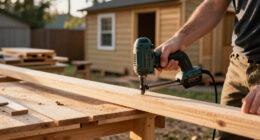
Benchtop wood planers vary most in cutterhead design, board capacity, and control over the feed rate. I rank the DEWALT DW735X as the best overall for its two-speed feed and 13-inch capacity, while the JET helical-cutterhead planer stands out for carbide inserts and the WEN PL1326 for a spiral cutterhead at a more approachable level. The main tradeoff is between smoother, quieter cutting and simpler blade systems that may cost less to maintain. Capacity, dust collection, and the support needed for long boards matter just as much as the cutterhead. Read on for the full comparison and guidance on choosing a planer that fits your projects and shop.

Get business pricing on tools and workshop supplies
- Business-only prices and quantity discounts
- Tax-exempt purchasing
- Multiple users, one account, clear invoices
Complete the kit



Key Takeaways
The DW735X is the strongest all-around choice in this group for buyers who want 13-inch capacity and two feed speeds for balancing faster stock removal with a finer finish.
Helical and spiral cutterheads separate the premium options: the JET and FindBuyTool models emphasize carbide cutting edges, while the traditional knife models offer a more straightforward blade setup.
Width is not the only capacity that matters. Most listed models handle boards around 12.5 to 13 inches wide, but your longest workpieces also require adequate infeed and outfeed support.
Several VEVOR models overlap in width but differ in setup and controls. Compare the foldable stand, two-speed feed, and cutter configuration rather than choosing by the shared 13-inch label.
WEN PL1252 and PL1326 suit different priorities: the former uses a conventional two-blade system, while the latter brings a spiral cutterhead to the same broad benchtop category.
| FindBuyTool 13-Inch Benchtop Thickness Planer with Helical Cutterhead |  | Best for a Fine Finish | Model: MB320 | Power: 120 V, 15 A corded electric | Maximum cutting width: 13 inches | VIEW LATEST PRICE | See Our Full Breakdown |
| WOODERS 13-Inch Benchtop Thickness Planer, 15A, 2000W |  | Best for Easy Manual Adjustment | Model: PL13-15AB | Motor: 2000 W, 15 A | Maximum planing width: 13 inches | VIEW LATEST PRICE | See Our Full Breakdown |
| JET JWP-13BTK 13-Inch Benchtop 3-Knife Planer |  | Best for Space-Saving Storage | Model: JWP-13BTK | Planing capacity: 13 inches | Motor power: 2 HP | VIEW LATEST PRICE | See Our Full Breakdown |
| DEWALT DW734 12-1/2-Inch Corded Benchtop Planer, 15 Amp |  | Best for Long Workpiece Support | Model: DW734 | Motor: 15 A corded electric | Cutting width: 12.5 inches | VIEW LATEST PRICE | See Our Full Breakdown |
| VEVOR 13-Inch Spiral Benchtop Thickness Planer |  | Best for Steady Board Feeding | Model: M1B-LS-3301 | Cutting width: 13 inches | Maximum workpiece height: 6 inches | VIEW LATEST PRICE | See Our Full Breakdown |
| WEN PL1252 15-Amp 12.5-Inch Two-Blade Benchtop Thickness Planer |  | Best Value for Standard-Width Stock | Motor: 15 A | Maximum board width: 12.5 in | Maximum board thickness: 6 in | VIEW LATEST PRICE | See Our Full Breakdown |
| VEVOR 13-Inch Thickness Planer with Foldable Iron Stand and Dust Exhaust |  | Best for a Flexible, Ready-to-Set-Up Workstation | Motor: 15 A, 1800 W | Maximum cutting width: 13 in (330 mm) | Cutting thickness range: 0.2–6.3 in (6–160 mm) | VIEW LATEST PRICE | See Our Full Breakdown |
| VEVOR 13-Inch Two-Speed Benchtop Thickness Planer with Three-Blade Cutter |  | Best for Choosing Between Speed and Finish | Planing width: 13 in | Maximum board thickness: 6 in | Motor: 2,000 W, 15 A | VIEW LATEST PRICE | See Our Full Breakdown |
| VEVOR 13-Inch Two-Blade Benchtop Thickness Planer |  | Best for a Heavy, Stable Planing Bed | Worktable width: 13 in | Maximum board thickness: 6 in | Motor: 2000 W, 15 A | VIEW LATEST PRICE | See Our Full Breakdown |
| JET 13-Inch Benchtop Thickness Planer with Helical Cutterhead and 30 Carbide Inserts |  | Best Premium Helical-Cutterhead Option | Planing capacity: 13 in wide × 6 in thick | Cutterhead: Helical, with 30 four-sided carbide inserts | Motor: 2 HP, 15 A, 120 V | VIEW LATEST PRICE | See Our Full Breakdown |
| WEN PL1326 15-Amp 13-Inch Spiral Benchtop Thickness Planer |  | Best for Smoother Cuts on Varied Woods | Motor: 15 A | Cutterhead: Spiral cutterhead with 26 staggered, rotatable HSS blades | Maximum board width: 13 inches | VIEW LATEST PRICE | See Our Full Breakdown |
| VEVOR 13-Inch Two-Blade Benchtop Thickness Planer |  | Best for a Broad, Stable Work Surface | Motor power: 1800 W | Amperage and input voltage: 15 A, 110 V | Cutting width: 13 inches | VIEW LATEST PRICE | See Our Full Breakdown |
| DEWALT DW735X 13-Inch Two-Speed Thickness Planer |  | Best for Feed-Speed Control | Motor: 15 A | Cutting width: 13 inches | Feed-speed options: 96 or 179 cuts per inch | VIEW LATEST PRICE | See Our Full Breakdown |
| CRAFTSMAN CMEW320 12.25-Inch Benchtop Thickness Planer, 15 Amp |  | Best for Smaller Boards and Compact Shops | Motor: 15 A | Cutting width: 12.25 inches | Maximum cutting depth: 0.13 inches | VIEW LATEST PRICE | See Our Full Breakdown |
| WOODSTARTER 13-Inch Benchtop Wood Planer with 3 HSS Blades |  | Best for Flexible Dust-Hose Connections | Motor power: 2000 W | Planing width: 13 inches | Maximum workpiece thickness: 6-3/16 inches in description; title states 6-1/4 inches | VIEW LATEST PRICE | See Our Full Breakdown |
| benchtop wood planer | Motor | Cutterhead |
|---|---|---|
| FindBuyTool 13-Inch Benchtop T | — | Four-row helical cutterhead with 40 tungsten carbide inserts |
| WOODERS 13-Inch Benchtop Thick | 2000 W, 15 A | — |
| JET JWP-13BTK 13-Inch Benchtop | — | Three knives |
| DEWALT DW734 12-1/2-Inch Corde | 15 A corded electric | Three-knife |
| VEVOR 13-Inch Spiral Benchtop | 2000 W, 110 V, 15 A | Spiral-style with 24 alloy inserts |
| WEN PL1252 15-Amp 12.5-Inch Tw | 15 A | — |
| VEVOR 13-Inch Thickness Planer | 15 A, 1800 W | — |
| VEVOR 13-Inch Two-Speed Bencht | 2,000 W, 15 A | Three-blade solid steel, HRC 55–60 |
| VEVOR 13-Inch Two-Blade Bencht | 2000 W, 15 A | Two-blade, quick-change solid steel |
| JET 13-Inch Benchtop Thickness | 2 HP, 15 A, 120 V | Helical, with 30 four-sided carbide inserts |
| WEN PL1326 15-Amp 13-Inch Spir | 15 A | Spiral cutterhead with 26 staggered, rotatable HSS blades |
| VEVOR 13-Inch Two-Blade Bencht | — | — |
| DEWALT DW735X 13-Inch Two-Spee | 15 A | — |
| CRAFTSMAN CMEW320 12.25-Inch B | 15 A | Solid steel, two-knife, quick-change |
| WOODSTARTER 13-Inch Benchtop W | — | Three HSS blades |
More Details on Our Top Picks
FindBuyTool 13-Inch Benchtop Thickness Planer with Helical Cutterhead
The FindBuyTool’s 40-insert helical cutterhead gives it a different priority from the knife-based JET JWP-13BTK: it is aimed at smooth surface quality across hardwood and softwood, rather than relying on three long knives. Its eight-position depth stop also helps when returning to a set thickness across a batch, while folding extensions provide extra support without permanently taking up bench space. The 13-inch capacity matches several alternatives in this roundup, but the 1/8-inch maximum cut per pass favors patient, incremental stock removal over aggressive dimensioning. At 70 pounds, it is more of a shop-station planer than a tool to move around often. Choose it for controlled finishing passes; skip it if portability or fast, deep cuts matter more.
Pros:- Four-row cutterhead uses 40 tungsten carbide inserts for smooth planing.
- Eight depth-stop settings support repeatable thickness across batches.
- Folding extension boards and mounting holes support stable setup.
- Overload protection helps guard the motor under heavy load.
Cons:- Maximum cut depth is 1/8 inch per pass, limiting aggressive stock removal.
- At 70 pounds, it is difficult to reposition frequently.
Best for: Woodworkers who routinely thickness boards up to 13 inches wide and prioritize a fine finish and repeatable batch settings.
Not ideal for: Small-shop users who need to lift and stow a planer often, or anyone who wants to remove substantial material in fewer passes.
- Model:MB320
- Power:120 V, 15 A corded electric
- Maximum cutting width:13 inches
- Maximum planing depth:1/8 inch
- Cutterhead:Four-row helical cutterhead with 40 tungsten carbide inserts
- Maximum rotational speed:20,000 RPM
- Feed rate:27.5 FPM
- Weight:70 pounds
Our verdict“Choose the FindBuyTool if surface finish and repeatable settings matter more than portability or fast stock removal.”
WOODERS 13-Inch Benchtop Thickness Planer, 15A, 2000W
The WOODERS puts its emphasis on straightforward thickness control: an oversized crank and marked height indicator make setting a cut easier to manage than an adjustment system without a clear reference. That practical approach suits repeat work, while the dual-edge HSS blades and two included replacements give owners spares for future changes. Compared with the FindBuyTool’s carbide-insert helical head, this conventional blade system is less focused on insert-by-insert finishing and depends on replacing blades as they wear. Its integrated dust port is useful only when connected to a vacuum, so it is not a self-contained collection system. The listed minimum workpiece height is 1/4 inch, which rules out thinner stock. I’d pick it for accessible controls and a broad 13-inch capacity, not for very thin material or a helical-style cutterhead.
Pros:- Oversized crank and marked height indicator make depth adjustments easier to track.
- 13-inch planing width accommodates broad boards.
- Two extra dual-edge HSS blades are included.
- Dust port supports connection to a vacuum system.
Cons:- Listed workpiece height range begins at 1/4 inch, excluding thinner stock.
- Dust extraction requires a separate vacuum.
- HSS blade system lacks the carbide-insert cutterhead approach of the FindBuyTool.
Best for: Hobbyist woodworkers who want a 13-inch planer with a large, readable adjustment crank and replacement blades included.
Not ideal for: Woodworkers planing stock thinner than 1/4 inch or buyers without a vacuum to connect to the dust port.
- Model:PL13-15AB
- Motor:2000 W, 15 A
- Maximum planing width:13 inches
- Workpiece height range:1/4–6.3 inches
- Cutterhead speed:10,000 RPM
- Blades:Dual-edge HSS blades; two replacement blades included
- Depth adjustment:Oversized crank with indicator marked from 0 to 1/8 inch
- Dust collection:Integrated port for vacuum connection
Our verdict“Pick the WOODERS for accessible manual adjustment and spare blades, provided your stock is at least 1/4 inch thick and you have a vacuum.”
JET JWP-13BTK 13-Inch Benchtop 3-Knife Planer
The JET JWP-13BTK stands out for a feature that matters after the work is done: vertical storage capability lets a shop reclaim floor or bench space between projects. Its folding infeed and outfeed tables and preset depth stop make it better suited to repeatable shop sessions than a bare-bones planer, while the three-knife cutterhead takes a conventional approach compared with the FindBuyTool’s helical inserts. A dual-size dust port accommodates either 2-1/2-inch or 4-inch hoses, giving more flexibility in dust-system hookups. The 13-inch capacity is shared with the WOODERS, but this JET adds a stated 2 HP motor and space-conscious storage. The tradeoffs are a corded setup, a three-knife system, and inconsistent voltage data: the product information lists both 115 V and 120 V.
Pros:- Vertical storage capability helps conserve shop space.
- Folding tables support longer workpieces and compact storage.
- Preset depth stop helps repeat thickness settings.
- Dust port accepts 2-1/2-inch and 4-inch hoses.
Cons:- Product data lists both 115 V and 120 V, creating uncertainty about the stated motor voltage.
- Three-knife cutterhead differs from the helical insert systems on the FindBuyTool and VEVOR.
- Requires a corded electrical connection.
Best for: Woodworkers with limited shop space who want a 13-inch planer that can be stored vertically between jobs.
Not ideal for: Buyers who need a cordless tool, prefer a helical cutterhead, or require unambiguous voltage specifications before purchase.
- Model:JWP-13BTK
- Planing capacity:13 inches
- Motor power:2 HP
- Voltage:Product data lists 115 V and 120 V
- Amperage:20 A
- Cutterhead:Three knives
- Cutterhead speed:9,500 RPM
- Dust port compatibility:2-1/2-inch and 4-inch hoses
- Storage:Vertical storage capability
Our verdict“Choose the JET if vertical storage and flexible dust-hose sizing matter more to your shop than a helical cutterhead.”
DEWALT DW734 12-1/2-Inch Corded Benchtop Planer, 15 Amp
The DW734’s strongest distinction is its 33.5 inches of material support, which gives longer boards more help entering and leaving the cutterhead than the compact-support setup listed for the VEVOR. Its three-knife head is specified at 96 cuts per inch, and a material removal gauge plus turret depth stop help make repeat passes easier to plan. Reversible disposable knives offer a practical second edge, but they are not intended for sharpening, so worn knives mean replacement rather than resharpening. At 12.5 inches, its capacity is slightly narrower than the 13-inch FindBuyTool, WOODERS, JET, and VEVOR models. That difference may matter for wide panels, but buyers working mostly with narrower boards may value the longer support more. This is a conventional knife-based choice, not a helical-head alternative.
Pros:- 33.5 inches of material support helps steady longer workpieces.
- Three-knife cutterhead is specified at 96 cuts per inch.
- Reversible disposable knives provide a second cutting edge.
- Material removal gauge and turret depth stop support controlled, repeatable cuts.
Cons:- 12.5-inch width is narrower than the 13-inch alternatives in this batch.
- Disposable knives are replaced rather than sharpened.
- Knife wear brings ongoing replacement needs.
Best for: Woodworkers who regularly feed long boards and want extended table support with a repeatable depth-stop system.
Not ideal for: Buyers who need the full 13-inch capacity or want knives designed to be sharpened rather than replaced.
- Model:DW734
- Motor:15 A corded electric
- Cutting width:12.5 inches
- Cutterhead:Three-knife
- Cutterhead speed:10,000 RPM
- Cuts per inch:96
- Cutting depth:0.13 inches
- Material support length:33.5 inches
- Knife type:Disposable, reversible
Our verdict“Choose the DW734 for long-board support and repeatable knife-based planing, but select a 13-inch model if your stock needs the extra width.”
VEVOR 13-Inch Spiral Benchtop Thickness Planer
The VEVOR pairs a spiral-style head with 24 alloy inserts and dual feed rollers, making it a strong fit for buyers who want a 13-inch planer with board-feeding support built into the design. Its 28.2-inch worktable is longer than the FindBuyTool’s listed 27.4-inch extended support, while compatibility with 2-inch and 4-inch dust hoses gives it useful flexibility for existing shop setups. The 2000W motor and stated 23,500 RPM speed are paired with single-speed operation, so there is no feed-speed choice for balancing finish and throughput. Compared with the FindBuyTool’s 40 tungsten carbide inserts, this model has fewer inserts and specifies alloy rather than tungsten carbide. Its 6-inch maximum workpiece height may also constrain thicker stock. It suits steady, general-purpose planing, not buyers seeking variable speed or a taller capacity.
Pros:- Spiral-style cutterhead uses 24 alloy inserts.
- Dual feed rollers support steady board movement.
- 28.2-inch worktable provides substantial workpiece support.
- Accepts 2-inch and 4-inch dust hoses.
Cons:- Single-speed operation does not allow speed adjustment.
- Maximum workpiece height is 6 inches.
- Uses 24 alloy inserts, fewer and a different stated material than the FindBuyTool’s 40 tungsten carbide inserts.
Best for: Woodworkers who want a 13-inch spiral-head planer with dual rollers, a long worktable, and dust-hose compatibility for common hose sizes.
Not ideal for: Users who need variable feed speed, plan stock taller than 6 inches, or specifically want the FindBuyTool’s 40 tungsten carbide inserts.
- Model:M1B-LS-3301
- Cutting width:13 inches
- Maximum workpiece height:6 inches
- Motor:2000 W, 110 V, 15 A
- Maximum rotational speed:23,500 RPM
- Cutterhead:Spiral-style with 24 alloy inserts
- Feed system:Dual rollers
- Worktable length:28.2 inches
- Dust hose compatibility:2-inch and 4-inch
Our verdict“Choose the VEVOR for roller-assisted feeding and flexible dust hookups, but skip it if variable speed or more than 6 inches of workpiece height is required.”
WEN PL1252 15-Amp 12.5-Inch Two-Blade Benchtop Thickness Planer
The WEN PL1252 is a straightforward choice for shop owners who mostly plane boards narrower than 12.5 inches and want useful support features without stepping up to a more elaborate cutter system. Its reversible SK5 blades give you another cutting edge before replacement, while adjustable infeed and outfeed tables help support boards and reduce the chance of snipe. Compared with the wider VEVOR 13-Inch Two-Speed Planer, the WEN gives up half an inch of capacity and has no selectable feed speeds, but its return rollers make repeated passes easier to manage. The tradeoff is a 1/8-inch maximum depth per pass, which can mean more trips through the machine when removing substantial material. At 55.6 pounds, it is also portable only in the sense that it can be moved—not especially convenient to relocate often.
Pros:- Reversible SK5 blades provide a second usable cutting edge.
- Adjustable infeed and outfeed tables help support stock through the cut.
- Workpiece return rollers simplify repeated passes.
- Predrilled base holes allow secure mounting to a bench.
Cons:- The 12.5-inch capacity is narrower than the 13-inch VEVOR models in this group.
- A maximum 1/8-inch cut per pass can require multiple passes for heavier stock removal.
- Its 55.6-pound weight makes frequent relocation inconvenient.
Best for: Home woodworkers who mainly dimension boards up to 12.5 inches wide and value reversible blades, table support, and return rollers.
Not ideal for: Furniture makers who routinely work with boards wider than 12.5 inches or need selectable feed speeds for different finish and throughput needs.
- Motor:15 A
- Maximum board width:12.5 in
- Maximum board thickness:6 in
- Maximum cuts per minute:20,000
- Feed rate:26 ft/min
- Blades:Two reversible 12.5-inch SK5 blades
- Dust port:2 in
- Weight:55.6 lb
Our verdict“Choose the PL1252 for routine planing of standard-width stock when reversible blades and practical work support matter more than extra width or variable feed speeds.”
VEVOR 13-Inch Thickness Planer with Foldable Iron Stand and Dust Exhaust
This VEVOR pairs a 13-inch planing width with a detachable iron stand, making it a practical fit for a shop that needs a planer station but cannot leave every machine permanently in place. Automatic feed and return rollers reduce the handling involved in repeated passes, while foldable extension tables offer support that can be tucked away for storage. Against the WEN PL1252, it accepts slightly wider stock and includes a stand; the WEN, however, lists a faster 26 ft/min feed rate, compared with this model’s 6 m/min. Its double-sided HSS blades offer two cutting edges, but the supplied information does not point to selectable feed speeds or a three-knife head like the other VEVOR model in this roundup. Dust extraction also depends on connecting a collector, so the included dust cover is not a substitute for active chip removal.
Pros:- 13-inch capacity accommodates wider stock than the WEN PL1252.
- Detachable iron stand provides a dedicated working height without requiring a permanent bench.
- Foldable extension tables help balance board support with compact storage.
- Automatic feed and return rollers aid repeated planing passes.
Cons:- The listed 6 m/min feed speed may limit throughput compared with faster-feeding options.
- Active dust removal requires a compatible dust collector.
- Two double-sided blades lack the three-knife cutterhead and two feed speeds of the VEVOR two-speed model.
Best for: Small-shop woodworkers who need a 13-inch planer with a stand and folding tables that can be stored between projects.
Not ideal for: Production-focused users seeking faster stock throughput, or buyers without a compatible dust collector for chip extraction.
- Motor:15 A, 1800 W
- Maximum cutting width:13 in (330 mm)
- Cutting thickness range:0.2–6.3 in (6–160 mm)
- Feed speed:6 m/min (236 in/min)
- Blade speed:8000 rpm
- Blades:Two double-sided HSS cutter blades
- Dust port:1.8 in inner diameter; 2 in outer diameter
- Stand:Detachable heavy-duty iron stand
Our verdict“Pick this VEVOR if you want a 13-inch planer packaged with a detachable stand and folding supports, and can accept its slower listed feed speed.”
VEVOR 13-Inch Two-Speed Benchtop Thickness Planer with Three-Blade Cutter
The standout here is feed-rate choice: the VEVOR’s two settings, 15 and 24 ft/min, let you favor a slower pass for finish quality or a faster one when moving through routine stock. A three-blade hardened steel cutterhead and 35 inches of table support make it the most adjustable cutting setup among the VEVOR options in this batch. Compared with the VEVOR 13-Inch Two-Blade Planer, it adds a second feed speed and a third knife, which gives buyers more control over the planing task. That added flexibility does not remove the shared limits: both are corded 110 V machines with a 6-inch maximum board thickness and a vacuum port rather than self-contained dust handling. Its 13-inch width also matches the other VEVOR models here, rather than offering extra capacity.
Pros:- Two feed speeds allow a choice between throughput and a slower finishing pass.
- Three-blade, hardened solid-steel cutterhead distinguishes it from the two-blade VEVOR models.
- Table extensions provide 35 inches of total support.
- Built-in material-removal gauge and thickness scale help monitor cuts.
Cons:- Maximum board thickness is 6 inches.
- Requires a corded 110 V AC supply.
- Dust collection depends on connecting a vacuum system.
Best for: Woodworkers who switch between faster dimensioning and slower finishing passes and want long table support for 13-inch stock.
Not ideal for: Buyers who want a compact, cordless setup, need to plane boards thicker than 6 inches, or do not have vacuum-based dust collection.
- Planing width:13 in
- Maximum board thickness:6 in
- Motor:2,000 W, 15 A
- Feed speeds:15 ft/min and 24 ft/min
- Cutterhead:Three-blade solid steel, HRC 55–60
- Table length with extensions:35 in
- Maximum rotational speed:23,500 rpm
- Power supply:110 V AC, corded
Our verdict“Choose this model over the VEVOR two-blade planer if selectable feed speeds and a three-knife cutterhead are more useful to you than a simpler cutting setup.”
VEVOR 13-Inch Two-Blade Benchtop Thickness Planer
For buyers who prioritize a substantial support surface over cutterhead complexity, this VEVOR’s cast-iron bed and 35-inch table support are the main reasons to choose it. The 13-inch worktable and adjustable extensions help keep longer boards supported as they enter and leave the cutter, while the two-blade quick-change steel head keeps the setup more straightforward than the three-knife VEVOR Two-Speed Planer. That simpler arrangement also means giving up its selectable feed rates; the supplied product data does not list a feed speed for this model. Compared with the VEVOR planer with a detachable stand, this one emphasizes a cast-iron bed rather than a bundled stand and foldable workstation. A vacuum port supports chip collection, but it still needs an external system, and the 6-inch thickness limit rules out thicker stock.
Pros:- Cast-iron bed provides a substantial surface for supporting workpieces.
- Adjustable extensions create 35 inches of total table support.
- Quick-change, two-blade solid-steel cutterhead keeps blade replacement straightforward.
- Vacuum port allows connection to a dust-collection system.
Cons:- No feed-speed specification is provided, unlike the VEVOR two-speed model.
- Maximum board thickness is limited to 6 inches.
- A dust collector or vacuum system is needed for active chip removal.
Best for: Woodworkers who want a cast-iron planer bed and extended board support for regularly surfacing long, wide stock.
Not ideal for: Users who need a stand included, selectable feed speeds, or a planer for boards over 6 inches thick.
- Worktable width:13 in
- Maximum board thickness:6 in
- Motor:2000 W, 15 A
- Cutterhead:Two-blade, quick-change solid steel
- Table support length:35 in
- Base material:Cast iron
- Input voltage:110 V
- Dimensions:27.4 × 20.7 × 18.9 in
Our verdict“Pick this VEVOR if a cast-iron bed and long table support matter more than a stand, a third blade, or variable feed speeds.”
JET 13-Inch Benchtop Thickness Planer with Helical Cutterhead and 30 Carbide Inserts
The JET is the clear step-up pick for woodworkers who value a helical cutterhead with carbide inserts over the simpler straight-knife arrangements on the WEN PL1252 and VEVOR models. Its 30 four-sided inserts can be rotated to expose a fresh edge, and the helical design is specified for smoother, quieter cutting. Fine-increment adjustment, a cut-depth gauge, and a depth stop also help make controlled passes less guesswork-heavy. The tradeoffs are meaningful: the planer is for solid wood only, its full-width maximum cut is 1/16 inch rather than 1/8 inch, and dust collection calls for at least 550 CFM. At 66 pounds, it is heavier than the WEN, and the 91 dB sound rating means “quieter” should be understood as relative to comparable cutting approaches, not silent operation.
Pros:- Thirty four-sided carbide inserts can be rotated to present fresh cutting edges.
- Helical cutterhead is designed for smoother and quieter cuts than conventional knife setups.
- Depth stop, cut-depth gauge, and fine-increment adjustment support controlled stock removal.
- Folding tables and upright storage help reduce its shop footprint.
Cons:- Limited to solid wood; it is not specified for plywood, particleboard, painted or reclaimed lumber, or end grain.
- At full 13-inch width, maximum depth of cut is 1/16 inch per pass.
- Recommended dust collection is at least 550 CFM, and its 66-pound weight makes moving it difficult.
Best for: Dedicated-shop woodworkers who plane solid lumber regularly and want rotatable carbide inserts, controlled adjustment, and a helical cut.
Not ideal for: Users who plane plywood, particleboard, painted, reclaimed, or end-grain stock, or who lack a dust collector capable of the recommended airflow.
- Planing capacity:13 in wide × 6 in thick
- Cutterhead:Helical, with 30 four-sided carbide inserts
- Motor:2 HP, 15 A, 120 V
- Cutterhead speed:9,500 RPM
- Feed rate:24.6 FPM
- Maximum depth of cut:1/8 in on boards up to 6 in wide; 1/16 in at full width
- Dust port:Fits 4 in and 2-1/2 in hoses
- Weight:66 lb
- Warranty:5-year limited warranty
Our verdict“Choose the JET if you mostly plane solid lumber and prefer the helical carbide cutterhead, but skip it if your work includes sheet goods or demanding dust-collection limits.”
WEN PL1326 15-Amp 13-Inch Spiral Benchtop Thickness Planer
The WEN PL1326 stands apart from the two-knife VEVOR M1B-LS-3301 through its 26 staggered, rotatable HSS blades. That spiral arrangement is suited to producing smoother surfaces across hard and soft woods, while rotating individual blades gives owners a way to refresh cutting edges without replacing a full knife set. Its 13-inch width and 6-inch thickness capacity cover common furniture and shop projects, and the material-removal gauge and depth stop help repeat settings between boards. The tradeoff is a maximum 1/8-inch cut per pass, so heavy stock reduction calls for multiple passes. Its 26 ft/min feed rate is also slower than the DEWALT DW735X’s faster feed option. I’d choose this WEN for finish-conscious work, not for the quickest rough milling.
Pros:- Spiral cutterhead with 26 rotatable HSS blades is designed for smoother results on varied woods.
- Accepts boards up to 13 inches wide and 6 inches thick.
- Material-removal gauge and depth stop support repeatable thickness settings.
- Adjustable tables help support boards and limit snipe.
Cons:- Maximum 1/8-inch material removal per pass makes heavy stock reduction a multiple-pass job.
- The 26 ft/min feed rate is slower than the DEWALT DW735X’s higher-speed feed setting.
- Corded operation requires a nearby power outlet.
Best for: Woodworkers who regularly plane mixed hardwood and softwood and value a smoother finish over rapid stock removal.
Not ideal for: Shop owners who need fast dimensioning of thick, rough boards or a planer they can use away from a power outlet.
- Motor:15 A
- Cutterhead:Spiral cutterhead with 26 staggered, rotatable HSS blades
- Maximum board width:13 inches
- Maximum board thickness:6 inches
- Feed rate:26 ft/min
- Maximum material removal per pass:1/8 inch
- Maximum rotational speed:10,000 RPM
- Compatible replacement blades:WEN BP510H
Our verdict“Choose the WEN PL1326 for smoother, controlled planing across different woods; choose the DEWALT DW735X if feed-speed flexibility matters more.”
VEVOR 13-Inch Two-Blade Benchtop Thickness Planer
The VEVOR M1B-LS-3301 is a worktable-first option in this group: its 28.2-inch-long surface gives boards more support than the more compact setup implied by the CRAFTSMAN CMEW320’s listed dimensions. Dual feed rollers are intended to keep stock moving steadily, while the 13-inch capacity and 6-inch maximum cutting height suit typical benchtop-planer work. Its two HSS blades and 1/8-inch adjustment increments offer a straightforward arrangement for repeatable cuts, and the dust port accepts either 2-inch or 4-inch hoses. Unlike the WEN PL1326’s spiral head, this is a conventional two-blade design, so it is less tailored to finish-focused cutting across varied grain. It also runs at a single speed, giving less control over the finish-versus-feed tradeoff than the DEWALT DW735X.
Pros:- 28.2-inch worktable provides substantial support for longer boards.
- Dual feed rollers are designed to steady workpiece movement.
- Accepts boards up to 13 inches wide and 6 inches high.
- Dust port works with both 2-inch and 4-inch hoses.
Cons:- Single-speed operation does not let users trade feed speed for a finer cut.
- Two-blade cutterhead lacks the spiral layout of the WEN PL1326.
- Aluminum base differs from the heavy-duty cast-iron base specified for the WEN PL1326.
Best for: Home-shop woodworkers who need a long support surface for feeding longer boards and already have dust hoses in 2-inch or 4-inch sizes.
Not ideal for: Finish-focused users who want a spiral cutterhead or operators who need to change feed speed for different woods and cuts.
- Motor power:1800 W
- Amperage and input voltage:15 A, 110 V
- Cutting width:13 inches
- Maximum cutting height:6 inches
- Worktable dimensions:28.2 × 13 × 6 inches
- Blade type:Two HSS blades
- Cutting rate:Up to 16,000 CPM
- Dust hose compatibility:2-inch and 4-inch
Our verdict“Pick this VEVOR for its generous worktable and compatible dust-hose options, but choose the DEWALT DW735X for more feed-speed control.”
DEWALT DW735X 13-Inch Two-Speed Thickness Planer
The DEWALT DW735X earns its place through two feed-speed settings: 96 or 179 cuts per inch let users favor faster work or a finer finish, a useful distinction from the single-speed VEVOR M1B-LS-3301. Its three-knife cutterhead and fan-assisted chip ejection make it a strong fit for a busy shop processing plenty of boards, while the included infeed and outfeed tables and extra knife set add practical support. The WEN PL1326 is the more finish-oriented alternative for buyers drawn to a spiral cutterhead, but this DEWALT offers more explicit control over cutting pace. The main compromise is portability: at 102 pounds, it is far heavier than the 57.8-pound VEVOR. Its 13-inch width and 0.13-inch maximum cutting depth suit standard thicknessing, not exceptionally wide stock or aggressive passes.
Pros:- Two feed settings provide a choice between 96 and 179 cuts per inch.
- Three-knife cutterhead is designed for longer knife life and straightforward knife changes.
- Fan-assisted chip ejection clears debris from the cutterhead.
- Includes infeed and outfeed tables, an extra knife set, and a dust hose adapter.
Cons:- At 102 pounds, it is substantially heavier than the VEVOR M1B-LS-3301.
- Corded operation ties the machine to a power outlet.
- The 13-inch width and 0.13-inch maximum cutting depth limit stock size and removal per pass.
Best for: Dedicated shop users who plane boards regularly and want to choose between a faster feed and a finer cut.
Not ideal for: Woodworkers who need to move a planer often, have limited bench space, or prefer a spiral cutterhead for finish-focused work.
- Motor:15 A
- Cutting width:13 inches
- Feed-speed options:96 or 179 cuts per inch
- Cutterhead knives:Three
- Maximum cutting depth:0.13 inches
- Weight:102 pounds
- Dimensions:24.58 × 22 × 20.97 inches
- Included components:Infeed and outfeed tables, extra knife set, dust hose adapter, and dust-ejection chute
Our verdict“Choose the DW735X if adjustable feed speed and included shop accessories matter more than easy portability or a spiral cutterhead.”
CRAFTSMAN CMEW320 12.25-Inch Benchtop Thickness Planer, 15 Amp
The CRAFTSMAN CMEW320 is the narrower-capacity choice here, topping out at 12.25 inches rather than the 13 inches offered by the WEN PL1326, VEVOR M1B-LS-3301, and DEWALT DW735X. That difference matters if your projects routinely use wide panels, but it is less limiting for furniture parts and everyday shop stock. Its reversible, double-edged high-carbon steel knives give users another cutting edge before replacement, and the vacuum port provides a direct route for dust collection. The 15-amp motor and 16,000 cuts per minute suit general hardwood and softwood dimensioning. Compared with the DEWALT DW735X, it lacks a two-speed feed choice and the listed package does not include the same set of tables and extra knives. I’d favor it for a straightforward planer footprint, not for maximum width or speed flexibility.
Pros:- Reversible, double-edged high-carbon steel knives offer a second cutting edge.
- 15-amp motor and 16,000 cuts per minute support general hardwood and softwood planing.
- Vacuum port allows connection to a dust-collection system.
- Solid-steel, quick-change cutterhead supports knife replacement.
Cons:- 12.25-inch cutting width is narrower than the 13-inch capacity of several alternatives in this roundup.
- No selectable feed-speed settings are listed, unlike the DEWALT DW735X.
- The specified maximum cutting depth is 0.13 inches per pass.
Best for: Small-shop woodworkers who mostly dimension boards narrower than 12.25 inches and want reversible knives with vacuum-port dust collection.
Not ideal for: Users who regularly plane 13-inch-wide stock or want selectable feed speeds like the DEWALT DW735X.
- Motor:15 A
- Cutting width:12.25 inches
- Maximum cutting depth:0.13 inches
- Cutterhead:Solid steel, two-knife, quick-change
- Knife material:High-carbon steel, reversible and double-edged
- Maximum rotational speed:8,000 RPM
- Cuts per minute:16,000
- Dust collection:Vacuum port
Our verdict“Choose the CMEW320 for routine planing of narrower stock with reversible knives, but move to a 13-inch model if wide boards are common in your projects.”
WOODSTARTER 13-Inch Benchtop Wood Planer with 3 HSS Blades
The WOODSTARTER TP20K’s clearest point of difference is its three-size dust port, which can connect to 1-2/5-inch, 2-1/2-inch, or 4-inch hoses. That flexibility may help a shop use an existing vacuum setup, while the 13-inch width and 29-inch worktable suit longer boards. Its three HSS blades and 21 ft/min feed rate make it a conventional, steady-feed alternative to the WEN PL1326’s spiral head; the WEN is the stronger fit when a spiral cutterhead is the priority, while this model emphasizes hose compatibility and overload/overheat protection. The listed 1/8-inch maximum cut per pass means thick stock needs staged passes. There is also a specification discrepancy: the maximum workpiece thickness is given as 6-3/16 inches in the description but 6-1/4 inches in the title. Buyers who need a precise height limit should verify it before purchase.
Pros:- Dust port supports 1-2/5-inch, 2-1/2-inch, and 4-inch hose sizes.
- 29-inch worktable supports longer workpieces.
- Three HSS blades and a 21 ft/min feed rate provide a conventional planing setup.
- Overload and overheat protection can stop the machine under excessive load.
Cons:- Maximum workpiece thickness is inconsistent between the title and description.
- Maximum cut depth is limited to 1/8 inch per pass.
- Three-blade cutterhead is not the spiral design found on the WEN PL1326.
Best for: Home-shop users with an existing dust-extraction system who want a 13-inch planer, long worktable, and several hose connection sizes.
Not ideal for: Buyers who need a clearly verified maximum workpiece height or prefer a spiral cutterhead for finish-focused planing.
- Motor power:2000 W
- Planing width:13 inches
- Maximum workpiece thickness:6-3/16 inches in description; title states 6-1/4 inches
- Cutterhead:Three HSS blades
- Cutterhead speed:10,000 RPM
- Feed rate:21 ft/min
- Maximum cut depth per pass:1/8 inch
- Dust port sizes:1-2/5 inches, 2-1/2 inches, and 4 inches
Our verdict“Pick the WOODSTARTER for flexible dust-hose hookups and a long worktable, but verify its maximum workpiece height if that clearance is close to your needs.”

How We Picked
I compared the 15 listed planers by the factors that change day-to-day results: cutting capacity, cutterhead style, feed-rate control, motor and construction details, dust handling, and the support each machine needs around it. I gave extra weight to features that can improve finish consistency or reduce the amount of hand cleanup, while treating blade replacement, machine footprint, and workpiece support as real ownership costs rather than minor details.
The ranking favors versatile machines that fit a wide range of home-shop tasks, then distinguishes specialized picks by their strongest use case. The DW735X leads for its combination of width and two-speed feed; helical and spiral models rank well for buyers prioritizing cutterhead design, while simpler two- or three-knife machines remain sensible where straightforward setup and routine blade changes matter more. Models with similar stated capacities are separated by their control, stand, and cutter configuration, not by branding alone.
Factors to Consider When Choosing Benchtop Wood Planers
Before choosing among these benchtop wood planers, I would match the machine to the lumber you actually process and the shop space you can give it. A larger capacity or more elaborate cutterhead does not help if long boards sag at the tables or chips overwhelm your dust setup. These factors can prevent common buying mistakes and clarify when paying for a more capable machine makes sense.
Choose Capacity Around Your Typical Stock
A 13-inch capacity sounds decisive, but it only describes the maximum board width, not the size of every workpiece the planer can handle comfortably. Measure the widest boards you regularly expect to surface, then leave room for occasional wider stock if your projects call for it. Check maximum thickness and minimum thickness as well, since reclaimed lumber and thin components place different demands on a machine. Long boards need infeed and outfeed support; unsupported stock can tip, snipe, or feed unevenly even when the planer itself has ample capacity. A stand or extension setup may be a better use of shop space than buying a wider machine you rarely need. Avoid choosing by width alone when your real bottleneck is safely supporting long material.
Match the Cutterhead to Your Finish and Maintenance Preferences
Traditional straight knives, three-knife heads, and helical or spiral cutters involve different tradeoffs in finish, upkeep, and replacement. Carbide inserts can often be rotated when an edge is damaged, which is useful when working with knots or abrasive reclaimed wood, but insert systems have their own maintenance costs and procedures. Straight knives are familiar and may be easier to source, though changing or aligning blades can take care. A smoother cut can reduce sanding, but it cannot correct tearout caused by grain direction, dull edges, or an overly aggressive cut. Think about the species and condition of the lumber you plane, not just the cutterhead label. If you mostly process clean, predictable stock, a more elaborate head may not justify its added complexity.
Treat Feed Speed as a Finish-Control Tool
Feed rate affects how quickly a board passes the cutter and how much material each knife or insert removes at a given point. A slower setting can help produce a cleaner finish on difficult grain, while a faster setting is useful when roughing stock for later work. Two-speed machines offer more control, but they do not replace sensible depth-of-cut choices or sharp cutters. Taking too much off in one pass can strain the machine and increase the chance of a rough surface or snipe. Plan to make several lighter passes when flattening warped or irregular boards. Buyers who mainly dimension straightforward lumber may not benefit as much from extra feed settings as those who routinely work with figured wood.
Plan Dust Collection and Chip Handling Before Setup
Planers produce a large volume of chips, and a small shop vacuum may not keep up with sustained work. Check how the dust outlet connects to your existing hose or collector, including whether an adapter is needed and whether the hose will interfere with board travel. A machine with an exhaust port still depends on a suitable collection system to keep chips from accumulating around the cutterhead and work area. Before buying, make room for the planer, the collector, and the length of board you need to feed through it. If the machine will move between work areas, hose routing and storage can become daily inconveniences. Dust management is part of the planer setup, not an accessory decision to postpone until after delivery.
Budget for Support, Blades, and Routine Upkeep
The machine is only one part of a workable planer station. Stable support tables or rollers, a secure mounting surface, and enough clearance for boards can matter more than an extra feature on the tool. Compare how each cutterhead is serviced and whether replacement blades or inserts are easy for you to obtain. Keep the cutter area clean and follow the manufacturer’s maintenance instructions; packed chips and neglected edges can undermine cut quality. A foldable stand may suit a shop that needs to reclaim floor space, while a fixed bench can offer a firmer setup. Do not spend your entire tool budget on the planer if doing so leaves no room for safe workpiece support or dust collection.
Frequently Asked Questions
Is a helical or spiral cutterhead worth choosing over straight knives?
It can be worthwhile if you regularly plane figured, knotty, or reclaimed wood, where damaged or dull edges can be more troublesome. Carbide inserts can be rotated or replaced individually on many designs, rather than requiring a full set of long knives to be handled at once. That convenience comes with a different replacement and maintenance system, so check insert availability and service instructions before buying. For clean, common lumber and occasional use, a traditional knife head may meet your needs without the added cutterhead complexity. The right choice depends on your stock and upkeep preferences, not a universal finish guarantee.
Do I need a two-speed benchtop planer?
Two speeds help when you want to choose between faster stock removal and a slower feed for a finer surface. That flexibility is more useful for varied woods and finish-sensitive work than for quickly dimensioning ordinary boards. A second speed does not make deep cuts safer or eliminate the need to plane warped stock in controlled passes. If most of your work is simple sizing, a single-speed model may be a more practical fit. If you frequently switch between rough milling and finish preparation, feed-rate control can earn its place.
Can a benchtop planer flatten a warped board?
A thickness planer makes the face passing over its bed parallel to the opposite face; it does not reliably flatten a board that rocks or bows on the bed. Start with a flat reference face, often made with a jointer or a planer sled, then plane the other face to thickness. Trying to remove a twist or bow directly can leave the board thinner while preserving the original shape. For occasional rough lumber, a sled can be a useful workaround if it is stable and safely supported. Buyers processing warped stock often need to plan for this flattening step as well as the planer itself.
What should I prioritize if I have limited shop space?
Measure the machine footprint, but also account for the board length you need to feed and space for a dust hose. A compact planer can still occupy a large working area when long boards extend from both ends. A foldable stand or a mountable bench setup may help reclaim floor space between jobs, provided the machine remains stable during use. Consider where the planer will live and whether you can move it safely; a heavy tool is not convenient simply because it is labeled benchtop. If you process long stock often, support and clearance should take priority over the smallest stored footprint.
Should I choose a 12.5-inch model or step up to 13 inches?
The difference matters only when your projects regularly include boards wider than the smaller machine can accept. Measure your actual stock, including any allowance for rough edges you intend to trim after planing. A wider opening does not guarantee better results or higher capacity in thickness, so compare those specifications separately. If you rarely approach the width limit, cutterhead style, feed control, and support arrangements may affect your work more. Choose the larger capacity when it solves a recurring need, rather than paying shop space and setup costs for an occasional possibility.
Conclusion
For the broadest mix of stock preparation and finish control, I recommend the DEWALT DW735X as best overall, especially for buyers who value its two feed speeds and 13-inch capacity. The WEN PL1252 is my best value-style pick for straightforward thicknessing with a conventional two-blade setup, while the JET helical-cutterhead model is the best premium choice for shoppers focused on carbide inserts and cutterhead refinement. Beginners who want a familiar, uncomplicated approach can start with a basic two- or three-knife model such as the CRAFTSMAN CMEW320, after confirming its capacity suits their stock. For a spiral cutterhead at a more accessible level, consider the WEN PL1326; for a shop that needs a movable setup, compare the VEVOR model with the foldable iron stand. Pick the machine that fits your lumber, support space, and maintenance habits—not simply the one with the largest number on its label.
Evergreen bestsellers Picks

Vitamix VX3 Professional-Grade Blender with BlendPilot, 48 oz, Black

Vitamix 5200 Professional-Grade Blender with 64 oz Container, Black

KitchenAid Artisan 5-Qt Tilt-Head Stand Mixer, Almond Cream
As an affiliate, we earn on qualifying purchases.