
TL;DR
Electric paint sprayers use a powered pump or turbine to turn paint into a fine spray, helping you cover large or detailed surfaces faster than brushing or rolling. Airless models suit broad jobs such as fences and walls, while HVLP sprayers give you more control for cabinets and furniture; check coating compatibility, practice on scrap, mask carefully, and follow the manual for safe spraying and cleanup.
A sprayer can coat a fence in a fraction of the time it takes to work through each picket with a brush. It can also leave paint dust on the patio, clog a tip, or turn a quick project into a long cleanup. Electric paint sprayers save time when the tool matches the job; they don’t make preparation disappear.

Get business pricing on tools and workshop supplies
- Business-only prices and quantity discounts
- Tax-exempt purchasing
- Multiple users, one account, clear invoices
In this guide, you’ll learn how the main sprayer types work, what to compare before buying, and how to get a smoother coat without wasting paint. You’ll also get practical advice for masking, testing, cleaning, and handling high-pressure equipment safely. If you’re deciding between a roller and a sprayer for a bedroom wall—or between sprayers for kitchen cabinets—the surface and coating should guide your choice.
Airless sprayers suit many large-area jobs; HVLP sprayers often give you more control on furniture, cabinets, and trim.
Check the manual and paint label for coating compatibility and tip recommendations; thin paint only when instructions call for it.
Mask nearby surfaces, wear suitable eye and respiratory protection, and test your spray pattern on scrap before painting.
Never put a hand near an airless spray tip; lock the trigger and relieve pressure according to the manual before servicing.
Include cleanup, replacement parts, weight, and reach in your buying decision, not just the sprayer’s speed.
Choose the Sprayer Type That Fits Your Project
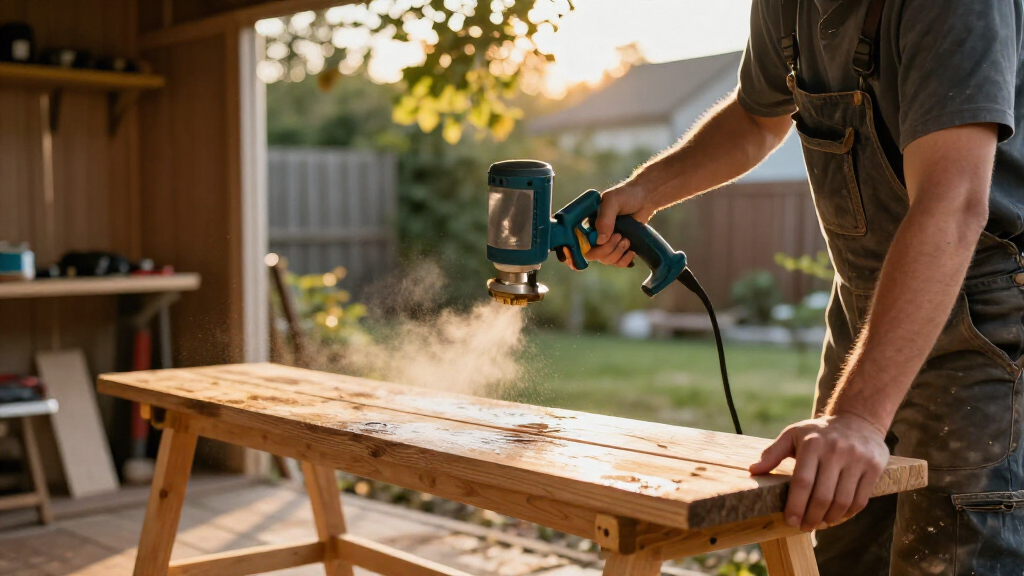
An electric paint sprayer uses a powered pump or turbine to turn paint into a fine spray, then directs that spray onto a surface. Airless models force paint through a small tip at high pressure and work well on large areas such as walls, fences, and exteriors. HVLP models use a high volume of air at relatively low pressure, which gives you more control for cabinets, furniture, and trim.
Think about the difference like watering a garden: one nozzle throws a broad stream over a large bed, while another gives you a gentler, more directed spray. A homeowner repainting a long backyard fence may value an airless sprayer’s speed. Someone coating a small bookcase may prefer HVLP control, even if each pass takes longer.
Handheld electric sprayers can be convenient for smaller jobs, but they don’t all use the same technology. Some are airless; others rely on a turbine. Check the model’s specifications and supported coatings rather than choosing based on its size alone. You can spray latex with many machines, but that doesn’t mean every latex paint will work without preparation.
Brushing and rolling still make sense for small rooms, edges, and touch-ups. Sprayers often demand extra masking and cleaning, so a few broad doors may justify one while a single scuffed patch usually doesn’t. Match the tool to the surface, coating, and amount of work, then compare the likely finish and cleanup time.
Products Worth Considering

Samsung 65-Inch M70H Series 4K Mini LED Smart TV (2026)

Sonos Era 100 SL Compact Microphone-Free Speaker, Black

Dyson Cyclone V10 Origin Cordless Vacuum
As an affiliate, we earn on qualifying purchases.
Compare Airless and HVLP Before You Buy
Airless sprayers cover broad surfaces quickly, while HVLP sprayers offer more control for detailed finishing. Airless equipment can handle many thicker coatings, depending on the model and tip, but it can produce substantial overspray and uses high pressure. HVLP can limit overspray compared with airless, though it doesn’t eliminate it, and some coatings may spray slowly or need specific preparation.
| Feature | Airless | HVLP |
|---|---|---|
| Good fit | Walls, fences, exteriors | Furniture, cabinets, trim |
| How it sprays | Paint pushed through a tip at high pressure | Airflow atomizes paint at relatively low pressure |
| Typical strength | Fast coverage across large areas | More control on smaller, detailed work |
| Tradeoff | Overspray and injection injury risk | Slower work; some coatings may need preparation |
For example, if you’re painting a row of exterior shutters beside a light-colored brick wall, either type still calls for careful masking. A large wall project may favor airless speed, but the extra masking effort can outweigh that benefit if you’re only coating one small shutter. Your actual paint, tip, and technique change the result.
Check compatibility before comparing speed: read the sprayer manual and the paint label. “Can spray latex” doesn’t promise that every latex coating will pass through every tip. Likewise, don’t thin paint unless the coating or equipment instructions call for it; thinning too much can weaken coverage or affect the finish.
Check These Details Before You Choose a Model
The best sprayer for you is the one that supports your coating and gives you useful control, reach, capacity, and parts support. Start with the manual’s approved paints and finishes, then look at the recommended tip sizes for your surfaces. A tip affects both fan width and how much paint the machine delivers, so the right choice for a broad fence may not suit narrow cabinet rails.
For a weekend cabinet project, pressure, flow, and spray-pattern controls can help you match the output to a door’s wide center and narrow frame. A large paint container may save refills on a fence, while a direct-from-bucket setup can make more sense for bigger jobs. If you’re working from a ladder or moving around a room, weight and hose length also affect how easily you can control the gun.
Before buying, compare the practical details in this list:
- Coating support: Confirm that the model and supplied tip suit the paint or finish you’ll use.
- Controls: Look for settings that let you adjust flow, pressure, or spray pattern as the model allows.
- Capacity and reach: Consider the container, hose length, unit weight, and whether it draws paint from a bucket.
- Cleaning and parts: Check how the sprayer flushes, which parts need cleaning, and whether replacement tips, filters, and seals are available.
A compact handheld unit may be easier to store than a larger sprayer, but its capacity may make repeated refills tedious on a large project. Features change across models, so verify current specifications, battery runtime, and paint compatibility before you buy. Easy maintenance and available replacement parts matter most if you plan to spray often.
Set Up and Spray for a More Even Finish
A smooth spray finish starts with a prepared space, a tested pattern, and steady movement. Mask nearby surfaces and cover floors before you fill the sprayer: mist can travel beyond the area that looks directly in front of the nozzle. Wear eye protection and a respirator appropriate for the coating and conditions, and work only where ventilation is adequate.
Before coating the real surface, test the spray on scrap material. For example, use a cardboard box to see whether your chosen tip leaves a consistent fan or creates heavy edges. Follow the coating and sprayer instructions for filtration, thinning, and settings. Then hold the gun at a consistent distance, move steadily, and overlap passes; lingering over one spot can make paint run.
Imagine spraying a cabinet door: begin the pass just before its edge, travel smoothly across the face, and release after moving past the other edge. That keeps the spray moving across the whole panel instead of pooling at its ends. If a test pass looks blotchy, adjust according to the manual and test again on scrap rather than guessing over the finished door.
Preparation is part of the job, not wasted time. A few minutes spent covering a patio and practicing can prevent a much longer cleanup and reduce uneven coats. If you’re spraying a large exterior, check wind and nearby surfaces too; overspray can drift and land where you didn’t intend.
Treat Airless Pressure as a Serious Safety Risk
An airless sprayer can inject paint through skin, causing a medical emergency even when the wound looks small. Never place your hand or another body part in front of an airless tip, and don’t treat a leak or blockage as a harmless mess. The paint stream is under high pressure, so follow the manufacturer’s trigger-lock and pressure-relief instructions before cleaning, clearing a blockage, or changing a tip.
Suppose a fence job stops because the spray pattern suddenly narrows. Don’t point the nozzle toward yourself to inspect it or try to wipe the tip while the machine is pressurized. Engage the trigger lock and relieve pressure as the manual directs before you handle any part of the system. If paint penetrates your skin, seek emergency medical care immediately.
Protect yourself from the spray as well as the equipment. Use suitable eye protection and a respirator appropriate to the coating and conditions; keep airflow adequate and follow the product label. If a job involves electrical, gas, structural, or roof work alongside painting, use a licensed professional for that work and follow applicable safety steps and code or permit requirements. Don’t treat protective gear as a substitute for safe equipment handling.
Never put your hand in front of an airless tip. Lock the trigger and relieve pressure according to the manual before servicing the sprayer. A suspected injection injury needs immediate emergency medical attention.
HVLP sprayers avoid the same airless pressure mechanism, but they still create airborne coating mist. Read the manual, protect your eyes and lungs, and keep others away from the spray area. Safe spraying depends on the coating, space, and equipment, not just the sprayer type.
Clean the Sprayer Before the Paint Dries
Clean your sprayer promptly after use, following the cleaning method and parts list in its manual. Leftover coating can dry in the tip, filters, or internal passages and make the next session harder to start. Cleanup time varies with the model and paint, so include it when you decide whether spraying will really save time on a small job.
For example, if you finish painting a pair of cabinet doors at the end of the afternoon, don’t leave the sprayer full while you take a break. Follow the coating and sprayer instructions to flush the system, then clean the specified tips, filters, and other removable parts. Use the cleaning method recommended for that coating and equipment rather than assuming one approach works for every paint.
Some models are designed for easier flushing, and many manufacturers offer specialized tips and accessories for particular coatings or surfaces. Those features can make repeated use more convenient, but they don’t remove the need to clean each time. Availability and exact specifications change, so check the current manual and product details before purchase.
Plan cleanup before the first pass. Set aside the recommended supplies and time, and check which parts need attention. If you only need to paint a small shelf, a brush may take less time overall. For a larger project, an organized cleanup routine helps protect the sprayer and makes the next coat or job less frustrating.
Frequently Asked Questions
Are electric paint sprayers better than rollers or brushes?
They can cover large, awkward, or textured surfaces quickly and leave a smooth finish, but they need masking and careful cleanup. For a small patch, a roller or brush may be simpler and produce less overspray.
Can an electric sprayer spray latex paint?
Many models can spray latex, but support depends on the machine, paint, and tip. Check the sprayer manual and paint label; a claim that a model handles latex doesn’t mean every latex paint needs no preparation.
Do I need to thin paint before spraying?
Not always. Thin paint only when the coating or sprayer manufacturer instructs you to do so, since excessive thinning can change coverage and finish.
Which sprayer type works well for cabinets or furniture?
HVLP sprayers are often chosen for their control on smaller, detailed surfaces. Check that the model supports your finish and practice on scrap before spraying a cabinet door.
How do I prevent runs and an uneven finish?
Use a tip and settings recommended for the coating, test the pattern first, and keep your distance and movement steady. Overlap each pass and avoid lingering in one spot; if the test looks uneven, adjust according to the manual.
Are airless paint sprayers safe to use?
Follow the manual, protect your eyes and lungs, and never put a hand in front of the spray tip. High-pressure paint can penetrate skin; seek emergency medical care immediately after a suspected injection injury.
Conclusion
Choose your sprayer by matching the coating and surface to the tool: broad exterior work often favors airless speed, while detailed furniture work often benefits from HVLP control. Check compatibility, practice on scrap, mask well, and plan for cleanup before the paint can starts to smell like a finished project.
Then keep the airless tip pointed away from your body and follow the manual whenever you clean or service the machine. A good finish should leave color on the fence or cabinet—not drifting across the patio or pooling on your fingers.