

For woodworking, I’d make the DEWALT DCS334B my best overall pick: its brushless design and familiar top-handle format suit frequent, controlled cutting. The DEWALT DCS335B barrel-grip is a compelling alternative for users who prefer a lower hand position, while the CRAFTSMAN V20 kit pairs a familiar brand with a battery and charger in the box. The main tradeoffs are cut control and tool refinement versus kit completeness, battery-platform fit, and upfront convenience. A bare tool can make sense if you already own compatible batteries; a complete kit can be easier for a first-time cordless-tool buyer. Read on for how these seven options compare and which one fits your woodworking habits.

Get business pricing on tools and workshop supplies
- Business-only prices and quantity discounts
- Tax-exempt purchasing
- Multiple users, one account, clear invoices
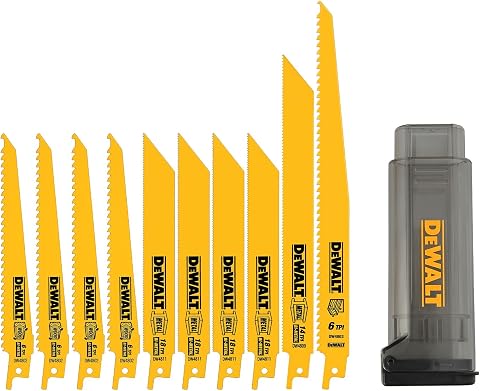
Complete the kit


Key Takeaways
The DEWALT DCS334B leads for all-around woodworking because its brushless motor and top-handle layout make it the most balanced pick for regular work, provided you already have a compatible battery.
The DCS335B is a grip-style choice, not an automatic upgrade: its barrel grip may suit users who want a lower hand position, while the DCS334B will feel more familiar to many top-handle users.
Battery inclusion changes the value equation. The CRAFTSMAN V20 kit and TaskStar and SEESII two-battery kits are more self-contained than bare tools, but buyers should weigh platform support and kit details alongside battery count.
RYOBI and CRAFTSMAN bare tools make the most sense inside their existing ecosystems. Their appeal grows when batteries and chargers are already on hand; buying them as a first cordless tool adds a separate battery decision.
Maximum speed is only one part of clean woodworking cuts. Blade choice, orbital action, workpiece support, and a controlled feed rate can matter more to the cut than a high strokes-per-minute figure alone.


| cordless jigsaws for woodworking | Voltage | Maximum speed | Orbital settings | Model |
|---|---|---|---|---|
| RYOBI 18V Cordless Jigsaw Tool | 18V | — | — | PCL525B |
| DEWALT DCS334B 20V MAX XR Brus | 20V | 3,200 strokes per minute | 4 positions | DCS334B |
| TaskStar Cordless Jigsaw Kit w | 21V | 2,800 SPM | 4 | — |
| CRAFTSMAN V20 20V Cordless Jig | 20V | 2,500 SPM | 3 | CMCS600B |
| DEWALT 20V MAX XR Cordless Bar | 20V | 3,200 strokes per minute | 4 positions | DCS335B |
| SEESII Cordless Jigsaw with Tw | 21 volts | 2,800 SPM | 4 | — |
| CRAFTSMAN V20 Cordless Jig Saw | 20V | 2,500 SPM | 3 | CMCS600D1 |
More Details on Our Top Picks
RYOBI 18V Cordless Jigsaw Tool Only
The RYOBI PCL525B is a straightforward choice for woodworkers who already own compatible 18V batteries and want to add a jigsaw without changing platforms. Its 45-degree cutting angle opens up basic bevel work, while the wood-focused design suits general shop projects and home repairs. Compared with the DEWALT DCS334B, it gives up brushless power, four orbital settings, and features such as a dust blower; the supplied details also don’t list a variable-speed range. That makes it a simpler pick for occasional cuts rather than a feature-rich tool for frequent, controlled work. The main tradeoff is the bare-tool format: buyers starting a battery collection need to source a battery and charger separately. I’d choose it for platform fit and basic woodworking, not for the widest cutting adjustment range.
Pros:- Cordless 18V operation suits work away from an outlet
- Supports cuts angled up to 45 degrees
- Designed for cutting wood
- Straightforward addition for owners of compatible RYOBI batteries
Cons:- Battery and charger are sold separately
- Provided specifications do not list variable-speed or orbital settings
- Fewer listed cut-control and visibility features than the DEWALT DCS334B
Best for: Woodworkers who already own compatible RYOBI 18V batteries and need a basic jigsaw for occasional wood cuts and bevels.
Not ideal for: Buyers seeking a complete kit, detailed speed and orbital controls, or the visibility features listed for the DEWALT DCS334B.
- Model:PCL525B
- Voltage:18V
- Power source:Battery powered
- Maximum cutting angle:45 degrees
- Blade length:4 inches
- Blade material:High-speed steel
- Weight:5 pounds
- Included components:Tool only; battery and charger sold separately
Our verdict“Choose the RYOBI PCL525B if you already have its 18V battery platform and want a basic cordless woodworking jigsaw.”
DEWALT DCS334B 20V MAX XR Brushless Cordless Jig Saw (Bare Tool)
The DEWALT DCS334B earns my top spot for woodworking because its control features are more fully specified than those on the RYOBI PCL525B or CRAFTSMAN CMCS600B. The brushless motor, variable speed up to 3,200 strokes per minute, and four-position orbital action let a buyer adjust the cutting approach to the task, from a more controlled cut to faster progress. Tool-free blade and bevel adjustments reduce interruptions when changing between cuts, while the LED and dust blower help keep the cut line visible. Compared with the barrel-grip DCS335B, this model has a different grip format, so handle preference should guide the choice between the two. Its clear downside is the bare-tool package: the battery and charger are separate, and this is a poor starting point for anyone without compatible DEWALT batteries.
Pros:- Brushless motor
- Variable speed up to 3,200 strokes per minute
- Four-position orbital action gives a choice of cutting aggressiveness
- LED light and integrated dust blower support cut-line visibility
Cons:- Battery and charger are sold separately
- Bare tool is a limited choice for buyers starting a cordless platform
- Grip style may not suit buyers who prefer a barrel-grip jigsaw
Best for: Woodworkers who already own compatible DEWALT 20V batteries and want adjustable speed, orbital action, and convenient blade and bevel changes.
Not ideal for: First-time cordless-tool buyers who need a battery and charger, or shoppers who specifically prefer the DCS335B barrel-grip design.
- Model:DCS334B
- Voltage:20V
- Motor:Brushless
- Maximum speed:3,200 strokes per minute
- Orbital settings:4 positions
- Bevel angles:0°, 15°, 30°, and 45°
- Blade type:T-shank
- Weight:4.2 pounds
- Included components:Bare tool; battery and charger sold separately
Our verdict“Pick the DCS334B if you want the lineup’s strongest combination of listed cut adjustments and already have compatible DEWALT batteries.”
TaskStar Cordless Jigsaw Kit with Two Batteries and Charger
The TaskStar kit is the most ready-to-work option in this group: it includes two 2.0Ah batteries, a charger, nine blades, and a storage bag. For a new cordless-tool buyer, that package avoids the extra platform purchases required by the bare-tool DEWALT DCS334B and CRAFTSMAN CMCS600B. Its variable speed, four orbital settings, and 0°–45° bevel range provide useful adjustment for woodworking, while the included blades also allow cuts in metal and plastic. The tradeoff is less certainty about sustained work: the stated runtime is up to 40 minutes per charge, and the listed weight of 2.8 g appears unusually low, so it should not be treated as a reliable handling figure. I’d favor this kit for occasional projects and broad out-of-box utility, not as the clearest choice for long cutting sessions.
Pros:- Includes two 2.0Ah batteries and a charger
- Nine included blades support wood, metal, and plastic cutting
- Four orbital settings and bevel cuts up to 45 degrees
- LED work light and keyless blade changes
Cons:- Stated runtime is up to 40 minutes per charge
- Listed weight of 2.8 g appears unusually low and may not help buyers judge handling
- Maximum speed of 2,800 SPM is below the DEWALT DCS334B and DCS335B specifications
Best for: New cordless-tool buyers who want batteries, a charger, multiple blades, and a jigsaw for occasional woodworking and mixed-material projects.
Not ideal for: Woodworkers planning extended cutting sessions or buyers who need dependable weight information and a clearly established battery platform.
- Voltage:21V
- Battery capacity:2.0Ah per battery
- Batteries included:2
- Maximum speed:2,800 SPM
- Orbital settings:4
- Bevel range:0°–45°
- Blades included:9
- Stated runtime:Up to 40 minutes per charge
- Warranty:Two-year limited warranty
Our verdict“Choose TaskStar if you want a complete kit for occasional, varied projects and value included batteries and blades over the DEWALT models’ higher stated speed.”
CRAFTSMAN V20 20V Cordless Jig Saw, 3 Orbital Settings, Up to 2,500 SPM (CMCS600B)
The CRAFTSMAN CMCS600B keeps the feature set practical: a variable-speed trigger, three orbital settings, a beveling shoe, and a dust blower. Those adjustments give woodworkers more control than the basic details supplied for the RYOBI PCL525B, while the included wood blade makes the tool more immediately suited to its stated use. Its 2,500 SPM maximum is below the 3,200 SPM listed for the DEWALT DCS334B and DCS335B, and it has three orbital settings rather than four. That’s a sensible tradeoff for buyers who want core controls without the DEWALT models’ listed speed ceiling. The bare-tool format remains a real hurdle: the battery and charger are separate. I’d choose this for uncomplicated V20 woodworking, especially if you already own compatible batteries.
Pros:- Variable-speed trigger supports controlled cutting
- Three orbital settings allow adjustment of cutting aggressiveness
- Shoe bevels up to 45 degrees
- Includes a wood blade and has a dust blower
Cons:- Battery and charger are sold separately
- Maximum speed of 2,500 SPM is lower than the DEWALT DCS334B and DCS335B
- Three orbital settings provide fewer choices than the four-setting options
Best for: Existing CRAFTSMAN V20 owners who want a practical jigsaw for home woodworking, bevel cuts, and general material cutting.
Not ideal for: Buyers who need a battery and charger in the box or want the higher stated speed and four orbital settings of the DEWALT DCS334B.
- Model:CMCS600B
- Voltage:20V
- Maximum speed:2,500 SPM
- Orbital settings:3
- Maximum cutting angle:45 degrees
- Blade compatibility:T-shank and U-shank
- Weight:2.16 kg
- Included components:Jigsaw and wood blade; battery and charger sold separately
- Warranty:Three-year limited warranty
Our verdict“Choose the CMCS600B for core woodworking controls if you already own compatible CRAFTSMAN V20 batteries and don’t need the DEWALT models’ higher listed speed.”
DEWALT 20V MAX XR Cordless Barrel-Grip Jig Saw (DCS335B), Bare Tool
The DEWALT DCS335B brings the same headline cutting adjustments listed for the DCS334B—brushless power, up to 3,200 strokes per minute, and four-position orbital action—but in a barrel-grip format. That makes this the distinct choice for buyers who prefer that handle style rather than a conventional grip. For woodworking, the combination of variable speed, keyless blade and bevel adjustments, an LED light, and a dust blower supports switching between cuts while keeping the work area visible. Compared with the CRAFTSMAN CMCS600B, it has a higher stated speed and one additional orbital setting; the CRAFTSMAN, by contrast, includes a wood blade and lists T-shank and U-shank compatibility. The DCS335B’s listed weight is 2.16 kg, and it is a bare tool, so weight and battery-platform needs may rule it out. It’s a feature-rich pick, but not a kit purchase.
Pros:- Brushless motor with variable speed up to 3,200 strokes per minute
- Four-position orbital action supports different cutting approaches
- Keyless blade and bevel adjustments
- LED light and integrated dust blower aid cut-line visibility
Cons:- Battery and charger are not included
- Listed weight is 2.16 kg
- Provided specifications do not state blade-shank compatibility
Best for: Woodworkers who prefer a barrel-grip handle, already own compatible DEWALT 20V batteries, and want adjustable speed and orbital cutting.
Not ideal for: Buyers who want batteries and a charger included, prefer a conventional grip, or need confirmed T-shank and U-shank compatibility.
- Model:DCS335B
- Voltage:20V
- Motor:Brushless
- Maximum speed:3,200 strokes per minute
- Orbital settings:4 positions
- Bevel angles:0°, 15°, 30°, and 45°
- Weight:2.16 kg
- Included components:20V jig saw; battery and charger not included
Our verdict“Pick the DCS335B if a barrel grip is your preference and you already have DEWALT 20V batteries; otherwise, compare it with the DCS334B’s conventional format.”
SEESII Cordless Jigsaw with Two Batteries and Charger
The SEESII makes a practical woodworking starter kit for buyers who want cutting accessories and a spare battery in the box. Two batteries, nine blades, and a carrying bag give it a more ready-to-work setup than the CRAFTSMAN V20 CMCS600D1, which includes one battery and a wood blade. Its four orbital settings, variable speed up to 2,800 SPM, and bevel shoe up to 45 degrees offer flexibility for curves, faster rough cuts, and angled work. A quick-release blade system and LED also help when changing tasks or working in dim areas. The tradeoff is uncertainty around power planning: battery capacity is inconsistent in the listing, and runtime and charge time are not specified. I’d choose it for a varied home workshop, but skip it if predictable battery endurance matters more than the bundled kit.
Pros:- Two included batteries can reduce interruptions for charging
- Four orbital settings and variable speed suit different cut types and materials
- Bevel adjustment supports angled cuts up to 45 degrees
- Nine blades, quick-release system, LED, and carrying bag make the kit ready for varied tasks
Cons:- Battery capacity is inconsistent between the title and description
- Runtime and charging time are not specified
- Its 2,800 SPM maximum does not by itself establish cutting performance in demanding hardwood
Best for: Woodworkers setting up a home tool kit who want spare battery capacity, multiple blades, and flexibility for occasional angled and curved cuts.
Not ideal for: Buyers who need a clearly documented battery capacity, runtime, or charging time to plan longer sessions.
- Power source:Battery powered
- Voltage:21 volts
- Batteries included:2
- Maximum speed:2,800 SPM
- Orbital settings:4
- Maximum cutting angle:45 degrees
- Included accessories:Charger, 9 blades, hex wrench, carrying bag
- Warranty:Three years
Our verdict“Choose the SEESII for a well-supplied starter kit with two batteries, but look elsewhere if documented battery endurance is a priority.”
CRAFTSMAN V20 Cordless Jig Saw Kit, 2,500 SPM, Battery and Charger Included
For a woodworker already building around CRAFTSMAN V20 tools, this kit offers a straightforward way to add a jigsaw without sourcing a battery and charger separately. The 2.0Ah battery and wood blade are included, while the variable-speed trigger, three orbital settings, and 45-degree bevel shoe cover common workshop cuts. A dust blower helps keep the line visible as sawdust accumulates. Compared with the SEESII kit, the CRAFTSMAN has fewer orbital settings and comes with one battery and one blade, but its listed battery capacity is clear. The SEESII’s two-battery bundle is more appealing for longer sessions; this CRAFTSMAN makes more sense for users who value a familiar V20 platform. The included battery is modest for extended cutting, and the supplied weight figure appears unreliable, so I wouldn’t choose it based on weight claims.
Pros:- Includes a 2.0Ah battery and charger
- Variable-speed trigger supports control across different cuts
- Three orbital settings and a 45-degree bevel shoe add cutting flexibility
- Dust blower helps keep the cut line visible
Cons:- The included 2.0Ah battery may limit uninterrupted work compared with the SEESII’s two-battery kit
- Only one wood blade is included
- The listed weight of 0.27 g appears unreliable
Best for: Woodworkers who already own CRAFTSMAN V20 tools and want a jigsaw kit with a compatible battery, charger, and starter wood blade.
Not ideal for: Buyers planning long cutting sessions without another battery, or shoppers who need dependable product weight information before purchase.
- Model:CMCS600D1
- Power source:Battery powered
- Voltage:20V
- Maximum speed:2,500 SPM
- Orbital settings:3
- Maximum bevel angle:45 degrees
- Battery included:One 2.0Ah lithium-ion battery
- Blade compatibility:T-shank and U-shank
Our verdict“Pick this kit if you want a clear entry into the CRAFTSMAN V20 platform, but plan for a second battery if your woodworking sessions run long.”

How We Picked
I ranked these jigsaws around the jobs woodworkers actually face: straight cuts, curves, notches, and occasional bevel work. I gave the most weight to the potential for controlled cutting, useful speed and orbital settings, comfortable handling, and the practical difference between a bare tool and a complete kit. Brushless construction and a well-established battery platform helped a model earn a stronger position for recurring workshop use, while included batteries and a charger counted in favor of convenience for new cordless-tool buyers.
The ranking favors tools that make sense across a broad range of woodworking tasks, not simply the longest feature list. That puts the DEWALT DCS334B first as the balanced option, with the DCS335B close behind for buyers who prefer barrel-grip handling. CRAFTSMAN and RYOBI models are more compelling when their battery platforms already fit a buyer’s shop, while TaskStar and SEESII earn attention for bundled batteries but rank lower where long-term platform fit and documented tool support matter more. Product names and listed specifications are treated as selection cues, not proof of cut quality; I would verify exact kit contents and compatibility before purchase.
| cordless jigsaws for woodworking | Model |
|---|---|
| RYOBI 18V Cordless Jigsaw Tool | PCL525B |
| DEWALT DCS334B 20V MAX XR Brus | DCS334B |
| TaskStar Cordless Jigsaw Kit w | — |
| CRAFTSMAN V20 20V Cordless Jig | CMCS600B |
| DEWALT 20V MAX XR Cordless Bar | DCS335B |
| SEESII Cordless Jigsaw with Tw | — |
| CRAFTSMAN V20 Cordless Jig Saw | CMCS600D1 |
Factors to Consider When Choosing Cordless Jigsaws For Woodworking
Choosing a cordless jigsaw for woodworking is less about chasing a single speed figure and more about matching the tool to your shop, cut types, and battery setup. These factors can help separate a capable daily tool from a convenient occasional-use kit.
Match the battery platform to your workshop
Start with the batteries you already own, not the tool listing alone. A bare tool can be the sensible choice when it shares a platform with your drill or impact driver, since you avoid adding another charger and battery family. If this will be your first cordless tool, compare the complete kit contents and think about what other tools you may want later. A kit with two batteries sounds useful, but battery capacity, replacement availability, and compatibility with future tools matter more than the count by itself. Avoid buying into an unfamiliar platform solely because a bundle appears convenient.
Choose grip style for control and comfort
Top-handle and barrel-grip jigsaws ask your hand to guide the cut in different ways. A top handle is familiar to many DIY woodworkers and can feel natural when making cuts across a broad panel. A barrel grip places the hand lower, which some users may prefer for close control around curves or when following a marked line. Neither design guarantees a straighter cut; body posture, sightline, and how securely you can hold the workpiece also matter. If possible, handle both styles before buying, especially if you make long cuts where fatigue can affect accuracy.
Treat orbital action as a cut-quality adjustment
Orbital action moves the blade in a more aggressive path, which can speed cuts in suitable materials but may leave a rougher edge. For visible edges in furniture parts or cabinet components, a low setting—or no orbital action—often gives better control than maximum aggression. Faster, rougher cutting may be acceptable for hidden cuts or rough stock, where cleanup is expected. A common mistake is leaving the saw at one setting for every job; the right setting depends on wood, blade, and finish requirements. Check whether the model offers useful adjustment and learn to pair it with an appropriate feed rate.
Plan the blade around the finished edge
The blade has a direct effect on splintering, curve radius, and how quickly the saw tracks through wood. Fine-tooth blades generally suit cleaner cuts, while narrower blades can turn tighter curves; a coarse blade may remove material faster but leave more cleanup. Match blade length and shank type to the saw’s requirements rather than assuming every jigsaw blade fits every tool. For a visible face, test the blade and cutting direction on scrap from the same stock before committing to the finished piece. A quality blade and careful support can improve results more than a small difference in the tool’s advertised speed.
Balance speed, support, and cut accuracy
A high strokes-per-minute rating can help a saw cut briskly, but speed alone does not tell you how well it will follow a layout line. Wood thickness, blade condition, orbital setting, and pressure all affect the result. Pushing hard to force a fast cut can bend the blade and send it off course, particularly on curves or thicker stock. Support the work close to the cut while leaving room for the shoe, and let the blade do the cutting at a steady pace. For repeatable woodworking, practice on scrap and prioritize control over completing every cut as quickly as possible.
Decide when paying for a more refined tool makes sense
A more capable brushless model is easier to justify when the jigsaw sees frequent use, runs for longer sessions, or shares batteries with other tools in the same ecosystem. For occasional craft cuts, a complete kit may be a better practical fit than paying for a bare tool with features you rarely use. Also think about service access, replacement batteries, and whether the tool’s grip and adjustments suit your hands. A low initial commitment can become inconvenient if the platform is difficult to expand or maintain. Compare the total setup you need—tool, battery, charger, blades, and any dust-management accessories—rather than judging the saw alone.
Frequently Asked Questions
Should I buy the DEWALT DCS334B or the DCS335B for woodworking?
Choose the DCS334B if you prefer a conventional top-handle layout and want the roundup’s best all-around fit for regular woodworking. The DCS335B is the better match if a barrel grip feels more natural for your hand position and close guidance around curves. Both are bare tools, so your existing compatible battery setup matters before either makes sense. If you are unsure about grip style, try holding both before buying rather than assuming one is more accurate for everyone. Your blade, cut setup, and technique will still shape the result.
Is a cordless jigsaw kit a better first purchase than a bare tool?
A kit is often easier for a first cordless-tool purchase because it includes the battery and charger needed to get started. In this lineup, the CRAFTSMAN V20 kit and the TaskStar and SEESII bundles offer that convenience, while the DEWALT, RYOBI, and CRAFTSMAN bare tools depend on a compatible battery you already own. Before choosing a bundle, check what batteries and charger are actually included and whether replacement batteries are readily available to you. If you plan to build a tool collection, a platform you can expand may matter more than receiving an extra battery now. If this is a one-off tool, a complete kit can reduce setup friction.
Does a higher strokes-per-minute rating mean cleaner cuts in wood?
No. A higher speed rating describes how quickly the blade can move, not how smooth or accurate the finished edge will be. Blade tooth pattern, orbital setting, wood species, and steady guidance all affect cut quality. For a clean visible edge, use a suitable fine-tooth blade and test the setup on scrap rather than defaulting to the fastest setting. Keep the workpiece supported and avoid forcing the saw through the cut. Speed is useful when the cut and material call for it, but it is not a substitute for control.
Can a cordless jigsaw handle furniture and cabinet projects?
Yes, a cordless jigsaw can handle curved parts, notches, cutouts, and other work where a circular saw is not the right shape of tool. It is less suited to long, highly precise straight cuts, where a track saw, circular saw with a guide, or table saw can produce a more consistent result. For furniture or cabinet work, use a sharp blade suited to the edge quality you need and leave material for trimming or sanding when appropriate. Support the stock well to reduce vibration and blade deflection. Pick a jigsaw as a versatile shaping tool, not as a replacement for every woodworking saw.
Are two included batteries worth prioritizing over a brushless motor?
It depends on how long and how often you work. Two batteries can reduce pauses between cuts, which is handy for a longer project or when no other compatible battery is available. A brushless model such as the DEWALT DCS334B is the stronger fit for a buyer who values a more refined tool for recurring use, especially if batteries are already on hand. Battery count alone does not show capacity, longevity, or how easily replacements can be found. Compare the complete battery setup and your expected workload before deciding which benefit matters more.
Conclusion
For the best overall, I’d choose the DEWALT DCS334B for its brushless design and broadly familiar top-handle format, especially if you already own compatible batteries. The DEWALT DCS335B is my best premium alternative for barrel-grip buyers who prefer a lower hand position. For best value within an existing battery platform, consider the RYOBI 18V or CRAFTSMAN V20 bare tool that matches the batteries already in your shop; the CRAFTSMAN V20 kit is a more convenient route for someone starting without a battery. Beginners who want a ready-to-use bundle can compare that kit with the TaskStar and SEESII two-battery options, checking platform support and exact kit contents before choosing. For specific needs, pick the grip style, battery ecosystem, and cut-control features that suit your projects rather than relying on speed claims alone.