
TL;DR

Get business pricing on tools and workshop supplies
- Business-only prices and quantity discounts
- Tax-exempt purchasing
- Multiple users, one account, clear invoices
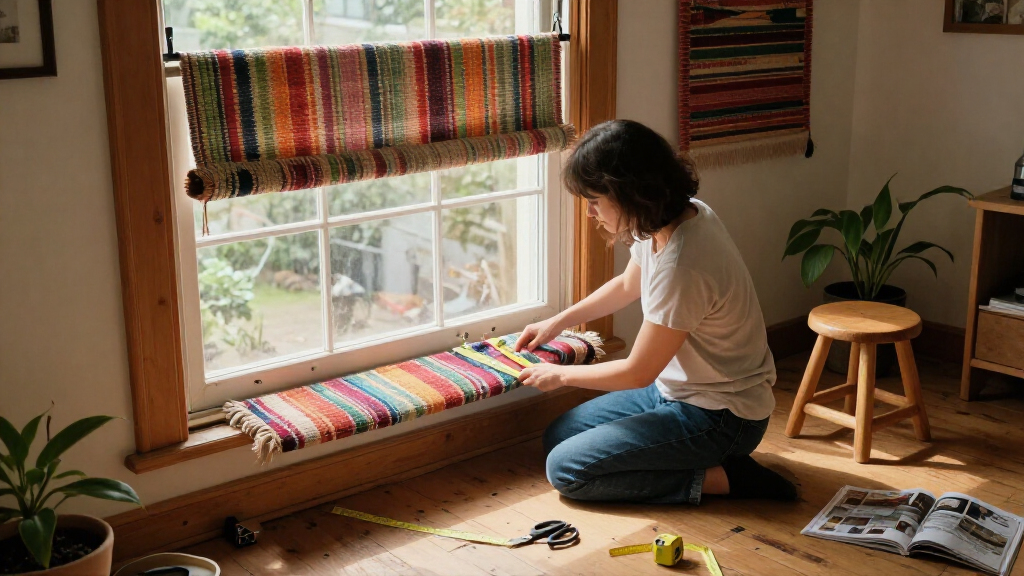
TikTok user Birdie Wood demonstrated how to turn chindi rag rugs into a loose, colorful window covering by cutting the fabric into strips and tying them to a curtain rod. She said she bought her rugs at Five Below for $5 each; the design’s privacy, light-blocking and durability have not been specified.
TikTok user Birdie Wood demonstrated a window covering made from $5 chindi rugs, cutting the rugs into fabric strips and tying them to a curtain rod. The idea offers a low-cost, colorful alternative to conventional curtains, though the source does not report how well it blocks light or provides privacy.
In a report about the project, Hunker described chindi rugs as rag rugs made from strips of scrap fabric and originating in India. Wood’s approach repurposes the floor covering: she cut apart the fabric strands and looped or tied them over a rod, leaving the material to hang loosely as a billowy treatment. The finished look draws on the rugs’ varied colors and patterns, which become more visible when the twisted strands are separated.
Wood said she found the rugs at Five Below for $5 each. Hunker also pointed to an online Cotton Craft chindi rug listed for $10 on Amazon, though prices and availability can change. The other basic supplies are a curtain rod and sharp scissors; the work involves cutting apart the rug’s binding strings and preparing strips to fit the window.
The strips can be adjusted to make a full-length hanging, a shorter valance or a mix of lengths. Hunker described several ways to attach or arrange them: loop the material over the rod, tie it in knots or bows, or use clips if some of the rug remains intact as a top header. The report also suggested attaching the strips to a horizontal band so they move together, or adding braids, ribbons or beads for a different texture.
A Low-Cost Alternative to Curtains
The project gives renters and homeowners a way to change a room’s appearance using a relatively inexpensive textile and a small set of supplies. At $5 per rug in Wood’s example, the material cost may be lower than buying a full set of new curtains, although the report does not compare total costs, including a rod or any hardware.
Its practical fit depends on the room and the job the window treatment needs to do. The source presents the design as decorative and says its mixed patterns suit boho or maximalist interiors. It does not establish whether the hanging offers meaningful privacy, reduces glare, insulates a room or meets any fire-safety requirements. Readers choosing it for a bedroom or street-facing window would need to account for those needs separately.
Products Worth Considering

Philips Hue Secure Wired Video Doorbell, 2K, Black

LEVOIT Vital 200S-P Smart Air Purifier for Large Rooms

Levoit Vital 100S-P Air Purifier
As an affiliate, we earn on qualifying purchases.
How the Rug Becomes a Hanging
Chindi rugs are assembled from fabric strips, often twisted or bound together. Hunker’s instructions say to cut the strings that hold the rug’s strands in tight tubes, freeing the fabric into separate lengths. Those lengths can then be cut or tied to reach the desired drop from the rod.
That construction also explains the project’s visual effect: separating the strips reveals more of the individual fabrics and patterns than are visible in the rug’s bundled form. The method is adaptable, from loosely hanging strips to a tied or clipped top edge. Hunker notes that keeping the upper part of the rug intact can create a header, while a copper pipe is one possible alternative to a conventional curtain rod.
“This DIY window treatment works best in a boho eclectic style room or in a maximalist space.”
— Hunker
Privacy and Performance Are Unreported
The source gives no measurements for Wood’s window, the rugs or the finished hanging, so the amount of material needed for a particular window is unclear. It also does not say how long the project took or whether the strips remained securely attached over time.
No tests or performance details are provided for light control, privacy, insulation or cleaning. The report also does not address whether the materials are suitable around heat sources or whether local rules apply in a particular home. The example establishes a decorative method, not a tested replacement for purpose-made window coverings.
Adapting the Design to a Window
Anyone following the idea would first need to measure the window and decide whether the goal is a full-length covering, a valance or a layered arrangement of short and long strips. The rug can then be taken apart, with the strands cut or tied to the required length and attached to a rod by looping, knotting or using clips.
Cost will depend on the number and price of rugs needed, plus any rod or accessories. The source does not announce a follow-up from Wood or provide plans for further testing. Questions about privacy, light control, cleaning and safe placement remain for anyone adapting the design to their own room.
Key Questions
What is a chindi rug?
A chindi rug is a rag rug made from strips of scrap fabric, according to Hunker. Its fabric can be separated into strands for the window-covering project.
How much did Birdie Wood’s rugs cost?
Wood said she bought her rugs at Five Below for $5 each. Hunker also cited a $10 online example, but prices may vary.
What supplies does the project use?
The basic supplies are a chindi rug, a curtain rod and sharp scissors. Clips or a band of fabric are optional ways to attach or gather the strips.
Does the rug covering block light or provide privacy?
The source does not report how much light the hanging blocks or whether it provides privacy. Those practical results are not established by the demonstration.
Source: rss