
TL;DR

Get business pricing on tools and workshop supplies
- Business-only prices and quantity discounts
- Tax-exempt purchasing
- Multiple users, one account, clear invoices
A Hunker report says 3% hydrogen peroxide, mixed with a little dish soap, may help with some organic wall stains and grime when tested first and rinsed thoroughly. Mold specialist Michael Rubino cautions that spraying peroxide alone does not remove mold particles or address moisture, and porous drywall with mold growth may need professional assessment or replacement.
A Hunker report says 3% hydrogen peroxide may help lighten some organic stains and remove certain kinds of grime from painted walls, but mold expert Michael Rubino warns that spraying it on a moldy surface is not a complete remediation method. The distinction matters for homeowners deciding whether a mark is routine dirt or a sign of a moisture problem: treating a surface does not necessarily remove mold fragments or stop growth from returning.
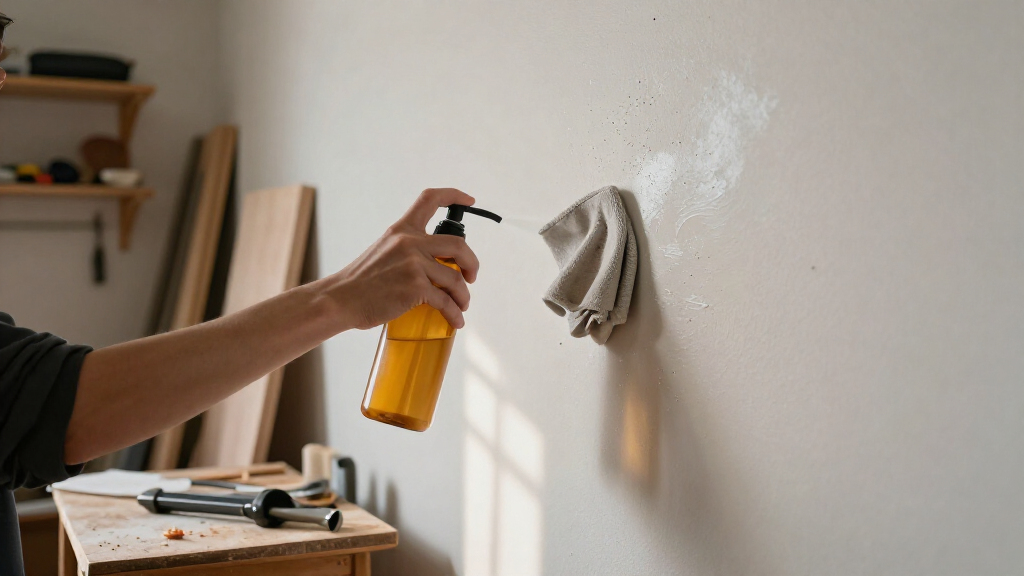
Rubino, founder of HomeCleanse and president of the Change the Air Foundation, told Hunker that peroxide’s oxidizing action can break down some organic material and may lighten related stains. He said it can also help with some residue, including sticky or greasy fingerprints. For a small stain, the report says cleaners recommend combining 3% hydrogen peroxide with a little dish soap, applying it gently with a clean rag, testing the mixture in an inconspicuous place first, and rinsing residue with clear water.
The advice is limited: the report does not present peroxide as a reliable treatment for every stain, greasy buildup or mold problem. Rubino said the bubbles that sometimes appear after application can result from organic material or certain enzymes; bubbling does not establish that mold is present, nor does it prove that a surface is clean once the reaction stops.
For mold, Rubino described peroxide as one possible step in a broader process. Depending on the surface, that process may include HEPA vacuuming and physical cleaning before a treatment is applied. He said killing mold and removing its spores, fragments and other microscopic particles are different tasks. Because drywall is porous, mold that has grown into it may require removing and replacing the affected material rather than repeatedly spraying the surface.
Why a Surface Treatment May Fall Short
The main practical distinction is between cleaning a visible mark and addressing contamination inside or on a surface. Peroxide may lighten some stains, but a better-looking wall is not proof that mold or microscopic residue has been removed. The report’s cautions can help readers avoid treating bubbles or a temporarily faded patch as evidence that a mold problem is resolved.
Moisture also matters. Rubino advised addressing the conditions that allow mold to grow, such as poor airflow or excess humidity, using measures such as improved ventilation or a dehumidifier where appropriate. Without controlling the moisture source, growth may recur after a cleaning attempt. A persistent musty smell or mold that returns is a reason to seek a qualified mold inspector, according to his advice to Hunker.
For ordinary dirt and grease, the report says a gentle detergent formulated for the surface may be a better choice. That offers a less aggressive first option for painted walls, where an untested cleaner could leave discoloration or damage the finish.
Products Worth Considering

Shark Navigator Robot Vacuum with 30-Day Self-Emptying Base, White (AV2110S)

LEVOIT Vital 200S-P Smart Air Purifier for Large Rooms

Levoit Vital 100S-P Air Purifier
As an affiliate, we earn on qualifying purchases.
Peroxide’s Place in Wall Cleaning
The Hunker report frames hydrogen peroxide as an accessible household product with a limited cleaning role, not a universal wall cleaner. Its cited expert describes oxidation as the reason it may affect certain organic stains and mold, while also stressing that the result depends on the material and the type and extent of contamination.
The report distinguishes everyday marks, such as fingerprints and scuffs, from mold that has grown into porous drywall. It does not provide a universal treatment protocol for every wall finish or mold situation. Its practical guidance is to spot-test a small area, apply a diluted approach gently for suitable grime, and rinse the surface; for mold, physical removal and moisture control may be necessary.
“Hydrogen peroxide can be useful in some situations for some types of residue, particularly organic buildup and staining.”
— Michael Rubino, founder of HomeCleanse and president of the Change the Air Foundation, speaking to Hunker
Limits Depend on the Wall
The supplied report does not specify a peroxide-and-soap ratio, a contact time, or a single method suitable for every paint and wall material. It also does not give test results comparing peroxide with other cleaners. Effectiveness and the risk of discoloration can depend on the surface finish and residue, which is why the report recommends testing an inconspicuous spot first.
For mold, the extent of growth, the material involved and the source of moisture determine what work is needed. The report does not identify a threshold that homeowners can use to decide when drywall must be removed. Rubino’s guidance is to seek a qualified inspector if mold returns or a musty odor persists; the source provides no independent inspection findings for a specific home or wall.
Choose the Next Cleaning Step
For a small, ordinary stain, readers can follow the report’s cautious approach: test a hidden area, use the suggested 3% peroxide-and-dish-soap mixture gently on a clean rag, and rinse it away. For general dirt or grease, the report points to a mild detergent designed for the surface and advises following its label directions.
If a wall appears moldy, the stain repeatedly returns, or a musty smell remains, the next step is not to rely on peroxide alone. Readers should consider a qualified mold inspection and address the underlying moisture source. The source material does not announce a new product, official guidance or follow-up study; it offers household cleaning advice and expert cautions.
Key Questions
Can hydrogen peroxide remove stains from walls?
It may lighten some organic stains and residue, according to Michael Rubino’s comments to Hunker. Results depend on the stain and surface, so test a hidden area first and rinse after cleaning.
What mixture does the report recommend for small stains?
The report relays a recommendation to mix 3% hydrogen peroxide with a little dish soap and apply it gently with a clean rag. It does not specify an exact soap-to-peroxide ratio.
Does bubbling mean the wall has mold?
No. Rubino said bubbling can be caused by organic material or certain enzymes and does not confirm mold or prove that the surface is clean.
Is spraying peroxide enough to remove mold?
Not necessarily. The report says mold cleanup may require physical removal and other steps, and peroxide does not by itself remove all spores or fragments. Mold in porous drywall may require removal and replacement.
When should I call a mold professional?
Rubino advised seeking a qualified mold inspector if mold quickly returns or a musty smell persists. The moisture source should also be addressed to reduce the chance of recurrence.
Source: hunker.com