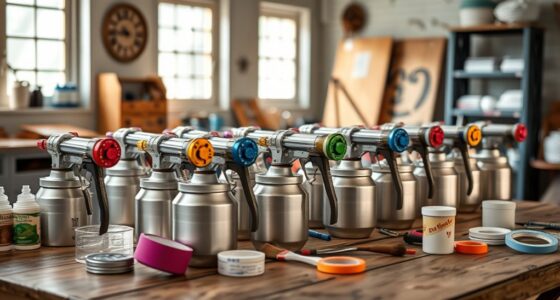
Choosing the right sprayer for epoxy floor coatings is essential for achieving a smooth, professional finish. The best overall pick, the VEVOR Industrial Sprayer, offers a large capacity and durable stainless steel construction, suited for extensive projects. For smaller jobs, the RESINSAFE 1 QT Sprayer provides precise control and ease of use, while the Chapin International 22170XP excels in versatility with its excellent chemical resistance. Buyers face tradeoffs between capacity, ease of handling, and chemical compatibility, making it important to match the sprayer’s features to your specific project scale and type. Continue reading for a detailed breakdown of each option and help narrowing down your choice.

Get business pricing on tools and workshop supplies
- Business-only prices and quantity discounts
- Tax-exempt purchasing
- Multiple users, one account, clear invoices
Complete the kit


Key Takeaways
- The most capable sprayer for large epoxy projects is the VEVOR Industrial Sprayer, thanks to its 4.5-gallon capacity and durable build.
- Chemical resistance varies; stainless steel tanks like those on the Armor 2-Gallon Sprayer offer better longevity when spraying harsh epoxy formulations.
- Ease of use and control are key for smaller or detailed jobs, making smaller, handheld models like the RESINSAFE 1 QT ideal for precision work.
- Cost-effectiveness depends heavily on capacity and durability; larger industrial sprayers tend to have a higher upfront price but lower long-term costs.
- Material compatibility, especially with epoxy chemicals, is a critical factor that influences the sprayer’s lifespan and performance.
| VEVOR Industrial Sprayer, 4.5 Gallons Large Capacity, Stainless Steel Concrete Sealer Sprayer with Ergonomic Handle & Removable Cart |  | Best Overall for Large-Scale Epoxy Projects | Capacity: 4.5 gallons | Tank Material: 304 stainless steel | Hose Length: 48 inches + 120 inches extension | VIEW ON AMAZON | See Our Full Breakdown |
| ERC #1 Epoxy Cleaner – All Purpose, 14 oz Air-Powered Spray |  | Best for Surface Cleaning Before or After Coating | Volume: 14 oz | Application: All-purpose cleaner for epoxy and sealed concrete | Spray Type: Air-powered, non-aerosol | VIEW ON AMAZON | See Our Full Breakdown |
| RESINSAFE 1 QT Sprayer RTU pH Neutral Cleaner for Epoxy and Resinous Coatings |  | Best for Gentle, Professional-Grade Cleaning | Volume: 32 oz | Formulation: RTU | pH Level: Neutral | VIEW ON AMAZON | See Our Full Breakdown |
| Concrete Sprayer 2 Gallon Chemical Resistant Compression Pump Sprayer for Form Oil, Water-Based Sealers, Construction Chemicals |  | Best for Heavy-Duty Chemical Application on Concrete | Capacity: 2 gallons | Material: Brass nozzle, Viton seals | Tank Thickness: 50% thicker than standard | VIEW ON AMAZON | See Our Full Breakdown |
| Chapin International 22170XP 3-Gallon Industrial Concrete Sprayer for Curing Compounds, Form Oils, Waterproofing, and Coatings |  | Best for Curing and Waterproofing Applications | Tank Capacity: 3 gallons | Material: Poly | Wand Length: 36 inches | VIEW ON AMAZON | See Our Full Breakdown |
| Armor 2-Gallon Stainless Steel Pump Sprayer |  | Best for Chemical-Resistant Precision in Small to Medium Projects | Capacity: 2 gallons | Tip Options: .5 adjustable cone tip, 1 GPM fan tip | Material: Stainless steel | VIEW ON AMAZON | See Our Full Breakdown |
| Chapin 19494 3.5-Gallon Industrial Concrete Sprayer with Tri-Poxy Steel Tank |  | Best for Heavy-Duty Industrial Coatings and Large Projects | Tank Capacity: 3.5 gallons | Tank Material: Tri-Poxy steel | Nozzle Types: 0.5 GPM fan, 1.0 GPM fan, adjustable cone nozzle | VIEW ON AMAZON | See Our Full Breakdown |
| Marshalltown Industrial Concrete Sprayer, 3.5 Gallon |  | Best for Versatile Concrete and Sealer Applications on Job Sites | Capacity: 3.5 gallons | Material: Epoxy-lined tank | Hose Length: 48 inches | VIEW ON AMAZON | See Our Full Breakdown |
| ERC #1 Epoxy Cleaner Ready 2 Go Pre-Diluted Gallon of Surface Cleaner |  | Best for Fast, Convenient Surface Cleaning Before Coating | Type: Epoxy & Resinous Surface Cleaner | Volume: 1 gallon | Application: Spray, pump sprayer, or mop | VIEW ON AMAZON | See Our Full Breakdown |
More Details on Our Top Picks
VEVOR Industrial Sprayer, 4.5 Gallons Large Capacity, Stainless Steel Concrete Sealer Sprayer with Ergonomic Handle & Removable Cart
This heavy-duty sprayer stands out for its large 4.5-gallon capacity and durable stainless steel construction, making it ideal for extensive epoxy floor coating applications where coverage speed matters. Compared with smaller or less robust options, this model reduces refilling frequency and resists corrosion, which is crucial in demanding environments. However, its weight when filled and limited spray pattern details mean it’s less suited for precision work or smaller jobs. The ergonomic handle helps minimize fatigue during long sessions, and the extended hoses provide flexibility across large surfaces.
Tradeoffs include its bulkiness and potential difficulty maneuvering in tight spaces, but the investment pays off in efficiency for large-area coatings.
Pros:- Large 4.5-gallon capacity reduces frequent refilling
- Corrosion-resistant stainless steel tank extends lifespan
- Extended hoses improve reach and flexibility
- Ergonomic handle minimizes operator fatigue
Cons:- Weight may be cumbersome when fully loaded
- Limited details on spray pattern adjustment
Best for: Professional contractors applying epoxy coatings on large commercial or industrial floors
Not ideal for: Home users with small spaces or occasional coating needs, due to its size and weight
- Capacity:4.5 gallons
- Tank Material:304 stainless steel
- Hose Length:48 inches + 120 inches extension
- Nozzles:2 brass nozzles
- Seals:2 seal kits
- Weight:Not specified
Our verdict“This sprayer is best suited for professionals needing high-capacity, durable equipment for large epoxy floor projects.”
ERC #1 Epoxy Cleaner – All Purpose, 14 oz Air-Powered Spray
This 14 oz air-powered spray excels at cleaning epoxy and sealed concrete surfaces without risking damage or haze, making it a solid choice for detailed prep or post-coating cleanup. Unlike chemical-resistant sprayers that target chemical application, this cleaner is designed for delicate yet effective removal of oils, tire marks, and grime. Its environmentally friendly, non-aerosol design offers safety and convenience, but it’s not suitable for wet or uncured surfaces, limiting its use to fully cured coatings. Compared to larger, chemical-specific sprayers, this product provides precision cleaning without risking surface damage.
It’s ideal for epoxy professionals and DIYers seeking a safe, effective cleaner for finished surfaces but not for heavy-duty or uncured epoxy removal.
Pros:- Safe for epoxy and resinous surfaces, preventing damage
- Uses environmentally friendly, air-powered spray
- Pre-diluted and ready to use, saving prep time
- Effective at removing oils, tire marks, and grime
Cons:- Limited to cleaning cured surfaces, not suitable for wet epoxy
- Results depend on surface condition and topcoat integrity
Best for: Homeowners or contractors needing a safe, effective surface cleaner for cured epoxy and resin coatings
Not ideal for: Jobs requiring removal of wet or uncured epoxy, where more aggressive cleaning tools are necessary
- Volume:14 oz
- Application:All-purpose cleaner for epoxy and sealed concrete
- Spray Type:Air-powered, non-aerosol
- Made in:USA
Our verdict“This cleaner is perfect for detailed, safe cleaning of fully cured epoxy and sealed concrete surfaces, especially in maintenance routines.”
RESINSAFE 1 QT Sprayer RTU pH Neutral Cleaner for Epoxy and Resinous Coatings
ResinSafe offers a 32 oz ready-to-use, pH-neutral formula that preserves the finish and gloss of epoxy and other resinous coatings, making it ideal for routine cleaning and light maintenance. Compared with larger or more aggressive cleaners, this product provides a streak-free, professional shine without dulling the surface. It’s particularly suited for delicate coatings in showrooms, garages, or high-end spaces. However, its limited capacity and gentle formulation mean it’s less effective for heavy dirt or grease removal. It’s a wise choice for those prioritizing surface preservation over heavy-duty cleaning.
This pick makes the most sense for owners of high-end resin floors seeking a safe, simple cleaning solution that maintains appearance and durability.
Pros:- Maintains gloss and durability of resinous surfaces
- No rinsing required, streak-free finish
- Safe for all epoxy, polyaspartics, and urethane coatings
- Easy to use for spot cleaning and routine maintenance
Cons:- Limited to light dirt and grease removal
- Not suitable for heavily soiled or abrasive cleaning
Best for: Homeowners or commercial owners with delicate epoxy or urethane surfaces needing regular, gentle cleaning
Not ideal for: Heavy-duty cleaning tasks involving grease, mud, or heavily soiled surfaces
- Volume:32 oz
- Formulation:RTU
- pH Level:Neutral
- Suitable Surfaces:Epoxy, polyaspartics, urethanes
Our verdict“This cleaner is best for high-end resin floors requiring gentle, routine maintenance that preserves surface quality.”
Concrete Sprayer 2 Gallon Chemical Resistant Compression Pump Sprayer for Form Oil, Water-Based Sealers, Construction Chemicals
This industrial-grade sprayer is designed for applying chemicals like sealers and form oils, featuring a robust 2-gallon tank with thick-walled construction and chemical-resistant components. Its adjustable brass nozzles and fan tips allow for precise coverage, and safety features like a pressure relief valve enhance user confidence. Compared with smaller or less durable sprayers, this model handles tough chemicals and larger jobs with ease. However, its bulk can hinder maneuverability for small-scale tasks, and some users find nozzle adjustments challenging. It’s best suited for professional environments where chemical resistance and durability matter most.
It’s a smart choice for contractors needing a resilient, versatile sprayer for chemical coatings on concrete and masonry surfaces.
Pros:- Heavy-duty, chemical-resistant construction enhances durability
- Adjustable and fan nozzles for tailored application
- Thicker tank walls for added strength and longevity
- Includes safety features like pressure relief valve
Cons:- Bulkier design may restrict use in tight spaces
- Nozzle adjustment can be tricky for some users
Best for: Construction professionals applying sealers, form oils, or graffiti removers on large concrete or masonry surfaces
Not ideal for: DIYers or users with small, detailed jobs where maneuverability is critical
- Capacity:2 gallons
- Material:Brass nozzle, Viton seals
- Tank Thickness:50% thicker than standard
- Included Nozzles:Adjustable brass, 90º and 110º fan tips
- Safety Features:Pressure relief valve, drip tray
Our verdict“This sprayer is ideal for professionals in need of a durable, chemical-resistant tool for large-scale concrete chemical applications.”
Chapin International 22170XP 3-Gallon Industrial Concrete Sprayer for Curing Compounds, Form Oils, Waterproofing, and Coatings
The Chapin 22170XP, with its 3-gallon capacity and wide-mouth tank, is well-suited for applying curing compounds, form oils, and waterproofing agents on concrete surfaces. Its durable poly tank, combined with a brass wand and lock-on shut-off, ensures reliable operation in professional settings. Compared to smaller sprayers, it offers more capacity for larger jobs, but its weight when full can be cumbersome. Designed mainly for industrial use, this model provides robust chemical resistance and user-friendly features like easy filling and cleaning, though it might be overbuilt for simple DIY tasks.
This sprayer is best for contractors and professionals handling large concrete treatment jobs, where capacity and durability outweigh convenience.
Pros:- Large 3-gallon tank with wide opening facilitates quick filling
- Durable poly tank withstands harsh chemicals
- Brass wand and nozzle ensure longevity and precision
- Chemical-resistant seals suitable for industrial chemicals
Cons:- Heavy when filled, impacting ease of handling
- Primarily designed for professional use, which might be overkill for occasional DIY projects
Best for: Professional contractors applying curing, waterproofing, or form oils on large-scale concrete projects
Not ideal for: Casual DIY users or small repair jobs, as it’s bulkier and geared toward high-volume work
- Tank Capacity:3 gallons
- Material:Poly
- Wand Length:36 inches
- Included Components:Brass wand, nozzle, lock-on
- Application:Curing compounds, form oils, waterproofing
Our verdict“This sprayer is best for professionals needing a high-capacity, durable tool for large concrete chemical applications and treatments.”
Armor 2-Gallon Stainless Steel Pump Sprayer
This sprayer stands out for its durable stainless steel construction and chemical-resistant components, making it well-suited for water-, solvent-, and acetone-based coatings. Compared to the Chapin 19494, it offers more precise pressure control via its pressure gauge and adjustable tips, which translate into finer application. However, its limited 2-gallon capacity can be a bottleneck for larger jobs, and its weight when filled demands strength and stability. This model is ideal for professionals or serious DIYers needing consistent, chemical-resistant spraying in smaller batches. It’s less suited for users requiring high volume or less frequent maintenance. Pros: Durable stainless steel; Chemical resistance; Adjustable tips; Pressure gauge for accuracy. Cons: Limited capacity; Can be heavy when filled; Requires upkeep of chemical-resistant parts.
Verdict: Best for experienced users prioritizing chemical resistance and precision over capacity.- Capacity:2 gallons
- Tip Options:.5 adjustable cone tip, 1 GPM fan tip
- Material:Stainless steel
- Hose Material:Acetone resistant EPDM rubber
- O-Rings:Naphtha resistant Viton
- Features:Pressure gauge, ergonomic wand with lock
Our verdict“Best for Chemical-Resistant Precision in Small to Medium Projects — a strong pick in this lineup.”
Chapin 19494 3.5-Gallon Industrial Concrete Sprayer with Tri-Poxy Steel Tank
This sprayer excels in industrial environments thanks to its Tri-Poxy steel tank, which resists rust, corrosion, and dents—attributes that surpass the durability of the epoxy-lined tank of the Marshalltown sprayer. Its 3.5-gallon capacity and wide-mouth opening make filling and cleaning straightforward, but its heaviness when full can hinder maneuverability. Designed mainly for concrete and industrial coatings, it’s not the best choice for small-scale or delicate projects, especially since it does not support acetone-based products. This makes it ideal for contractors needing robust, long-lasting equipment for large, tough applications. Pros: Heavy-duty Tri-Poxy steel tank; Easy to fill and clean; Brass nozzles and durable construction; Leak-free pump handle. Cons: Overkill for small jobs; Heavy when full; Limited compatibility with certain chemicals.
Verdict: Best for industrial users needing high-volume, tough performance in demanding environments.- Tank Capacity:3.5 gallons
- Tank Material:Tri-Poxy steel
- Nozzle Types:0.5 GPM fan, 1.0 GPM fan, adjustable cone nozzle
- Hose Length:48 inches
- Pump Type:Tri-Lock metal pump handle
- Included Components:Brass nozzles, spray wand, shut-off valve, reinforced hose
Our verdict“Best for Heavy-Duty Industrial Coatings and Large Projects — a strong pick in this lineup.”
Marshalltown Industrial Concrete Sprayer, 3.5 Gallon
The Marshalltown sprayer features a epoxy-lined tank that helps prevent rust and staining, making it a solid choice for sealing and curing compounds. Its brass fittings ensure durability and compatibility with various chemicals, similar to the Chapin, but with a focus on concrete applications. The flexible 48-inch hose provides maneuverability across large surfaces. Unlike the Armor sprayer, it’s more geared toward concrete and sealers rather than solvents, which might limit its use with certain coatings. Its industrial design makes it less ideal for small projects or hobbyist use, but it performs reliably on construction sites. Pros: Durable epoxy-lined tank; Brass fittings; Flexible hose; Suitable for concrete and sealers. Cons: Compatibility varies with chemicals; Requires seal inspection before use; Not designed for delicate or small-scale jobs.
Verdict: Best for contractors and professionals applying curing compounds and sealers on large-scale concrete projects.- Capacity:3.5 gallons
- Material:Epoxy-lined tank
- Hose Length:48 inches
- Fittings:Brass
- Seals:Viton
Our verdict“Best for Versatile Concrete and Sealer Applications on Job Sites — a strong pick in this lineup.”
ERC #1 Epoxy Cleaner Ready 2 Go Pre-Diluted Gallon of Surface Cleaner
This cleaner makes surface prep quick and straightforward, thanks to its pre-diluted, ready-to-use formula that eliminates mixing hassles. Compared to the other sprayers, which focus on application, this product specifically targets cleaning, making it essential for ensuring good adhesion. It works well on cured epoxy and resinous surfaces, removing grime, tire marks, and oil effectively. However, it’s not suitable for uncured resin, limiting its use to post-curing cleaning tasks. Its versatility in application methods—spray, pump, or mop—adds convenience, but results can vary depending on surface condition. This makes it perfect for homeowners and professionals needing quick cleaning between coats or before recoating. Pros: Pre-diluted and ready to use; Effective on tough stains; Versatile application. Cons: Not for uncured resin; Surface results vary; Limited to cleaning, not coating.
Verdict: Best for users seeking a hassle-free, effective cleaner for cured epoxy surfaces before recoating or sealing.- Type:Epoxy & Resinous Surface Cleaner
- Volume:1 gallon
- Application:Spray, pump sprayer, or mop
- Made in:USA
- Not for Use on:Uncured resin
Our verdict“Best for Fast, Convenient Surface Cleaning Before Coating — a strong pick in this lineup.”

How We Picked
These products were selected based on their relevance to epoxy floor coating applications, focusing on performance, durability, and ease of use for both professional and DIY users. We prioritized models with chemical-resistant materials, suitable capacities for different project sizes, and ergonomic design features that reduce user fatigue. Cost-to-value ratio was considered, balancing price against build quality and features. The ranking reflects a combination of customer reviews, brand reputation, and how well each sprayer handles the specific demands of epoxy coatings, including viscosity and chemical compatibility.Factors to Consider When Choosing Sprayer For Epoxy Floor Coatings
When choosing a sprayer for epoxy floor coatings, several factors influence your ability to complete a professional-looking job with minimal hassle. Understanding capacity, material compatibility, and control mechanisms can help prevent common pitfalls like clogging or inadequate coverage. Considering your project size and frequency will help determine whether a large-capacity sprayer or a smaller, more maneuverable model makes the most sense. Additionally, evaluating chemical resistance and ease of cleaning can extend the lifespan of your sprayer and maintain consistent performance.Capacity and Size
For large epoxy projects, a sprayer with at least 3 gallons capacity minimizes refilling stops, saving time and effort. Smaller projects or detail work benefit from compact, handheld units that are easier to maneuver and control. Remember, larger tanks are heavier and may require more effort to operate, so consider your physical comfort and the scope of your work when choosing capacity. If you plan frequent use, investing in a durable, large-capacity model can provide better long-term value, but for occasional jobs, smaller sizes may suffice.
Material Compatibility and Chemical Resistance
Epoxy coatings are thick and chemically aggressive, making material choice critical. Stainless steel tanks typically resist corrosion better than plastic or aluminum, especially when using strong solvents or curing agents. Chemical-resistant seals and pumps also extend the sprayer’s lifespan. Choosing a model with appropriate materials prevents clogging, leaks, or damage during application, ensuring a smooth finish and reducing maintenance costs over time.
Ease of Use and Control
Precision and comfort during spraying significantly impact the quality of your epoxy application. Features like adjustable pressure controls, ergonomic handles, and manageable weight make a difference, especially for prolonged use. Handheld or smaller models excel in detailed areas but may struggle with thicker epoxy formulations. Conversely, larger, powered units often include variable controls that allow you to fine-tune spray patterns and flow rates, resulting in a more uniform coating.
Maintenance and Cleaning
Epoxy coatings can be sticky and challenging to clean from sprayer components. Selecting a model with straightforward disassembly and cleaning features helps maintain consistent performance. Some sprayers include removable parts or are compatible with cleaning solutions that dissolve epoxy residues. Proper cleaning after each use prevents clogging and corrosion, extending the lifespan of your equipment and ensuring reliable operation for future projects.
Cost and Value
While price is an important consideration, it shouldn’t be the sole factor. High-capacity, industrial-grade sprayers tend to cost more upfront but offer greater durability and lower long-term costs. Conversely, budget models might suit occasional DIY jobs but could require replacement sooner if used frequently or with aggressive chemicals. Weighing initial investment against expected usage helps identify the best value, ensuring you don’t compromise quality for short-term savings.
Frequently Asked Questions
Can I use a standard garden sprayer for epoxy floor coatings?
Using a standard garden sprayer for epoxy coatings is generally not recommended because most are not designed to handle the viscosity and chemical nature of epoxy. Garden sprayers often lack the necessary pressure, material resistance, and control features needed for a smooth, even coating. They are more suitable for water-based or light-duty liquids. Investing in a sprayer specifically designed for epoxy ensures better performance, durability, and a professional finish.
How do I prevent clogging when spraying epoxy coatings?
Clogging is a common issue when spraying epoxy, especially if the mixture is thick or contains unmixed components. To minimize this, always strain your epoxy before loading it into the sprayer to remove lumps. Use a sprayer with a compatible, corrosion-resistant nozzle and maintain proper pressure settings. Regular cleaning of the spray gun and parts after each use is essential, as residual epoxy can harden and cause blockages that impair performance in future applications.
What size sprayer is best for small epoxy projects?
For small or detailed epoxy jobs, a handheld or smaller capacity sprayer, such as 1 to 2 gallons, offers better control and maneuverability. These models are lightweight and easier to handle in tight spaces, making them ideal for touch-ups or small areas. However, ensure the sprayer can handle the viscosity of epoxy. A smaller, manual model might require more effort to maintain consistent flow, but it provides precision that larger units may lack.
Is a stainless steel tank worth the extra cost?
Yes, stainless steel tanks are worth considering if you frequently work with harsh chemicals or thicker epoxy formulations. They resist corrosion and chemical degradation better than plastic or aluminum, leading to longer-lasting equipment and more consistent spray quality. While they tend to be more expensive initially, their durability often results in lower maintenance costs over time, especially for professional or high-volume users.
How often should I clean my epoxy sprayer?
Cleaning your epoxy sprayer immediately after each use is highly recommended to prevent residue buildup. Epoxy’s sticky nature can cause clogging and reduce spray quality if left to dry inside the equipment. Using appropriate cleaning solutions designed for epoxy, along with disassembly of parts, ensures thorough cleaning. Regular maintenance not only prolongs the life of your sprayer but also guarantees consistent, smooth application for every project.
Conclusion
For large, professional-scale epoxy coating jobs, the VEVOR Industrial Sprayer offers unmatched capacity and durability, making it the best overall choice. DIY enthusiasts or occasional users will find the RESINSAFE 1 QT Sprayer ideal for its control and ease of handling, while professionals needing maximum longevity should consider models with stainless steel tanks like the Armor 2-Gallon Sprayer. Beginners or those with small projects should opt for lightweight, manageable options to avoid frustration. Ultimately, matching the sprayer’s features to your specific project size, chemical compatibility needs, and budget will lead to the best results.Halloween Picks

Spirit Halloween 54-Inch Sitting Scarecrow Animatronic

10 ft Halloween Inflatable Archway with Built-in LEDs

Govee Outdoor Halloween Projector Light with 3D Dynamic Visuals and Nebula Effect
As an affiliate, we earn on qualifying purchases.