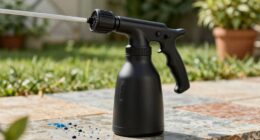
Choosing the right HVLP needle and nozzle sizes is key to getting better atomization and a professional finish. Smaller nozzles work best for thinner paints or stains, giving you fine, detailed spray patterns. Larger nozzles handle thick coatings like primers or enamels, ensuring smooth application without sputtering. Matching the correct nozzle to your paint’s viscosity improves spray quality, reduces waste, and minimizes uneven coats. Continue exploring to discover how to optimize your spray setup for perfect results.
Key Takeaways
- Selecting the correct nozzle size based on paint viscosity ensures optimal atomization and spray pattern control.
- Using manufacturer-recommended needle/nozzle sizes prevents sputtering, clogging, and uneven coating issues.
- Larger nozzles facilitate better flow for thick paints like primers and enamels, improving finish quality.
- Smaller nozzles are ideal for fine finishes with thin paints such as lacquers and stains, enhancing detail work.
- Proper matching of needle and nozzle sizes reduces overspray, material waste, and the need for rework.
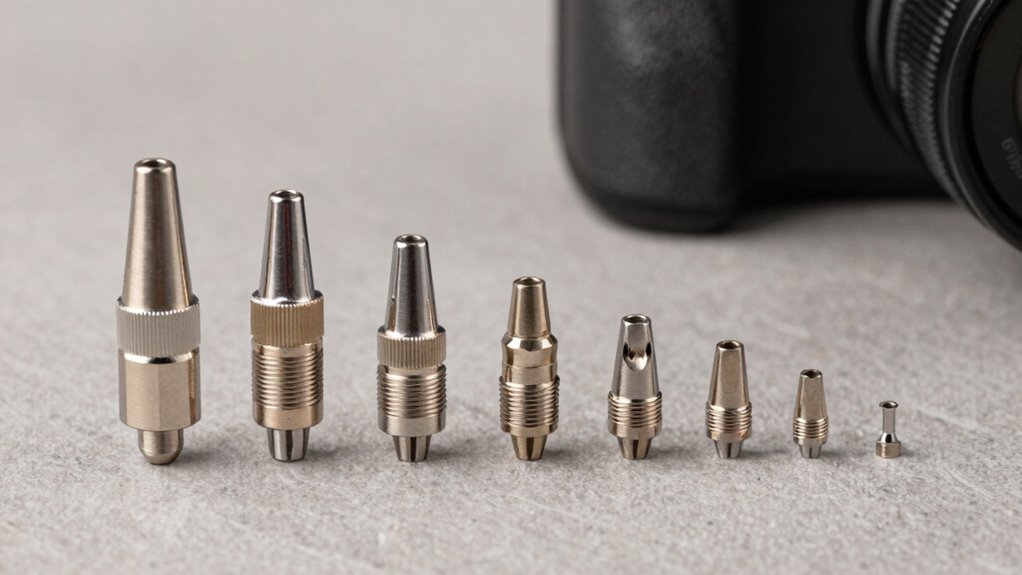
When working with HVLP (High Volume Low Pressure) spray guns, choosing the right needle and nozzle size is vital for achieving a smooth, professional finish. Your goal is to produce an even spray pattern that delivers paint efficiently without overspray or runs. One of the key factors influencing this is understanding how spray pattern and paint viscosity interact with your equipment. The spray pattern, which refers to the shape and size of the mist that leaves the gun, depends heavily on the nozzle size you select. A properly matched nozzle ensures that the spray pattern remains consistent, which is essential for achieving a uniform coat.
Paint viscosity plays a significant role in determining which needle and nozzle size you should use. Thicker paints, like primers or heavy enamels, require larger nozzles to allow sufficient flow and atomization. If you try to spray high-viscosity paint through a small nozzle, you’ll struggle to get a proper spray pattern, leading to uneven coverage, orange peel texture, or even clogging. Conversely, thinner paints, such as lacquers or stains, work better with smaller nozzles, producing a finer spray pattern that results in a smoother finish and less overspray.
Matching your nozzle size to your paint’s viscosity also impacts the overall efficiency of your spraying. Using a nozzle that’s too large for a thin coating can cause excessive paint flow, which wastes material and creates runs or drips. On the other hand, a nozzle that’s too small for thick paint may cause sputtering and inconsistent atomization, ruining the spray pattern. To optimize results, always check the manufacturer’s recommendations for the paint you’re using. They often specify ideal nozzle sizes based on viscosity levels, helping you select the best match for a professional finish.
Adjusting the needle size in tandem with the nozzle can further refine your spray pattern. A larger needle provides better flow for thick paints, while a smaller needle is suited for detailed work or delicate finishes. When you select the right combination, you’ll notice the spray pattern becomes more controlled, providing a consistent, even distribution of paint across your surface. This consistency reduces the need for multiple coats and minimizes touch-up work. Additionally, understanding spray pattern control can help you fine-tune your technique for optimal results.
Frequently Asked Questions
How Do I Choose the Right Needle/Nozzle Size for My Project?
To choose the right needle/nozzle size, consider your project’s paint flow and desired spray pattern. Smaller nozzles provide finer atomization, ideal for detailed work, while larger ones handle thicker paints and broader coverage. Match the nozzle size to the paint viscosity and the finish you want, ensuring you get consistent spray and ideal results. Adjust the settings as needed to fine-tune your spray pattern for best outcomes.
Can Changing Needle/Nozzle Sizes Affect Paint Thickness Application?
Sure, changing needle/nozzle sizes can influence paint thickness application, even if it seems counterintuitive. You might think a larger size would spray more paint, but it actually affects the spray pattern and how the paint viscosity interacts with it. Smaller nozzles create a finer spray, perfect for thin coats, while larger ones handle thicker paints. Adjusting these sizes helps you control the paint thickness and achieve a smooth, professional finish.
Are Larger Needle/Nozzle Sizes Better for Thicker Paints?
Larger needle/nozzle sizes are better for thicker paints because they allow for greater paint flow, reducing clogging and ensuring a consistent spray pattern. You’ll notice smoother application and even coverage with less effort. Just keep in mind, bigger sizes might produce a wider spray pattern, so adjust your technique accordingly. Experimenting with different sizes helps you find the perfect balance for your specific paint and project needs.
How Do I Prevent Clogging With Different Needle/Nozzle Sizes?
Did you know that improper needle/nozzle size causes 60% of spray gun clogs? To prevent clogging, you should match the needle/nozzle to your paint’s viscosity. Thicker paints need larger sizes, but always test spray patterns first. Regularly clean your equipment and thin paints if needed. This guarantees a smooth spray pattern and consistent atomization, reducing clogs and improving your finish.
Do Different HVLP Brands Have Compatible Needle/Nozzle Sizes?
Different HVLP brands often have incompatible needle/nozzle sizes because of varying manufacturing standards and brand-specific designs. You should always check the manufacturer’s specifications to verify compatibility, as using mismatched parts can cause poor spray patterns or damage your equipment. Sticking to original or recommended accessories guarantees better performance and reduces the risk of clogging or malfunction, making your spraying job smoother and more efficient.
Conclusion
Choosing the right HVLP needle and nozzle sizes might seem like a minor detail, but it’s your shortcut to flawless atomization. Small adjustments can make a big difference—like the precision of a fine-tuned instrument versus the chaos of inconsistent spray. By understanding this balance, you discover professional results with ease. Don’t overlook these tiny components; they’re the quiet artisans shaping your perfect finish. Precision here makes perfection everywhere.