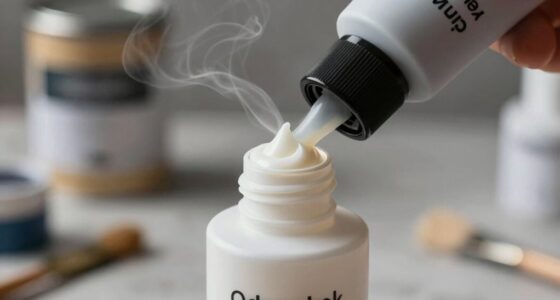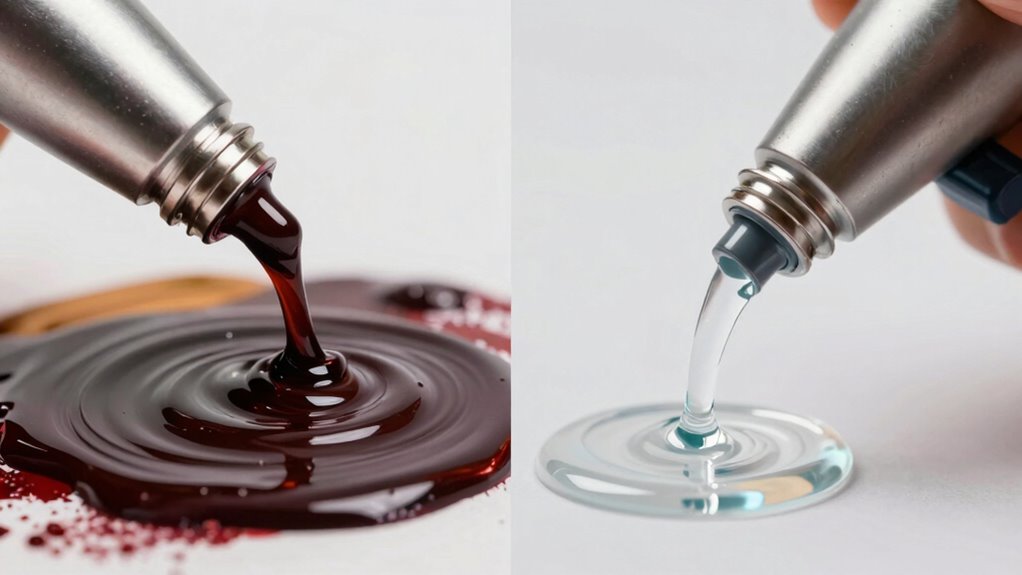
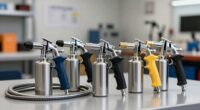
When spraying oil-based paints, you need higher pressure settings and often must thin the paint for smooth application, as its thickness affects compatibility. Water-based paints spray better at lower pressures and usually require less thinning, making them easier for beginners. Properly adjusting your sprayer and understanding each paint’s drying time and finish results are key. If you want to master these differences and improve your spraying techniques, keep exploring for more detailed tips and tricks.
Key Takeaways
- Oil-based paints typically require higher pressure settings and thinning for smooth spraying.
- Water-based paints spray well at lower pressure and often need minimal thinning or additives.
- Oil paints’ thickness may necessitate specialized sprayers or larger tips for proper application.
- Water paints are easier to clean and maintain sprayer equipment, reducing setup complexity.
- Compatibility depends on paint viscosity, sprayer type, and proper thinning to ensure smooth, even coverage.
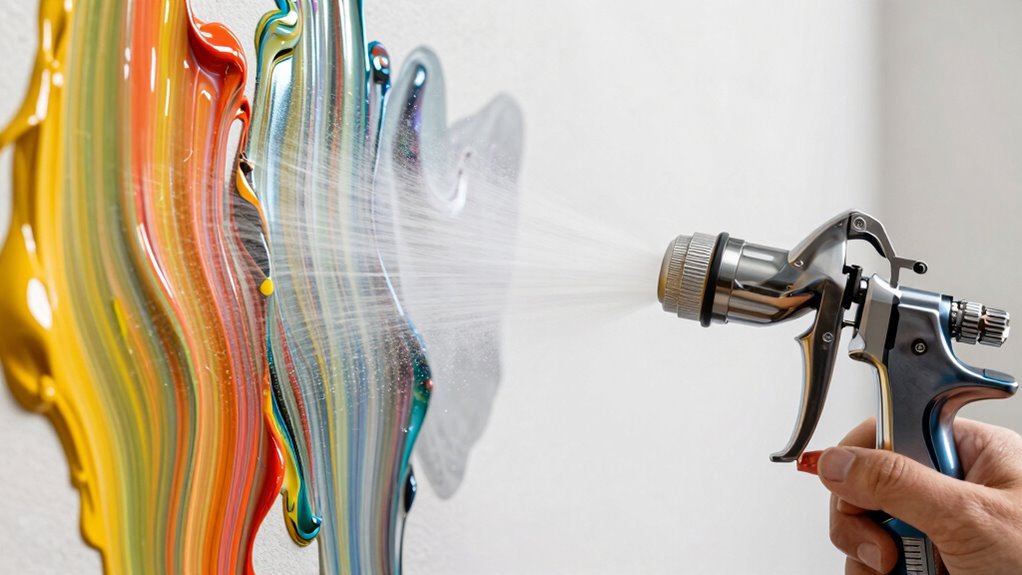
When choosing a paint sprayer, understanding the differences between oil-based and water-based paints is essential. These differences influence how you should approach your project, especially when it comes to brush techniques and drying times. Oil-based paints tend to be thicker and more durable, requiring specific techniques to achieve a smooth finish. Water-based paints are usually more fluid, making them easier to work with, especially for beginners. Knowing how these paints behave helps you select the right sprayer and prepare accordingly.
Understanding the differences between oil-based and water-based paints guides your sprayer choice and application techniques.
Oil-based paints typically need more careful brush techniques to avoid streaks and uneven coverage. When spraying, you’ll want to maintain a consistent distance from the surface and use overlapping passes to ensure an even coat. Since oil paints dry more slowly—sometimes taking 24 hours or more—your brush techniques should be deliberate, giving the paint ample time to set between coats. Rushing can lead to smudges or imperfections, so patience is key. The extended drying time means you might need to plan your project carefully to avoid dust or debris settling on the wet surface.
In contrast, water-based paints dry much faster, often within a few hours. This quick drying time influences your brush techniques and spray approach. You can work more rapidly, but you also need to be precise, as any mistake might be harder to correct once the paint sets. When spraying water-based paints, keeping a steady hand and consistent speed helps prevent issues like drips or uneven coverage. Because they dry quickly, you might need to work in smaller sections to avoid overlaps that could cause visible lines or texture differences.
Your choice of paint affects how you handle the sprayer and your application method. For oil-based paints, a sprayer with a higher pressure setting might be necessary to push the thicker mixture through the nozzle smoothly. You might also need to thin the paint slightly to improve flow, which influences your brush techniques and the final finish. Water-based paints usually flow better at lower pressure settings and often require less thinning. This makes them more forgiving and easier to clean up afterward. Additionally, understanding the paint chemistry helps in selecting appropriate thinner or additives for optimal spraying performance.

VONFORN Paint Sprayer, 700W HVLP Spray Gun with Cleaning & Blowing Joints, 4 Nozzles and 3 Patterns, Easy to Clean, for Furniture, Cabinets, Fence, Walls, Door, Garden Chairs etc. VF803 Yellow
【4 Nozzles & 3 Spray Patterns】VONFORN 700W paint sprayer includes 4 nozzle sizes (1.0mm, 1.5mm, 2.0mm, 3.0mm) to…
As an affiliate, we earn on qualifying purchases.
As an affiliate, we earn on qualifying purchases.
Frequently Asked Questions
Can I Switch Between Oil and Water-Based Paints With the Same Sprayer?
You can switch between oil and water-based paints with the same sprayer, but you need to verify paint compatibility first. Make sure the sprayer is suitable for both types, and clean it thoroughly between uses to prevent cross-contamination. Adjust the sprayer settings accordingly—oil paints may need different pressure and nozzle size than water-based paints. Proper sprayer adjustments ensure smooth application and prevent clogging or damage.
What Cleaning Procedures Are Required for Oil-Based Sprayers?
Oil-based sprayers demand thorough cleaning, unlike their water-based counterparts. You start by using a paint stripper to loosen dried paint, then switch to solvent cleaning with mineral spirits or paint thinner. Disassemble the spray gun and soak parts, scrubbing away residual paint. Rinse everything well, making certain no leftover paint clogs the nozzle. Proper cleaning prevents damage, keeps your sprayer in top shape, and ensures flawless future projects.
Are There Specific Nozzle Sizes Recommended for Each Paint Type?
You should choose nozzle sizes based on your paint type to guarantee ideal spray pattern and nozzle compatibility. For oil-based paints, use larger nozzles, typically 0.017 to 0.021 inches, to handle thicker consistency and achieve a smooth spray pattern. Water-based paints work well with smaller nozzles, around 0.013 to 0.015 inches, providing a fine, even spray. Matching nozzle size to your paint type ensures proper spray pattern and prevents clogs.
How Do I Prevent Clogging When Switching Paint Types?
To prevent clogging when switching paint types, always clean your spray gun thoroughly between uses. Check paint compatibility with your sprayer and use the correct nozzle size to match each paint type. Regular nozzle maintenance, like cleaning with appropriate solvents, ensures smooth operation. This prevents buildup and clogs, especially when switching from oil-based to water-based paints. Proper cleaning and nozzle care keep your sprayer functioning efficiently and extend its lifespan.
What Safety Precautions Should I Take When Spraying Oil or Water-Based Paints?
When spraying oil or water-based paints, you should wear protective gear like masks, goggles, and gloves to protect your skin and eyes. Make certain your ventilation setup is proper to avoid inhaling fumes and to keep fumes from building up indoors. Always work in a well-ventilated area, and consider using a respirator for added safety, especially when spraying oil-based paints. This keeps you safe and maintains good air quality.
VONFORN Paint Sprayer, 700W HVLP Spray Gun with Cleaning & Blowing Joints, 4 Nozzles and 3 Patterns, Easy to Clean, for Furniture, Cabinets, Fence, Walls, Door, Garden Chairs etc. VF803 Yellow
【4 Nozzles & 3 Spray Patterns】VONFORN 700W paint sprayer includes 4 nozzle sizes (1.0mm, 1.5mm, 2.0mm, 3.0mm) to…
As an affiliate, we earn on qualifying purchases.
As an affiliate, we earn on qualifying purchases.
Conclusion
Just as the choice between oil and water paints can make or break your masterpiece, understanding their compatibility with sprayers guarantees your project flows smoothly. Remember the tale of Icarus—knowing your tools prevents you from flying too close to the sun. By following these rules, you’ll avoid pitfalls and achieve a flawless finish. So, gear up wisely, and let your creativity soar without risking a fall. The perfect paint job is within your reach—just like Icarus reaching for the sky.

Lithitech Airless Paint Sprayer, 3000PSI High Efficiency Paint Sprayer Gun,Thinning-Free,with Accessories Storage Space,with Extension & Other Accessories, Paint Sprayer for House Painting
High-Efficiency Spraying: Airless Paint Sprayer delivers pressure up to 3000 psi. Quickly covers large areas. With a maximum…
As an affiliate, we earn on qualifying purchases.
As an affiliate, we earn on qualifying purchases.

VEVOR 750W Stand Airless Paint Sprayer, 3000PSI High Efficiency Electric Airless Sprayer, Fine and Even Painting Effect, Handheld Paint Sprayers for Home Interior and Exterior Furniture and Fences
Efficient Painting: Our stand airless paint sprayer is equipped with a powerful 750W motor, capable of delivering up…
As an affiliate, we earn on qualifying purchases.
As an affiliate, we earn on qualifying purchases.