For premium hiking boots for rugged trails, I’d start with the Oboz Bridger Mid B-DRY: its supportive build and protective design make it a strong all-around choice for demanding terrain. The Zamberlan Vioz GTX stands out for hikers who want a more substantial leather boot, while the Merrell Moab 3 Mid offers a more flexible, approachable option for varied day hikes. The main tradeoff is between heavier support and durability on rough ground versus lighter weight and quicker comfort on long days. Waterproofing, fit, and sole stiffness matter just as much as the feature list, so I’d compare them against your terrain and pack weight. Read on for the full breakdown of all 14 boots and how their strengths differ.

Get business pricing on tools and workshop supplies
- Business-only prices and quantity discounts
- Tax-exempt purchasing
- Multiple users, one account, clear invoices
Complete the kit


Key Takeaways
- Oboz Bridger Mid B-DRY is the strongest all-around match in this lineup for hikers who want a protective, supportive mid boot without choosing the most specialized high-cut designs.
- Zamberlan Vioz GTX and Kenetrek Mountain Extreme serve a different priority: they make more sense when a substantial boot and demanding terrain matter more than light weight or an easy break-in.
- Merrell Moab 3 Mid and Danner Mountain 600 ID favor a more approachable feel, making them better fits for hikers who want comfort and versatility over maximum stiffness.
- The budget-oriented Columbia, NORTIV 8, and SHULOOK options trade refinement for accessibility; buyers should pay close attention to fit, support needs, and the demands of their usual trails.
- Waterproof membranes are common across the lineup, but they do not solve every wet-weather problem: a boot still needs a secure fit, appropriate traction, and enough support for the load and terrain.
| Danner Men’s Mountain 600 ID Gore-Tex Waterproof Hiking Boots |  | Best Overall for Lightweight Rugged Hiking | Outer material: Nylon | Inner material: Gore-Tex | Water resistance: Waterproof | VIEW ON AMAZON | See Our Full Breakdown |
| Columbia Men’s Newton Ridge Plus II Suede Waterproof Hiking Boot |  | Best for Mixed-Weather Day Trails | Outer material: Leather and suede | Sole material: Rubber | Waterproof: Yes | VIEW ON AMAZON | See Our Full Breakdown |
| Foxelli Men’s Hiking Boots – Waterproof, Breathable & Lightweight Suede Leather |  | Best for Comfort-Oriented Day Hikers | Fabric type: Suede leather | Outer material: Suede leather | Sole material: Ethylene Vinyl Acetate | VIEW ON AMAZON | See Our Full Breakdown |
| NORTIV 8 Men’s Ankle High Waterproof Hiking Boots |  | Best for Flexible, Multi-Activity Use | Fabric type: Fabric and synthetic | Sole material: EVA and rubber | Shaft height: Ankle | VIEW ON AMAZON | See Our Full Breakdown |
| Kenetrek Men’s Mountain Extreme Non-Insulated Hiking Boots |  | Best for Heavy Loads and Rugged Backcountry | Fabric: 100% leather | Leather thickness: 2.8 mm | Shaft height: 10 inches | VIEW ON AMAZON | See Our Full Breakdown |
| Oboz Men’s Bridger Mid B-DRY Waterproof Hiking Boot |  | Best for Loaded Backpacking | Upper: Waterproof nubuck leather | Waterproofing: B-DRY membrane | Sole material: Rubber | VIEW ON AMAZON | See Our Full Breakdown |
| Zamberlan Men’s Vioz GTX Hiking Boots |  | Best Premium Leather Build | Upper: Hydrobloc full-grain leather | Membrane: Gore-Tex Performance Comfort | Lining: Moisture-wicking Microtex nylon | VIEW ON AMAZON | See Our Full Breakdown |
| Columbia Men’s Transverse Waterproof Hiking Boots | 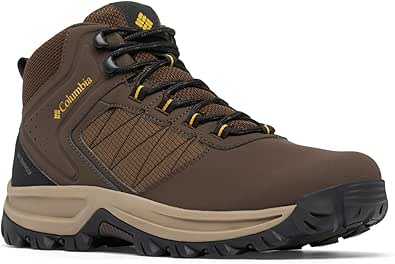 | Best for Moderate-Weather Day Hikes | Upper: Leather and mesh | Waterproofing: Waterproof, breathable, seam-sealed construction | Shaft height: Ankle | VIEW ON AMAZON | See Our Full Breakdown |
| SHULOOK Men’s Waterproof Hiking Boots, Lightweight Non-Slip Mid-Top Trekking Shoes |  | Best Lightweight Pick | Upper: Synthetic suede and fabric | Waterproof membrane: SL-TEX | Weight: 1.25 lb (size 10) | VIEW ON AMAZON | See Our Full Breakdown |
| Timberland Men’s White Ledge Mid Waterproof Hiking Boots |  | Best for Leather-Boot Simplicity | Upper: Waterproof premium leather | Waterproofing: Seam-sealed construction | Shaft height: Mid | VIEW ON AMAZON | See Our Full Breakdown |
| Columbia Men’s Crestwood Hiking Boots |  | Best for Dry-Trail Comfort | Fabric: 100% leather and textile | Outer material: Leather | Sole material: Rubber | VIEW ON AMAZON | See Our Full Breakdown |
| Kenetrek Men’s Bridger High Hiking Boots |  | Best for Ankle Support on Rugged Trails | Upper: Leather | Shaft height: 7 inches | Shaft circumference: 9 inches | VIEW ON AMAZON | See Our Full Breakdown |
| Merrell Men’s Moab 3 Mid Hiking Boot |  | Best for All-Around Trail Versatility | Upper: Pigskin leather and mesh | Lining: Recycled mesh | Shaft height: Mid | VIEW ON AMAZON | See Our Full Breakdown |
| Merrell Men’s Speed Strike 2 Mid Leather Waterproof Hiking Boot |  | Best for Lightweight Waterproof Protection | Upper: Waterproof full-grain leather | Shaft height: Ankle | Shaft circumference: 4 inches | VIEW ON AMAZON | See Our Full Breakdown |
| premium hiking boots for rugged trail | Midsole | Outsole | Sole material | Shaft height |
|---|---|---|---|---|
| Danner Men’s Mountain 600 ID G | Vibram SPE | Danner Plyolite | Rubber | — |
| Columbia Men’s Newton Ridge Pl | — | Omni-Grip with dual-zone winter tread | Rubber | — |
| Foxelli Men’s Hiking Boots | — | — | Ethylene Vinyl Acetate | — |
| NORTIV 8 Men’s Ankle High Wate | Lightweight EVA | Slip-resistant rubber | EVA and rubber | Ankle |
| Kenetrek Men’s Mountain Extrem | 7 mm nylon | K-Talon | Rubber | 10 inches |
| Oboz Men’s Bridger Mid B-DRY W | — | — | Rubber | 4.5 inches |
| Zamberlan Men’s Vioz GTX Hikin | PU | Zamberlan Vibram 3D | — | — |
| Columbia Men’s Transverse Wate | — | — | Rubber | Ankle |
| SHULOOK Men’s Waterproof Hikin | Flexible EVA | Advanced traction rubber | — | — |
| Timberland Men’s White Ledge M | EVA | Solid rubber with multidirectional lugs | — | Mid |
| Columbia Men’s Crestwood Hikin | Techlite cushioned | Omni-Grip | Rubber | — |
| Kenetrek Men’s Bridger High Hi | Full-length nylon | KT-Light | — | 7 inches |
| Merrell Men’s Moab 3 Mid Hikin | Lightweight EVA foam | Vibram TC5+ rubber | — | Mid |
| Merrell Men’s Speed Strike 2 M | Lightweight EVA foam | — | Rubber | Ankle |
More Details on Our Top Picks
Danner Men’s Mountain 600 ID Gore-Tex Waterproof Hiking Boots
The Danner Mountain 600 ID is my best all-around match here for hikers who want waterproof protection and trail-ready cushioning without the weight and rigidity of a heavy-duty boot. Its Gore-Tex lining helps keep water out, while the Vibram SPE midsole and OrthoLite footbed soften long days on mixed terrain. Compared with the Kenetrek Mountain Extreme, this Danner is the more flexible, lighter-feeling choice; the Kenetrek is better suited to heavy loads and rougher, more demanding routes. The tradeoff is that the Mountain 600 ID’s lighter construction offers less evidence of the rigid support and substantial leather build that benefit loaded backpacking. Its nylon upper and Danner Plyolite outsole also distinguish it from more traditional full-leather boots. I’d choose it for varied day hikes, not as my first pick for hauling a heavy pack over extended rugged terrain.
Pros:- Gore-Tex lining provides waterproof protection
- Lightweight, flexible design suits varied day hikes
- Vibram SPE midsole and OrthoLite footbed add cushioning
- Danner Plyolite outsole is designed for traction on rugged terrain
Cons:- Lighter construction may provide less support under heavy backpacking loads
- Nylon outer material is less substantial than the Kenetrek Mountain Extreme’s full-grain leather
Best for: Day hikers who want waterproof protection, cushioning, and a lighter, more flexible boot for varied trails.
Not ideal for: Backpackers carrying heavy loads on extended rough routes who need the rigid support and substantial leather construction of the Kenetrek Mountain Extreme.
- Outer material:Nylon
- Inner material:Gore-Tex
- Water resistance:Waterproof
- Sole material:Rubber
- Midsole:Vibram SPE
- Footbed:OrthoLite
- Outsole:Danner Plyolite
- Color:Almond Butter
Our verdict“Choose the Danner Mountain 600 ID for cushioned, waterproof day hikes when flexibility matters more than heavy-load support.”
Columbia Men’s Newton Ridge Plus II Suede Waterproof Hiking Boot
The Columbia Newton Ridge Plus II earns its place for hikers who meet wet paths, muddy stretches, and occasional icy conditions but don’t need a stiff boot built for heavy loads. Its seam-sealed waterproof construction helps protect against rain and puddles, and the Omni-Grip outsole’s dual-zone winter tread is a useful distinction from the Danner Mountain 600 ID, whose listed outsole details focus on rugged-terrain traction rather than winter tread. The lightweight cushioned midsole also favors comfortable day hiking over the firmer, load-carrying support of the Kenetrek Mountain Extreme. That lighter, approachable setup comes with tradeoffs: suede needs care to preserve its appearance, and this boot’s description gives less evidence of the structural support needed for demanding, heavily loaded treks. I’d shortlist it for changing weather and varied day routes, especially where winter footing is a concern.
Pros:- Seam-sealed waterproof construction helps keep out rain and puddles
- Omni-Grip outsole has dual-zone tread designed for ice and snow
- Lightweight midsole provides cushioning and energy return
- Leather and suede upper with metal hardware offers a protective build
Cons:- Suede requires extra care to maintain its appearance
- Less suited to heavy-load support than the Kenetrek Mountain Extreme
- Winter-oriented tread does not make it a substitute for a rigid mountaineering boot
Best for: Day hikers who regularly encounter rain, muddy trails, or some icy and snowy sections and want a cushioned boot with winter-oriented tread.
Not ideal for: Backpackers carrying heavy loads over extended rugged routes, or buyers who want low-maintenance uppers that need no suede care.
- Outer material:Leather and suede
- Sole material:Rubber
- Waterproof:Yes
- Construction:Seam-sealed
- Outsole:Omni-Grip with dual-zone winter tread
- Closure:Lace-up
- Shaft circumference:9.42 inches
- Origin:Imported
Our verdict“Pick the Newton Ridge Plus II for cushioned day hikes where wet weather and winter-style tread matter more than heavy-load support.”
Foxelli Men’s Hiking Boots – Waterproof, Breathable & Lightweight Suede Leather
The Foxelli Men’s Hiking Boots suit hikers who prioritize a lightweight feel, padded comfort, and ankle support for day outings and everyday wear. The suede leather upper is described as waterproof and breathable, while padded insoles and a non-slip rubber sole target comfort and footing without the distinctly heavy-duty build of the Kenetrek Mountain Extreme. Compared with the Danner Mountain 600 ID, Foxelli emphasizes padded insoles and includes extra laces and hiking socks, while Danner specifies a Gore-Tex lining and named midsole and footbed components. That difference makes Danner the clearer choice for shoppers seeking a specified waterproof membrane and cushioning system. Foxelli’s listed sole material is EVA, and its description supplies fewer construction details for judging support under a heavy pack. A break-in period may also be needed, so I’d favor it for lighter hikes rather than demanding, loaded treks.
Pros:- Lightweight design supports easier movement on day hikes
- Waterproof, breathable suede leather upper
- Padded insoles and described ankle and arch support
- Includes extra laces and hiking socks
Cons:- May require a break-in period before the fit feels right
- Product details provide less construction information than the Danner Mountain 600 ID
- EVA sole material offers less evidence of a heavy-load support setup than the Kenetrek Mountain Extreme
Best for: Hikers seeking a lightweight suede boot with padded insoles and ankle support for day hikes, casual outdoor use, and daily wear.
Not ideal for: Backpackers who carry heavy loads or shoppers who want a clearly specified waterproof membrane and midsole system like the Danner Mountain 600 ID.
- Fabric type:Suede leather
- Outer material:Suede leather
- Sole material:Ethylene Vinyl Acetate
- Waterproof:Yes, as described
- Breathability:Described as breathable
- Support:Ankle and arch support
- Origin:Imported
Our verdict“Choose Foxelli for lightweight day hiking and everyday comfort, but look elsewhere for detailed heavy-load support or a named waterproof membrane.”
NORTIV 8 Men’s Ankle High Waterproof Hiking Boots
The NORTIV 8 Ankle High is aimed at buyers who want one lightweight boot for hiking, camping, and other outdoor outings, rather than a specialized choice for long, heavily loaded treks. Its EVA midsole and shock-absorbent insole prioritize cushioning and flexibility, while the rubber sole is described as slip-resistant. Compared with the Kenetrek Mountain Extreme, NORTIV 8 gives up the listed thick leather, rigid nylon midsole, and aggressive K-Talon outsole in favor of a more flexible ankle-high design. The Danner Mountain 600 ID is a stronger alternative for shoppers who want a named Gore-Tex lining and specified cushioning components. Although this NORTIV 8 is described as waterproof, the supplied details don’t state how its protection performs over prolonged wet exposure. That uncertainty, along with its lighter support profile, makes it a better fit for general outings than technical, rugged backpacking.
Pros:- EVA midsole and shock-absorbent insole target all-day cushioning
- Lightweight, flexible design may reduce foot fatigue
- Rubber sole is described as slip-resistant
- Versatile for hiking, camping, and trekking
Cons:- Waterproof protection duration is not specified
- Ankle-high design and listed construction provide less evidence of heavy-load support than the Kenetrek Mountain Extreme
- Style options are described as potentially limited
Best for: Outdoor users who want a flexible, cushioned ankle-high boot for shorter hikes, camping, and general trail use.
Not ideal for: Backpackers on extended rugged routes who need specified waterproofing performance and firm support under a heavy load.
- Fabric type:Fabric and synthetic
- Sole material:EVA and rubber
- Shaft height:Ankle
- Water resistance:Described as waterproof; duration not specified
- Midsole:Lightweight EVA
- Insole:Shock-absorbent
- Outsole:Slip-resistant rubber
- Origin:Imported
Our verdict“Choose NORTIV 8 for flexible, cushioned outings across several outdoor activities, not for long treks with a heavy pack.”
Kenetrek Men’s Mountain Extreme Non-Insulated Hiking Boots
When a rugged route and a heavy pack call for firm support, the Kenetrek Mountain Extreme is the most purpose-built option in this group. Its 2.8 mm full-grain leather, 7 mm nylon midsole, and 10-inch shaft point to a sturdier, more supportive boot than the flexible Danner Mountain 600 ID or the cushioned, multi-activity NORTIV 8. The Windtex membrane is listed as waterproof and breathable, and the K-Talon outsole is designed for rugged terrain. That structure is also the main compromise: the boot may feel stiff, especially to hikers accustomed to lighter day-hiking models, and its non-insulated build is less suitable for extended use in very cold conditions. I’d favor it when load support and durability matter more than quick, easy flex. For shorter hikes without a heavy pack, Danner’s lighter construction is likely the more comfortable fit.
Pros:- 2.8 mm full-grain leather offers a substantial upper
- Rigid 7 mm nylon midsole is suited to supporting heavy loads
- Windtex membrane is listed as waterproof and breathable
- K-Talon outsole is designed for rugged-terrain traction
Cons:- Rigid support may feel stiff, especially compared with the Danner Mountain 600 ID
- Non-insulated construction may be less suitable for extended use in very cold conditions
- Heavier-duty build is less suited to hikers prioritizing a flexible day-hiking feel
Best for: Backpackers and rugged-trail hikers carrying heavy loads who want a tall, supportive full-leather boot.
Not ideal for: Day hikers seeking a lightweight, flexible boot, or anyone planning extended use in very cold conditions without separate insulation.
- Fabric:100% leather
- Leather thickness:2.8 mm
- Shaft height:10 inches
- Midsole:7 mm nylon
- Membrane:Windtex waterproof breathable
- Outsole:K-Talon
- Sole material:Rubber
- Insulation:Non-insulated
- Origin:Imported
Our verdict“Choose the Kenetrek Mountain Extreme for heavy-load backcountry hiking when firm support outweighs flexibility and insulation.”
Oboz Men’s Bridger Mid B-DRY Waterproof Hiking Boot
The Bridger Mid is the most backpacking-focused choice in this group: its TPU chassis and nylon shank add support under a load, while the rubber Trail Tread outsole is built for grip across varied terrain. The B-DRY membrane and reinforced nubuck leather upper suit wet, rough trails better than a lighter option such as the SHULOOK, whose synthetic build prioritizes lower weight over the same substantial feel. A triple-density EVA insole with a heel cup and arch support helps on long days, but the boot weighs 19 ounces per half pair, so it is not the nimblest pick here. The full leather upper may also need a break-in period. Choose it for support and protection; skip it if you want a light boot for short, easy hikes.
Pros:- B-DRY membrane provides waterproof, breathable protection for wet trails.
- TPU chassis and nylon shank add support under a backpack load.
- Triple-density EVA insole includes a heel cup and arch support.
- Rubber toe cap, heel counter, and multidirectional tread suit rough terrain.
Cons:- At 19 ounces per half pair, it is heavier than lightweight hiking options.
- Full leather construction may require a break-in period.
Best for: Backpackers carrying a loaded pack who want a supportive, waterproof leather boot for rough and varied trails.
Not ideal for: Day hikers prioritizing low weight or a quick break-in, since the leather build is heavier and may take time to soften.
- Upper:Waterproof nubuck leather
- Waterproofing:B-DRY membrane
- Sole material:Rubber
- Shaft height:4.5 inches
- Weight:19.0 oz per half pair
- Insole:Triple-density EVA O FIT
- Midsole support:Single-density EVA with TPU chassis and nylon shank
Our verdict“Choose the Bridger Mid for supportive, weather-ready backpacking; pick the SHULOOK instead if reducing boot weight matters more.”
Zamberlan Men’s Vioz GTX Hiking Boots
The Vioz GTX earns its place as the premium full-grain leather option for hikers who value a supportive, durable upper and a refined flex design. Its Gore-Tex Performance Comfort membrane pairs with moisture-wicking collar lining to manage wet conditions, while the Vibram 3D outsole and PU midsole provide a sturdier platform than the more lightly built Columbia Transverse. Zamberlan’s Flex System is designed to allow forward movement without giving up lateral support, a useful balance on uneven trails. The tradeoff is that the supplied details give no weight or break-in guidance, and its calf-high shaft may feel more substantial than an ankle-height boot. I’d favor it for demanding routes and leather-boot buyers, not hikers seeking a simple, light everyday option.
Pros:- Hydrobloc full-grain leather upper offers a substantial, durable build.
- Gore-Tex Performance Comfort membrane provides waterproof, breathable protection.
- Vibram 3D outsole and PU midsole support traction and cushioning.
- Zamberlan Flex System is designed for forward flex with lateral support.
Cons:- Calf-high shaft may feel more restrictive or substantial than ankle-height alternatives such as the Columbia Transverse.
- Product details do not specify boot weight, making pack-weight comparisons difficult.
- Full-grain leather construction may feel less suited to hikers seeking a light, flexible boot.
Best for: Experienced hikers seeking a premium full-grain leather boot with waterproof protection and support for uneven trails.
Not ideal for: Hikers who want a lightweight, low-profile boot or need published weight and fit details before choosing.
- Upper:Hydrobloc full-grain leather
- Membrane:Gore-Tex Performance Comfort
- Lining:Moisture-wicking Microtex nylon
- Outsole:Zamberlan Vibram 3D
- Midsole:PU
- Flex system:Zamberlan Flex System (ZFS)
- Shaft:Calf high
- Shaft circumference:6 inches
Our verdict“Pick the Vioz GTX for a supportive premium leather build on demanding trails, but choose the Columbia Transverse for a lighter, lower-cut design.”
Columbia Men’s Transverse Waterproof Hiking Boots
The Transverse is the practical choice for hikers who need waterproof coverage without a tall, heavy boot. Its ankle-height leather-and-mesh upper and seam-sealed construction are designed for moderate rain and snow, while TECHLITE cushioning absorbs impact and returns energy on mixed day-hike terrain. Compared with the leather-heavy Oboz Bridger Mid, this Columbia is a lower-cut, more straightforward option rather than a boot built around load support and a shank. OMNI-GRIP adds wet- and dry-terrain traction, but the product description sets a clear boundary: it is intended for moderate exposure, not prolonged severe weather. I’d choose it for varied local trails and day trips; hikers tackling sustained wet conditions or carrying heavy packs may want a more protective, supportive build.
Pros:- Seam-sealed waterproof, breathable construction helps shield feet from moderate rain and snow.
- TECHLITE cushioning provides impact absorption and energy return.
- OMNI-GRIP outsole is designed for wet and dry terrain.
- Leather-and-mesh upper balances durability with a lower-cut build.
Cons:- Designed for moderate rain and snow rather than prolonged severe exposure.
- Ankle-height design offers less coverage than mid-cut boots such as the Oboz Bridger Mid.
- Product details do not specify weight or a supportive shank for loaded backpacking.
Best for: Day hikers who want an ankle-height waterproof boot for trails with varied surfaces and occasional moderate rain or snow.
Not ideal for: Backpackers carrying heavy loads or hikers facing prolonged severe wet weather, given its moderate-exposure design and lower cut.
- Upper:Leather and mesh
- Waterproofing:Waterproof, breathable, seam-sealed construction
- Shaft height:Ankle
- Cushioning:TECHLITE impact absorption with energy return
- Traction:OMNI-GRIP for wet and dry terrain
- Sole material:Rubber
- Origin:Imported
Our verdict“Choose the Transverse for moderate-weather day hikes and a lower-cut feel, not for heavy-load trips or extended severe conditions.”
SHULOOK Men’s Waterproof Hiking Boots, Lightweight Non-Slip Mid-Top Trekking Shoes
SHULOOK is the weight-conscious choice for hikers who want a waterproof mid-top without the substantial leather build of the Oboz Bridger Mid. At 1.25 pounds for size 10, it is aimed at reducing fatigue on walking, camping, and less demanding hikes; the SL-TEX membrane and closed-cell tongue help keep trail moisture out. A removable memory-foam insole and flexible EVA midsole emphasize comfort over the structured support offered by the Bridger’s TPU chassis and nylon shank. That distinction matters on rugged routes: SHULOOK’s synthetic suede and fabric construction may be less durable than full-grain or reinforced leather, and the lighter mid-top offers less protection than a heavier backpacking boot. I’d pick it for lighter outings and mixed outdoor use, not rough trails under a heavy pack.
Pros:- Lightweight design weighs 1.25 pounds for size 10.
- SL-TEX membrane and closed-cell tongue help keep water out.
- Removable memory-foam insole and flexible EVA midsole add cushioning.
- Rubber anti-collision toe and traction outsole support everyday trail use.
Cons:- Synthetic suede and fabric may be less durable than full-grain leather.
- Lightweight mid-top construction offers less rugged protection than heavier backpacking boots.
- Waterproof construction may feel less breathable in hot conditions.
Best for: Hikers and campers who prioritize lower weight and cushioned comfort for day hikes and general outdoor use.
Not ideal for: Backpackers carrying heavy loads or hikers who need the durable, supportive protection of a heavier leather boot for rugged routes.
- Upper:Synthetic suede and fabric
- Waterproof membrane:SL-TEX
- Weight:1.25 lb (size 10)
- Lining:D01 breathable lining
- Closure:Lace-up
- Insole:Removable memory foam
- Midsole:Flexible EVA
- Outsole:Advanced traction rubber
Our verdict“Choose SHULOOK for lightweight, cushioned day hikes and camping, but opt for the Oboz Bridger Mid when loaded-trail support and a tougher leather build matter more.”
Timberland Men’s White Ledge Mid Waterproof Hiking Boots
The White Ledge Mid suits hikers who want a straightforward waterproof leather boot with familiar lacing and cushioning, rather than the more technical support package of the Oboz Bridger Mid. Waterproof premium leather and seam-sealed construction provide the core weather barrier, while a gusseted tongue helps limit debris and water entering at the lace area. Its EVA footbed and midsole prioritize cushioned comfort, and solid-rubber lugs provide multidirectional grip. The tradeoff is that the supplied details do not describe a shank or chassis for loaded backpacking, and its leather build may feel heavy to hikers accustomed to lighter synthetic boots such as SHULOOK. I’d shortlist it for general rugged day hikes and buyers who prefer leather; those carrying heavier packs should look for more explicit support features.
Pros:- Waterproof premium leather and seam-sealed construction provide weather protection.
- Gusseted tongue helps block debris and water around the laces.
- EVA footbed and midsole cushion the foot.
- Solid-rubber outsole has multidirectional lugs, with rustproof speed-lace hardware for a secure fit.
Cons:- May feel heavy compared with lighter options such as SHULOOK.
- Product details do not specify a shank or chassis for loaded backpacking support.
- Leather construction may be less appealing to hikers seeking a light, flexible boot.
Best for: Day hikers who prefer a waterproof premium leather upper, cushioned EVA underfoot, and simple speed-lace hardware.
Not ideal for: Weight-sensitive hikers or backpackers seeking documented shank and chassis support for heavy loads.
- Upper:Waterproof premium leather
- Waterproofing:Seam-sealed construction
- Shaft height:Mid
- Lining:ReBOTL fabric
- Footbed:EVA
- Midsole:EVA
- Outsole:Solid rubber with multidirectional lugs
- Hardware:Rustproof speed lace with lace hooks
- Tongue:Gusseted
Our verdict“Choose the White Ledge Mid for a cushioned, waterproof leather boot on rugged day hikes, but look to the Oboz Bridger Mid for more specified support under a pack.”
Columbia Men’s Crestwood Hiking Boots
The Columbia Crestwood is the comfort-first choice here for hikers who mostly stick to dry trails and want a boot that feels wearable beyond the trailhead. Its lightweight leather-and-textile upper and Techlite cushioned midsole favor easier walking over the more supportive, weather-ready build of the Kenetrek Bridger High. Omni-Grip rubber provides traction for varied terrain, but the description does not list a waterproof membrane, so I would not choose it for frequent rain, muddy routes, or wet crossings. Compared with the Merrell Moab 3 Mid, the Crestwood is presented as especially light and ready to wear without a break-in period, while the Moab offers a specified Vibram outsole and protective toe cap. Pick the Crestwood for uncomplicated dry-day hikes; skip it if rugged conditions regularly include water or prolonged exposure.
Pros:- Lightweight construction supports comfortable wear on longer outings.
- Techlite cushioned midsole adds comfort underfoot.
- Omni-Grip rubber outsole is designed for traction across varied terrain.
- Breathable suede-and-mesh design suits dry conditions and is described as ready to wear without a break-in period.
Cons:- No waterproof membrane is specified, limiting confidence in persistently wet conditions.
- Its comfort-oriented build is less clearly equipped for demanding, rough terrain than the Kenetrek Bridger High’s full-length nylon midsole and ankle-support features.
Best for: Day hikers who prioritize a lightweight, comfortable boot for dry trails and everyday wear.
Not ideal for: Hikers who routinely encounter rain, wet brush, or stream crossings and need a specified waterproof membrane.
- Fabric:100% leather and textile
- Outer material:Leather
- Sole material:Rubber
- Midsole:Techlite cushioned
- Outsole:Omni-Grip
- Upper design:Breathable suede mesh
- Origin:Imported
Our verdict“Choose the Crestwood for light, dry hikes and everyday comfort, but pick a waterproof boot for routinely wet or rough routes.”
Kenetrek Men’s Bridger High Hiking Boots
The Kenetrek Bridger High stands out for hikers who want more structure and weather protection without stepping up to a heavier, more specialized boot. Its 7-inch leather upper, K-Straps ankle support, and full-length nylon midsole are aimed at uneven trails where a steady feel matters; the Windtex membrane adds protection from wet conditions. At 2.9 pounds per pair, it is described as lightweight, though that figure and its supportive build still put it in a different category from the comfort-focused Columbia Crestwood, which lacks specified waterproofing and comparable ankle-support details. The tradeoff is fit flexibility: it comes in medium or wide widths only, and its structured design may feel like more boot than casual walkers need. I’d choose it for rugged, changeable routes, not minimal-shoe simplicity.
Pros:- Windtex membrane is specified as waterproof, breathable, and flexible.
- K-Straps and a 7-inch upper add ankle support on uneven ground.
- Full-length nylon midsole provides a supportive platform for rugged trails.
- Protective rubber rand and KT-Light outsole are suited to trail use.
Cons:- Only medium and wide widths are listed, which excludes hikers needing narrow sizing.
- Its supportive high-cut construction may feel excessive for easy walks compared with the Columbia Crestwood.
Best for: Hikers tackling uneven, wet trails who want a supportive leather boot and need a medium or wide fit.
Not ideal for: Hikers who need narrow sizing or prefer a flexible, low-structure boot for casual paths.
- Upper:Leather
- Shaft height:7 inches
- Shaft circumference:9 inches
- Weight:2.9 pounds per pair
- Membrane:Windtex waterproof, breathable, flexible
- Midsole:Full-length nylon
- Outsole:KT-Light
- Widths:Medium or wide
- Closure:Lace-to-toe
Our verdict“Choose the Bridger High for wet, uneven trails when ankle support matters and medium or wide sizing works for you.”
Merrell Men’s Moab 3 Mid Hiking Boot
The Merrell Moab 3 Mid is the most balanced pick in this group for hikers who want cushioning, a defined trail outsole, and protection in a mid-cut design. Its Vibram TC5+ outsole, removable contoured insole, and Merrell Air Cushion give it a more detailed underfoot setup than the Columbia Crestwood, whose description emphasizes lightness and general-purpose traction. A protective toe cap and bellows tongue also suit rougher paths, while recycled mesh lining and laces add material choices rather than changing the boot’s core trail role. The tradeoff is that this is not presented as a waterproof model, unlike the Merrell Speed Strike 2 Mid; hikers facing regular rain should favor that option. The Moab is also described as heavier than minimalist hiking shoes, and its mid shaft may not suit everyone.
Pros:- Vibram TC5+ rubber outsole provides a specified traction platform.
- Removable contoured insole and lightweight EVA foam midsole support cushioned wear.
- Protective toe cap and bellows tongue add useful coverage on rough trails.
- Recycled mesh lining and laces incorporate recycled materials.
Cons:- No waterproof membrane is specified, unlike the Merrell Speed Strike 2 Mid.
- Heavier than minimalist hiking shoes, according to the product information.
- The mid-height shaft may feel restrictive to some hikers.
Best for: Hikers seeking a cushioned, protective mid boot for varied trails who do not require specified waterproofing.
Not ideal for: Hikers who often cross wet terrain or want a minimalist, low-weight shoe.
- Upper:Pigskin leather and mesh
- Lining:Recycled mesh
- Shaft height:Mid
- Shaft circumference:4 inches
- Insole:Removable, contoured, with reinforced heel cushioning
- Midsole:Lightweight EVA foam
- Outsole:Vibram TC5+ rubber
- Additional features:Protective toe cap, bellows tongue, Merrell Air Cushion
- Laces:Recycled
Our verdict“Choose the Moab 3 Mid for cushioned, protective hiking on varied trails, but look to the Speed Strike 2 Mid for specified waterproof protection.”
Merrell Men’s Speed Strike 2 Mid Leather Waterproof Hiking Boot
The Merrell Speed Strike 2 Mid Leather is the straightforward pick here for hikers who want a waterproof leather upper without the more support-focused feature set of the Kenetrek Bridger High. Its waterproof membrane is designed to keep water out while letting moisture escape, and the lightweight EVA midsole aims to limit bulk underfoot. Recycled mesh lining and a partly recycled removable footbed add material details, though the boot’s main advantage over the Merrell Moab 3 Mid is the explicitly stated waterproof construction—not a specified Vibram outsole or protective toe cap. The tradeoffs are upkeep and replacement: full-grain leather needs regular care, and the removable footbed may wear before the rest of the boot. Choose it for wet-weather day hikes; hikers needing the Bridger’s stated ankle-support system should look elsewhere.
Pros:- Waterproof membrane is designed to block water while allowing moisture to escape.
- Full-grain leather upper provides a durable exterior.
- Lightweight EVA foam midsole offers cushioning and stability.
- Lining is 100% recycled mesh, and the removable EVA footbed is 50% recycled.
Cons:- Full-grain leather requires regular care to maintain.
- The removable footbed may wear out before the boot.
- The product details do not specify a specialized outsole or ankle-support system comparable to the Kenetrek Bridger High.
Best for: Day hikers who want a waterproof leather mid boot with a lightweight foam midsole and recycled lining.
Not ideal for: Hikers who need a specified high-support ankle system or want to avoid regular leather care and eventual footbed replacement.
- Upper:Waterproof full-grain leather
- Shaft height:Ankle
- Shaft circumference:4 inches
- Lining:100% recycled breathable mesh
- Footbed:Removable EVA foam, 50% recycled
- Midsole:Lightweight EVA foam
- Sole material:Rubber
- Origin:Imported
Our verdict“Choose the Speed Strike 2 Mid for waterproof leather protection on day hikes, but favor the Bridger High if structured ankle support is your priority.”

How We Picked
I compared the 14 boots by how well their designs suit rugged, uneven trails, focusing on support, outsole grip, toe and side protection, weather coverage, and the likely comfort tradeoffs of a more substantial build. I also weighed usability factors that shape real buying decisions: boot height, weight-oriented design, leather or synthetic construction, and how specialized the boot seems for a particular kind of hiking. The lineup spans supportive leather boots, lighter mid-height options, and more accessible models, so I judged each against its intended role rather than treating every boot as interchangeable.
The ranking favors boots that offer a convincing balance of protection, support, and versatility for rugged trails. More specialized or substantial models can rank highly for demanding terrain but lose ground for buyers who prioritize low weight or everyday flexibility. Lighter and value-oriented boots remain useful picks, but they sit lower when their design is less suited to heavy loads or consistently rough ground. Product names and listed features inform this comparison; fit varies by foot, so I recommend checking sizing guidance and trying boots with the socks you plan to hike in.
| premium hiking boots for rugged trail | Sole material |
|---|---|
| Danner Men’s Mountain 600 ID G | Rubber |
| Columbia Men’s Newton Ridge Pl | Rubber |
| Foxelli Men’s Hiking Boots | Ethylene Vinyl Acetate |
| NORTIV 8 Men’s Ankle High Wate | EVA and rubber |
| Kenetrek Men’s Mountain Extrem | Rubber |
| Oboz Men’s Bridger Mid B-DRY W | Rubber |
| Zamberlan Men’s Vioz GTX Hikin | — |
| Columbia Men’s Transverse Wate | Rubber |
| SHULOOK Men’s Waterproof Hikin | — |
| Timberland Men’s White Ledge M | — |
| Columbia Men’s Crestwood Hikin | Rubber |
| Kenetrek Men’s Bridger High Hi | — |
| Merrell Men’s Moab 3 Mid Hikin | — |
| Merrell Men’s Speed Strike 2 M | Rubber |
Factors to Consider When Choosing Premium Hiking Boots For Rugged Trails
Choosing boots for rough trails is less about finding the most features and more about matching the boot’s structure to your routes, pack, and feet. I’d use these factors to narrow the field before deciding between a flexible mid boot and a more protective, substantial build.
Match Support to Terrain and Pack Weight
A rocky route with frequent side-hilling puts different demands on a boot than a maintained forest trail. More structure can help your feet feel steadier under a loaded pack, but stiffness may feel tiring on easier ground and take more adjustment. Do not assume a taller boot automatically prevents ankle injuries; a secure fit, careful footing, and appropriate strength matter too. If you carry a light day pack, a supportive but flexible mid boot may be a better match than a very rigid model. For repeated trips over loose rock or steep, uneven terrain, prioritize a stable platform and protective build over softness underfoot. Let your usual route—not the most extreme hike you might take once—set the support level.
Treat Fit as a Performance Feature
A boot can have strong materials and still be the wrong choice if your heel lifts or your toes strike the front on descents. Try boots later in the day, when feet tend to be larger, and use the hiking socks you expect to wear. Leave room for toe movement while checking that the midfoot and heel feel held without pressure or numbness. Walk down an incline if possible: downhill toe contact often appears before it becomes obvious on flat floors. Do not rely on a break-in period to fix a poor width or a painful pressure point. When sizing between options, compare the brand’s fit guidance and return terms rather than automatically sizing up.
Choose Waterproofing With Your Climate in Mind
A waterproof membrane helps with wet grass, shallow puddles, and changing weather, but it can also hold heat and moisture inside the boot. In hot, dry conditions or on hikes with frequent stream crossings, faster drying may matter more than a waterproof label. Waterproof boots also need care: dirt and neglected leather can reduce comfort and shorten the life of the upper. Gaiters can help keep water, grit, and snow from entering over the collar, but they cannot compensate for a boot that is submerged above its opening. Think about how often your hikes are wet, how warm your feet run, and whether you can dry boots between outings. Choose for the conditions you encounter most often rather than treating waterproofing as an automatic upgrade.
Balance Weight Against Protection
Reducing boot weight can make long miles feel easier, but lighter construction may provide less of the substantial, protective feel some hikers want on broken ground. A heavier boot can be a sensible choice for rough routes and heavier loads, yet it may feel excessive on short walks or packed trails. Compare the whole setup, including socks, insoles, and the weight of your pack; no single boot feature determines fatigue. If you are new to hiking boots, a moderately supportive model may be easier to adapt to than a very rigid option. Avoid buying the stiffest boot simply because a trail is described as rugged. The right balance is the lightest design that still feels secure and protective for your actual conditions.
Look Beyond the Outsole Label
Traction depends on lug shape, rubber, and the surface underfoot, not just a claim that a sole is grippy. Deep, spaced lugs can shed mud more readily, while a broad, stable contact area can feel more secure on hard trails. Even a capable tread can struggle on wet roots, smooth rock, or loose gravel, so realistic foot placement remains part of the equation. Check whether the boot’s sole feels stable across the terrain you hike rather than judging it by appearance alone. Worn tread can also change grip before the upper looks finished, especially for frequent hikers. If you hike in mixed conditions, favor a versatile outsole design over one that excels only in a single surface.
Pay for the Features Your Hiking Uses
A more expensive or specialized boot is most useful when its construction answers a specific need, such as repeated rough-terrain use, a substantial protective feel, or durable leather that suits your maintenance habits. It is harder to justify extra complexity if most outings are short and on maintained paths. Before paying more, check whether the boot’s weight, stiffness, and break-in demands fit your routine, not just its material list. Also factor in care: leather may need cleaning and conditioning, while any waterproof boot benefits from drying and regular inspection. A dependable fit can be more valuable than a premium feature that does not suit your foot. Spend more for a clear functional gain, not simply for a more rugged appearance.
Frequently Asked Questions
Which boot should I choose if my rugged hikes include both rocky climbs and easier approach trails?
I’d look for a versatile mid boot with enough support for uneven sections but not so much stiffness that easy miles feel like work. The Oboz Bridger Mid B-DRY is the clearest all-around starting point in this comparison, while the Merrell Moab 3 Mid suits hikers who prefer a more approachable, flexible feel. If your pack is heavy or the rough sections dominate the route, a more substantial design may be a better fit. Think about the whole day, including the approach and descent, rather than buying only for the hardest stretch. Fit and comfort on a slope should settle the choice.
Is a heavier, stiffer boot better for carrying a loaded pack?
It can be, especially when a stable platform and added protection help on steep, broken terrain, but weight and stiffness are not automatically beneficial. A boot that feels secure under load may feel cumbersome on maintained trails or during long approach miles. The Kenetrek Mountain Extreme and Zamberlan Vioz GTX represent more substantial directions in this lineup than the lighter-feeling options. Match the boot to your pack weight and route difficulty, then check whether the fit stays comfortable as your feet swell. If your load is modest, a supportive but less rigid boot may be the more practical choice.
Should I choose waterproof boots if I hike in warm weather?
Choose waterproofing if wet grass, rain, or shallow water are regular parts of your hikes, but weigh that protection against heat and slower drying. Warm-weather hikers who mostly use dry trails may prefer a less insulated-feeling, more breathable design, depending on the boot’s construction. A waterproof membrane will not keep water out if it enters over the collar, and damp socks can still result from sweat. Consider your climate, how often you cross water, and how easily you can dry boots between trips. The waterproof models in this roundup are not automatically the best choice for every season.
How much break-in should I expect before taking new boots on a long hike?
Plan several shorter walks before relying on any new boot for a long or remote route, especially if it has a substantial leather upper or a stiff construction. Break-in can soften materials and reveal pressure points, but it cannot correct a boot that is too narrow, too short, or poorly shaped for your foot. Wear your hiking socks, adjust the lacing for climbs and descents, and check for heel movement or toe contact. If pain or numbness persists, reassess the size or model instead of hoping more miles will fix it. Keep a familiar backup option for demanding trips until the new pair has proved comfortable on varied terrain.
Are the lower-cost boots in this roundup suitable for rough trails, or should I buy a premium model?
A lower-cost boot can suit occasional hikes and moderate trails if it fits securely and gives you the support and traction you need. The Columbia, NORTIV 8, and SHULOOK options provide more accessible alternatives, while the more substantial premium-oriented boots may make better sense for frequent use or consistently demanding terrain. Compare the actual demands of your routes, how much you carry, and how often you hike before paying for a more specialized build. A premium label does not compensate for poor fit, and a less expensive boot is not automatically unsuitable. For regular remote hikes, prioritize dependable comfort and protection over saving weight or choosing by appearance.
Conclusion
For one boot to cover a broad mix of rough trails, I’d choose the Oboz Bridger Mid B-DRY as best overall. The Columbia Newton Ridge Plus II is my best value direction for hikers who want a waterproof mid boot without stepping straight into a highly specialized design, while the Zamberlan Vioz GTX is the best premium pick for buyers drawn to a substantial leather build. Beginners may find the Merrell Moab 3 Mid easier to approach than the stiffest boots here. For demanding terrain and a more rugged, high-support emphasis, compare the Kenetrek Mountain Extreme and Kenetrek Bridger High; for a lighter, flexible preference, look at the Danner Mountain 600 ID or Merrell Speed Strike 2 Mid Leather Waterproof. Choose by fit first, then match support, weight, and weather protection to the trails you hike most.