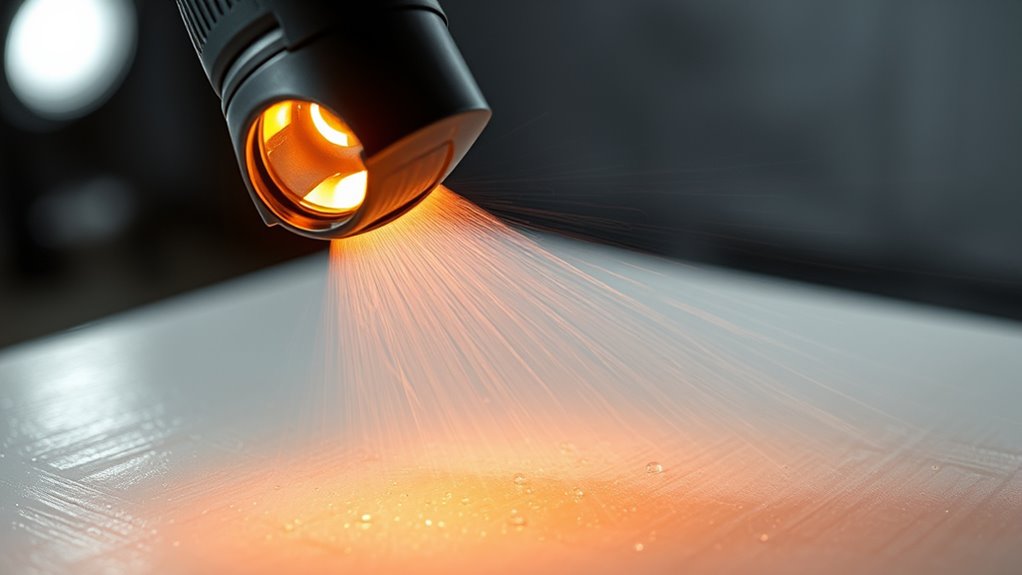
Using heat guns and drying aids after spraying can speed up your drying and curing process, helping to achieve a smooth, durable finish. By applying gentle, controlled heat, you can reduce trapped moisture and prevent issues like bubbling or uneven textures. Just keep the heat moderate and move the gun steadily to avoid damage. If you want to learn how to use these tools properly for the best results, keep exploring these tips.

Get business pricing on tools and workshop supplies
- Business-only prices and quantity discounts
- Tax-exempt purchasing
- Multiple users, one account, clear invoices
Key Takeaways
- Use heat guns to accelerate drying and curing of spray paint for quicker project completion.
- Maintain moderate heat settings and steady movement to prevent surface damage during drying.
- Apply controlled, gentle heat to eliminate trapped moisture and ensure a smooth, durable finish.
- Follow manufacturer guidelines for temperature and distance to optimize results and avoid discoloration.
- Regularly maintain and service drying tools to ensure consistent performance and prevent equipment failure.

Heat guns and drying aids are indispensable tools that can considerably speed up your drying processes and improve results. When you’re working with spray paint or other coatings, these tools help accelerate paint curing and moisture removal, guaranteeing a smoother finish and quicker turnaround. Using a heat gun correctly allows you to direct controlled heat onto the painted surface, which not only speeds up the curing process but also helps eliminate any trapped moisture that could cause issues later. Proper moisture removal is essential because excess moisture can lead to bubbling, uneven textures, or long-term adhesion problems. By applying a gentle, consistent heat, you can reduce these risks and achieve a more durable, professional-looking finish.
It’s important to understand that heat guns aren’t just for melting or softening materials—they’re powerful tools for enhancing drying and curing processes. When you use a heat gun for paint curing, keep the temperature moderate and move it steadily to avoid overheating the surface. Overheating can damage the paint or cause discoloration, so always follow manufacturer guidelines for temperature settings and distance from the surface. This controlled approach guarantees that the paint dries evenly and bonds properly without defects. As you work, pay close attention to the surface’s response; if you notice any signs of overheating, reduce the heat or increase the distance between the gun and the surface. Additionally, understanding the importance of proper maintenance practices can help prolong the effectiveness of your drying tools and prevent potential failures.
As an affiliate, we earn on qualifying purchases.
Frequently Asked Questions
Can Heat Guns Damage Spray Paint Finishes?
Yes, heat guns can damage spray paint finishes if you’re not careful. To protect your paint finish integrity, always follow heat gun safety guidelines, keeping the tool moving and maintaining a safe distance from the surface. Using high heat settings or holding the gun in one spot too long can cause bubbling, melting, or peeling. Stay attentive, and you’ll avoid damaging your spray job.
What Safety Precautions Are Needed When Using Drying Aids?
When using drying aids, you should wear personal protective equipment like gloves and a mask to avoid inhaling fumes or contact with skin. Guarantee proper ventilation requirements are met by working outdoors or in a well-ventilated area to prevent buildup of potentially harmful vapors. Always follow the manufacturer’s instructions, and keep the workspace clear of ignition sources, especially if drying aids are flammable.
How Long Does It Typically Take for Paint to Dry With a Heat Gun?
Think of your paint as a delicate flower needing just the right warmth to bloom. With a heat gun set on low to medium, paint curing can take anywhere from 10 to 30 minutes, depending on thickness. Keep the heat gun moving to avoid scorching. Patience is key, as proper drying guarantees a smooth, durable finish. Rushing can cause bubbles or uneven curing, so monitor carefully.
Are There Specific Drying Aids for Different Types of Paint?
Yes, there are specialized drying agents designed for different types of paint. You should use paint-specific solutions to guarantee ideal drying without damaging the finish. For example, acrylic paints benefit from water-based drying aids, while oil paints may require solvents or slow-drying mediums. Always check the paint manufacturer’s recommendations before applying any drying aids, and select specialized drying agents suited to your specific paint type for the best results.
Can Heat Guns Be Used for Drying Other Materials Besides Paint?
Think of a heat gun as a versatile artist’s brush, capable of shaping more than just paint. Yes, heat gun applications extend to drying adhesives, plastics, and even thawing frozen pipes. When choosing a drying aid, consider the material’s sensitivity to heat to prevent damage. Proper drying aid selection guarantees you use the right temperature and technique, making your project safer and more efficient.
Conclusion
So, next time you spray, don’t forget that heat guns and drying aids often come together in surprising ways. It’s funny how a simple tool can make the difference, almost like they’re meant to work side by side. Just like how a quick blast of heat can speed things up, your careful choice of drying aids can unexpectedly save you time and effort. Sometimes, the best results come from the most unexpected combinations.
Fall Picks
fall essentials
As an affiliate, we earn on qualifying purchases.