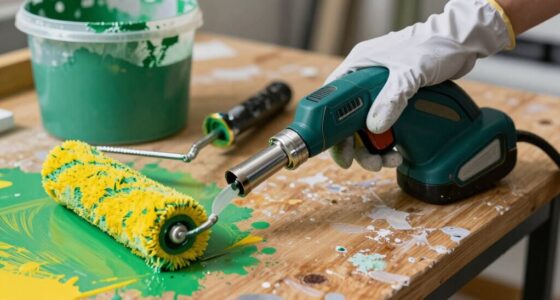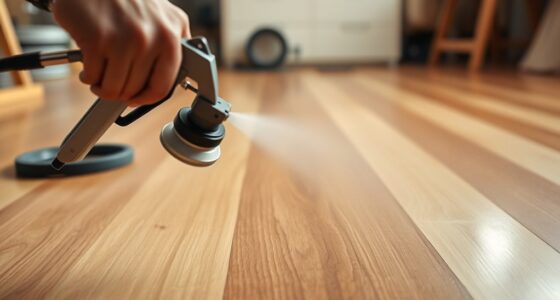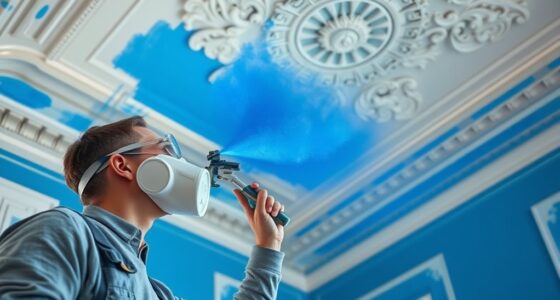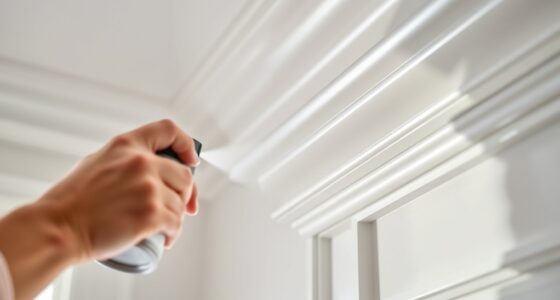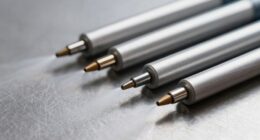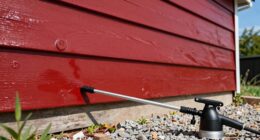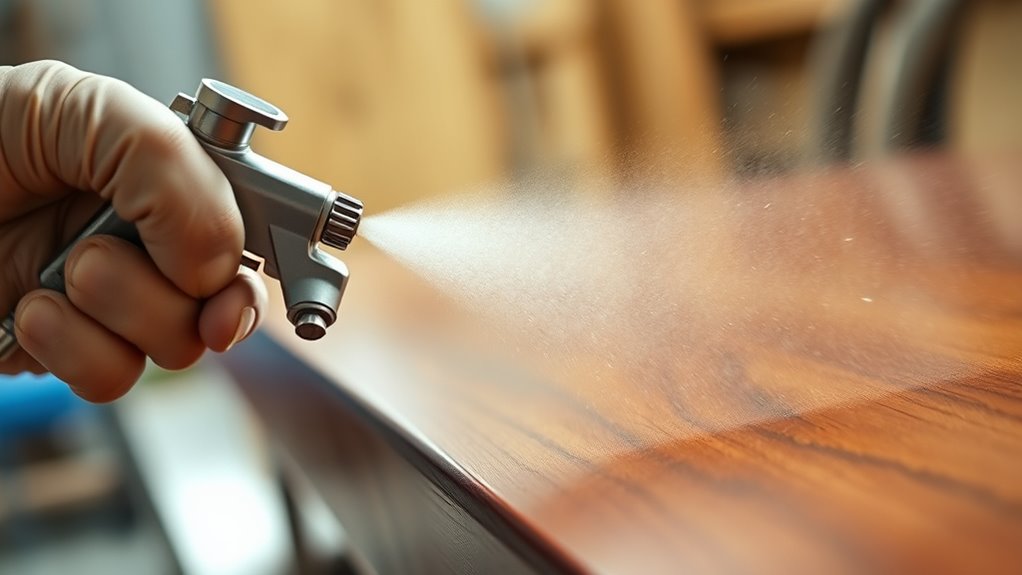

To achieve a flawless spray finish with lacquers and varnishes, focus on smooth, even strokes and maintain a wet edge to prevent streaks. Use high-quality brushes suited for your material, and work in a controlled, dust-free environment with stable temperature and humidity. Proper workspace setup and environment control help avoid dust and imperfections, ensuring a professional look. Keep practicing these fine-finish techniques, and you’ll discover even more tips for perfect results.
Key Takeaways
- Use smooth, even brush strokes and maintain a wet edge for a flawless finish.
- Control environmental conditions, keeping temperature between 70-75°F and low humidity.
- Prepare a dust-free workspace with coverings and air purifiers to prevent debris settling.
- Ensure proper ventilation and avoid drafts to promote even drying and curing.
- Select high-quality brushes suited for lacquer or varnish and avoid pressing too hard during application.
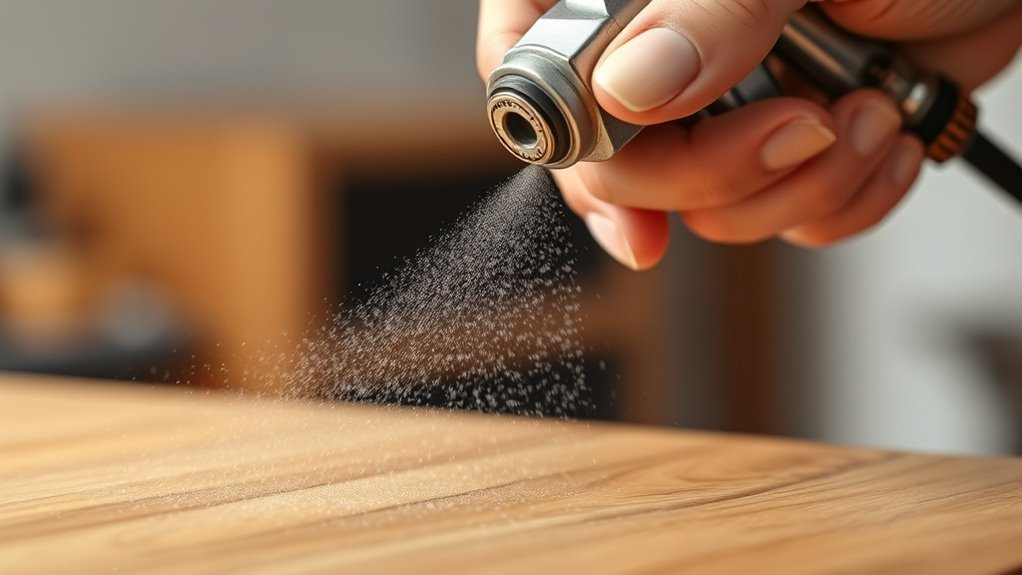
Spraying lacquers and varnishes is an efficient way to achieve a smooth, professional finish on furniture, cabinetry, and other woodwork. While spray equipment offers excellent coverage, mastering brush techniques is equally important, especially for touch-ups or intricate details. When you switch to brushing, focus on smooth, even strokes, maintaining a wet edge to prevent marks or streaks. Use high-quality brushes suited for lacquer or varnish, such as natural bristle or synthetic brushes, and avoid pressing too hard, which can cause brush marks. Consistent, light strokes help guarantee a uniform finish, and you should always work in the direction of the grain. Proper technique minimizes the need for sanding or re-coating later, saving you time and effort.
Equally vital is understanding your drying environment. Lacquers and varnishes are sensitive to temperature, humidity, and airflow. Ideally, you want a space that is clean, dust-free, and has stable temperature conditions, usually between 70-75°F (21-24°C). Too much humidity slows down drying, leading to tackiness or cloudiness, while low humidity can cause the finish to crack or peel. Proper ventilation is necessary to help the finish cure correctly, but avoid strong drafts or direct airflow that can cause uneven drying or dust settling on the surface. You might consider setting up a controlled environment with a portable heater or dehumidifier if your workspace isn’t ideal.
When you’re applying the finish, keep in mind that the drying environment plays a critical role in the final appearance. If conditions are too humid or cool, the lacquer or varnish might take longer to cure, increasing the risk of issues like bubbling or an uneven sheen. Conversely, if it’s too hot or dry, the finish can dry too quickly, leading to brush marks or a rough texture. To optimize results, work in a space that allows you to control these variables as much as possible. Cover nearby surfaces to prevent dust or debris from settling on your work, and consider using a fan or air purifier to keep the air clean.

“THE ORIGINAL” Curved 360 Wave Brush – Ruby Red – High Gloss Piano Lacquer Finish – Medium-Soft Premium 100% Boar Bristle Hairbrush – Gold Engraved Logo
BRING THE BARBERSHOP EXPERIENCE HOME WITH YOU: Crown Quality brings the barbershop experience straight to your bathroom with…
As an affiliate, we earn on qualifying purchases.
As an affiliate, we earn on qualifying purchases.
Frequently Asked Questions
How Do I Prevent Bubbles During Spraying?
To prevent bubbles during spraying, you should adjust your spray distance to avoid oversaturation and maintain a steady, even motion. Use a smooth brush technique to keep the finish consistent, and avoid stopping or starting abruptly. Keep the spray gun at the right distance—usually about 6-12 inches—and move consistently to prevent buildup that causes bubbles. Proper technique guarantees a smooth, bubble-free finish every time.
What Safety Gear Is Essential for Spraying Lacquers?
Your safety is paramount—don’t underestimate it; it’s as crucial as breathing! When spraying lacquers, you must wear protective gloves to prevent skin contact and a respirator mask to avoid inhaling harmful fumes. These essentials shield you from chemical exposure that can cause serious health issues. Always confirm your gear fits well and is in good condition, making your work safer and your finish flawless.
Can I Mix Different Brands of Lacquer?
You shouldn’t mix different brands of lacquer because they often have incompatible formulations, which can cause issues like poor adhesion or uneven finishes. Always check the manufacturer’s instructions for compatibility and stick to the recommended mixing ratios to guarantee the best results. If you must blend brands, do a small test first to see how they react. This way, you maintain a smooth, durable finish and avoid costly mistakes.
How Do I Fix Runs or Drips in the Finish?
To fix runs or drips, start by letting the finish dry completely. Then, use fine-grit sanding techniques to carefully level the area. If needed, you can do brush touch-ups to blend the repaired spot. Lightly sand the affected area, remove dust, and apply a thin coat of lacquer or varnish. This process helps restore a smooth, professional-looking finish without damaging the surrounding areas.
What Environmental Conditions Affect Spray Application?
Environmental factors like humidity, temperature, and dust can markedly affect your spray application. High humidity causes the finish to dry slowly, leading to uneven spray consistency, while low temperatures can cause runs or improper adhesion. Dust particles in the air settle on the surface, ruining the smooth finish. To achieve the best results, spray in a controlled environment with stable temperature and low humidity, and make certain the workspace is clean and dust-free.

Colad Improved Paint Booth Dust Control – 1 Gallon Solution for Automotive Paint Booths, Overspray & Contaminant Prevention in Body Shops
Specially designed to keep particles and dirt down on the floor to prevent particles from swirling during the…
As an affiliate, we earn on qualifying purchases.
As an affiliate, we earn on qualifying purchases.
Conclusion
As you finish your project, remember that the key to a flawless finish often comes down to patience and timing—just like waiting for the perfect moment to spray your lacquer or varnish. Sometimes, a gentle breeze or a sudden burst of sunlight can make all the difference, turning a good job into a great one. So, stay attentive and enjoy the process; those little surprises along the way often lead to the best results.
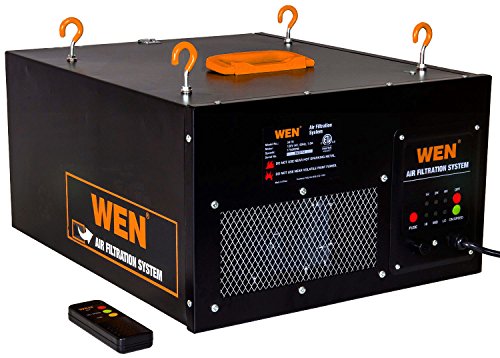
WEN 3410 3-Speed Remote-Controlled Air Filtration System (300/350/400 CFM), Basic w/ RF Remote (400 CFM) , Black
Includes a 1-micron filter and a 5-micron pre-filter, both of which can be easily replaced
As an affiliate, we earn on qualifying purchases.
As an affiliate, we earn on qualifying purchases.
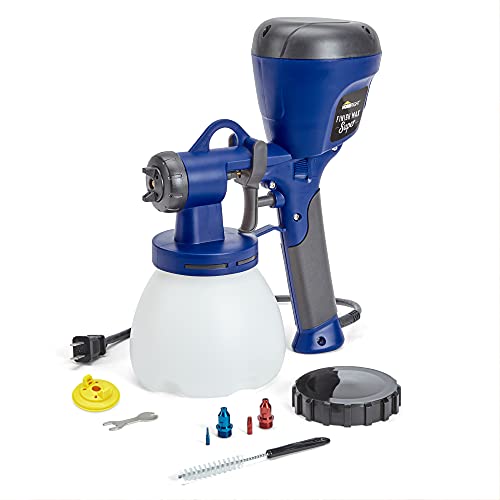
HomeRight Super Finish Max HVLP Paint Sprayer – 450 Watts, Model# C800971.M
PAINT SPRAYER FOR COUNTLESS DIY PROJECTS: The HomeRight Super Finish Max paint sprayer offers the ultimate DIYing experience….
As an affiliate, we earn on qualifying purchases.
As an affiliate, we earn on qualifying purchases.
Franz came aboard the Paint Sprayer Zone team with a background in both journalism and home renovation. His articulate writing style, combined with a passion for DIY projects, makes him an invaluable asset. Franz has a knack for breaking down technical jargon into easy-to-understand content, ensuring that even the most novice of readers can grasp the complexities of paint sprayers.