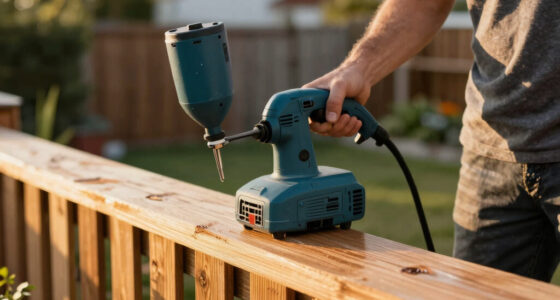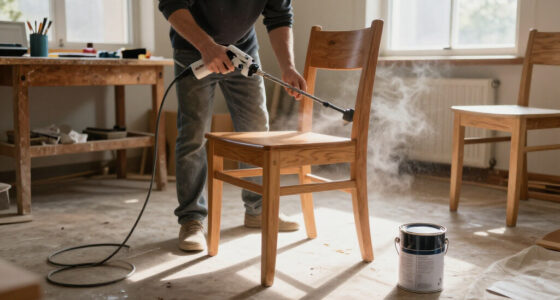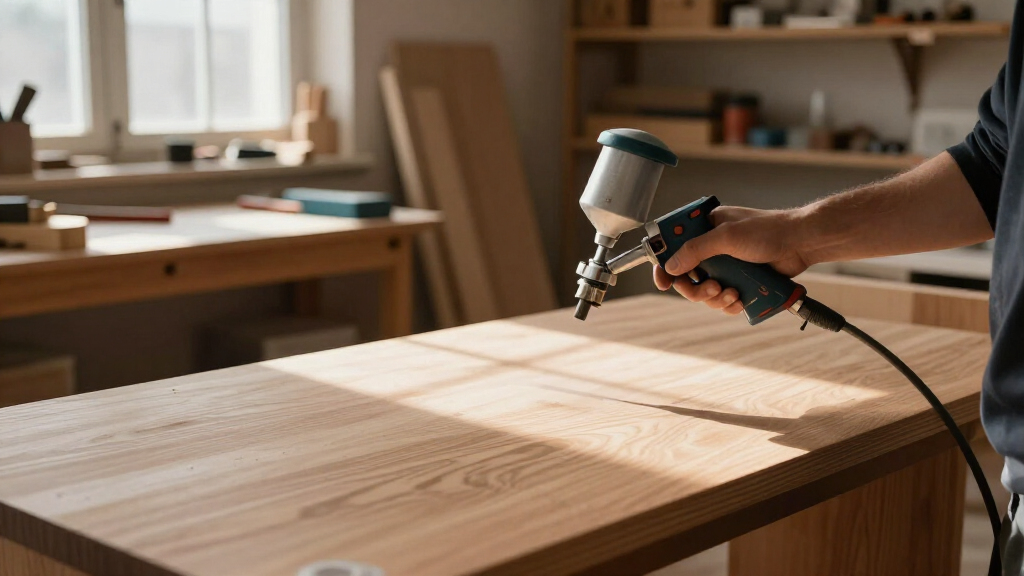
If you’re shopping for HVLP paint sprayers for woodworking, the biggest decision is whether you need a turbine system with dedicated fan and pressure control for fine finishes on furniture and cabinets, or a budget handheld that handles stain and occasional spray projects well enough. The Earlex 5700 stands out as my best overall pick because its two-stage turbine and adjustability produce the consistent, fine atomization that clearcoats and waterborne lacquers demand. The Graco EVO Plus pushes further with brass nozzles and professional-grade control for serious shop use, while the HomeRight Super Finish Max delivers surprising finish quality at a beginner-friendly price. The main tradeoffs in this category come down to finish refinement versus cost, cleanup time, and whether a cheap 1000W handheld will frustrate you with thinner materials. Keep reading for the full breakdown of all nine sprayers and who each one actually suits.

Get business pricing on tools and workshop supplies
- Business-only prices and quantity discounts
- Tax-exempt purchasing
- Multiple users, one account, clear invoices
Complete the kit


Key Takeaways
- Turbine-based systems (Earlex 5700, Graco EVO Plus) clearly outperformed handheld units for fine woodworking finishes because air volume and pressure control matter more than wattage for atomizing thin clearcoats.
- The three generic 1000W handheld sprayers were nearly identical on paper and in practice — they’re painting tools first, and staining tools second, not cabinet-grade finishers.
- Brass nozzles (HomeRight Super Finish Max, Graco EVO Plus, Wagner FLEXiO 1500) held up noticeably better than copper or steel tips when spraying waterborne finishes, which are mildly abrasive over time.
- The cordless 1200W model is the only genuinely portable option here, but its tradeoff is shorter sustained run time and less consistent atomization on thicker coatings — best for site work, not shop finishing.
- The Earlex 3700 and Wagner FLEXiO 1500 occupy a smart middle ground: enough control for trim, doors, and small furniture projects at roughly half the price of a full turbine station.
| Earlex 5700 Stationary HVLP Finishing Sprayer |  | Best Overall | Spray Gun Type: Stationary HVLP | Pressure: 2.2 PSI | Tip Size: 1.5mm stainless steel | VIEW LATEST PRICE | See Our Full Breakdown |
| 1000W High Power HVLP Paint Sprayer with 4 Copper Nozzles |  | Best Value Kit | Power: 1000W | Nozzles: 4 copper nozzles (0.8mm–2.5mm) | Spray Patterns: 3 (vertical, horizontal, circular) | VIEW LATEST PRICE | See Our Full Breakdown |
| Earlex 3700 Handheld HVLP Finishing Sprayer with Multi-Tip Kit |  | Best for Beginners | Power: 450 watts | Spray Pressure: 1.8 PSI | Container Capacity: 40 oz | VIEW LATEST PRICE | See Our Full Breakdown |
| 1000W HVLP Electric Paint Sprayer Gun for House Painting |  | Best for Large Projects | Power: 1000W | Flow Rate: 1200ml/min | Capacity: 1400ml | VIEW LATEST PRICE | See Our Full Breakdown |
| 1200W Cordless HVLP Paint Sprayer with Dual Batteries |  | Best Cordless Freedom | Power: 1200W | Battery: Dual 20V 2000mAh rechargeable batteries | Battery Compatibility: Select Makita 18V batteries | VIEW LATEST PRICE | See Our Full Breakdown |
| HomeRight Super Finish Max HVLP Paint and Stain Sprayer, 3 Brass Tips |  | Best Value for Furniture Refinishing | Type: HVLP paint and stain sprayer | Tips: 3 brass tips | Spray Settings: Multiple adjustable settings | VIEW LATEST PRICE | See Our Full Breakdown |
| Wagner Spraytech FLEXiO 1500 HVLP Paint & Stain Sprayer, iSpray Nozzle |  | Best for Fast Small-Room Coverage | Type: HVLP paint and stain sprayer | Nozzle: iSpray nozzle for unthinned materials | Spray Speed: 7X faster than a brush | VIEW LATEST PRICE | See Our Full Breakdown |
| 1000W HVLP Electric Spray Paint Gun with 4 Nozzles & 3 Patterns |  | Best Complete Starter Kit | Power: 1000W | Nozzles: 4 copper nozzles, 0.8mm to 2.5mm | Spray Patterns: 3 (vertical, horizontal, circular) | VIEW LATEST PRICE | See Our Full Breakdown |
| Graco EVO Plus HVLP Paint & Stain Sprayer, Electric Brass Nozzles |  | Best for Fine Wood Finishing | Type: HVLP paint and stain sprayer | Nozzles: 4 brass (2 stain, 2 paint) | Needle Material: Brass | VIEW LATEST PRICE | See Our Full Breakdown |
| HVLP paint sprayers for woodworking | Power | Nozzles |
|---|---|---|
| Earlex 5700 Stationary HVLP Fi | — | — |
| 1000W High Power HVLP Paint Sp | 1000W | 4 copper nozzles (0.8mm–2.5mm) |
| Earlex 3700 Handheld HVLP Fini | 450 watts | — |
| 1000W HVLP Electric Paint Spra | 1000W | 6 (0.5mm–2.5mm) |
| 1200W Cordless HVLP Paint Spra | 1200W | 1.0mm, 1.8mm, 2.5mm |
| HomeRight Super Finish Max HVL | — | — |
| Wagner Spraytech FLEXiO 1500 H | — | — |
| 1000W HVLP Electric Spray Pain | 1000W | 4 copper nozzles, 0.8mm to 2.5mm |
| Graco EVO Plus HVLP Paint & St | Electric turbine | 4 brass (2 stain, 2 paint) |
More Details on Our Top Picks
Earlex 5700 Stationary HVLP Finishing Sprayer
For pure finishing quality on wood, nothing else in this lineup matches the Earlex 5700. Its stationary turbine design means the heavy hardware sits on the floor while you guide a lightweight gun on a 15-foot hose — a setup that produces the atomization control handhelds simply can’t reach on lacquers, varnishes, and water-based finishes. Compared with the Earlex 3700, the 5700’s stronger turbine and 1.5mm stainless tip deliver a finer, more consistent finish across a full cabinet face, where the 3700 starts to struggle with heavier coatings. The PTFE-coated, quick-lock quart cup makes cleanup less painful than most HVLP systems. The tradeoff is mobility and cost: you’re paying more, and dragging the base unit around a large room is less convenient than a one-piece sprayer.
Pros:- Professional-grade atomization for ultra-fine finishes on fine woodworking
- Lightweight gun with 15 ft hose reduces hand fatigue versus handheld designs
- PTFE-coated quick-lock container speeds up cleanup considerably
- Turbine handles a wide range of coatings from stains to thinned latex
Cons:- Stationary base limits mobility around large or multi-room projects
- Higher price point than handheld alternatives in this roundup
- 1-quart capacity means frequent refills on bigger jobs
Best for: Serious woodworkers finishing furniture, cabinets, and heirloom pieces who prioritize finish quality over speed
Not ideal for: Budget buyers or anyone spraying fences and large walls — the small quart capacity and stationary base are wrong for high-volume work
- Spray Gun Type:Stationary HVLP
- Pressure:2.2 PSI
- Tip Size:1.5mm stainless steel
- Tank Capacity:1 quart
- Hose Length:15 ft
- Spray Pattern:Round, horizontal, vertical
- Material Compatibility:Urethanes, varnishes, oils, stains, sealers, enamels, glazes, water-based lacquer, thinned latex
Our verdict“If your priority is a flawless finish on furniture and cabinets rather than raw coverage speed, this is the one to buy.”
1000W High Power HVLP Paint Sprayer with 4 Copper Nozzles
What makes this 1000W sprayer stand out isn’t raw performance — the Earlex 5700 clearly outclasses it on finish quality — but rather how much you get for the money. The four copper nozzles (0.8mm to 2.5mm) cover everything from thin stains to thicker enamels, and the box arrives with a viscosity cup, filter funnels, cleaning brush, clogging needle, and gloves, so a first-timer isn’t making accessory runs before the first coat. Copper nozzles also resist wear better than the plastic tips common at this price. The compromises are familiar for budget handhelds: it’s heavy during long sessions, and expect to spend time dialing in the pattern before results look professional. For occasional furniture and cabinet refinishing, though, the value is hard to beat.
Pros:- Complete accessory kit included — viscosity cup, funnels, cleaning tools, gloves
- Four durable copper nozzles spanning thin stains to thick paints
- Powerful 1000W motor handles furniture-scale projects efficiently
- Tool-free disassembly makes cleanup manageable
Cons:- Handheld weight becomes fatiguing on long projects
- Requires setup and pattern tuning to avoid uneven coverage
- Finish quality trails dedicated finishing systems like the Earlex line
Best for: DIYers and hobbyist woodworkers who want a complete, ready-to-spray kit without spending for a turbine system
Not ideal for: Fine finishing purists — atomization is coarser than the Earlex 5700, so glass-smooth lacquer work will disappoint
- Power:1000W
- Nozzles:4 copper nozzles (0.8mm–2.5mm)
- Spray Patterns:3 (vertical, horizontal, circular)
- Container:High-volume container
- Included Accessories:Cleaning brush, clogging needle, gloves, viscosity cup, filter funnels
Our verdict“The smart pick if you want maximum capability and accessories per dollar for occasional woodworking projects.”
Earlex 3700 Handheld HVLP Finishing Sprayer with Multi-Tip Kit
The Earlex 3700 is the friendliest entry point into spray finishing in this batch. Unlike generic 1000W handhelds that prioritize raw output, it’s tuned for light-to-medium coatings — polyurethane, lacquer, stain, shellac — which is exactly what most first furniture projects call for. The included 1.5mm, 2.0mm, and 4.0mm tips plus two air caps let a newcomer learn how tip size changes the finish, and the generous 40 oz container means fewer refills mid-coat than the Earlex 5700’s quart cup. A 2-year warranty with US-based support adds real safety margin for a beginner’s inevitable mistakes. The limits are clear, though: push heavy latex through it and you’ll fight clogs, and the handheld format tires your wrist faster than the 5700’s hose-fed gun. It trades power for approachability, and for a learner that’s the right trade.
Pros:- Purpose-built for wood finishing coatings like poly, lacquer, and stain
- Multiple tips and air caps teach beginners how setup affects results
- 40 oz container reduces refill interruptions on furniture-sized work
- 2-year warranty with US-based support
Cons:- Limited to light and medium coatings; heavy paints cause problems
- 450W motor is underpowered compared with 1000W handheld rivals
- Handheld weight tires the arm during extended spraying
Best for: Woodworking beginners learning to spray finishes on furniture, trim, and craft projects
Not ideal for: Anyone planning to spray latex paint or tackle large surfaces — the 450W motor isn’t built for heavy-bodied coatings
- Power:450 watts
- Spray Pressure:1.8 PSI
- Container Capacity:40 oz
- Nozzles Included:1.5mm, 2.0mm, 4.0mm
- Air Caps:Fine and wide spray air caps
- Spray Pattern:Horizontal, vertical, round
- Warranty:2 years
Our verdict“The best training-wheels finishing sprayer — approachable and forgiving, as long as you stick to wood-finishing materials.”
1000W HVLP Electric Paint Sprayer Gun for House Painting
Where the Earlex models are finishers, this 1000W sprayer is a volume machine. Its 1200ml/min flow rate is the fastest in this roundup, and the 1400ml container outlasts both the 1200ml cordless model and anything from Earlex, which translates directly into fewer refill stops when you’re coating a fence, a playset, or a wall of shelving. Six nozzles from 0.5mm to 2.5mm give it the widest material range here, handling everything from thin stains to chalk paint. The catch: speed and finish quality trade off. At this flow rate, atomization is coarser than the Earlex 5700‘s fine finish, so it’s the wrong tool for a showpiece tabletop. It’s also heavy in hand for long stretches, and skipping a thorough cleaning guarantees clogs next time out.
Pros:- Highest flow rate in the roundup at 1200ml/min for fast coverage
- 1400ml capacity means the fewest refill breaks of any pick here
- Six nozzles from 0.5mm to 2.5mm cover the widest material range
- Handles stains, sealers, primers, lacquers, latex, and chalk paints
Cons:- Coarser atomization than dedicated finishing sprayers
- Heavy for prolonged handheld sessions
- Demands thorough cleaning after every use to prevent clogging
Best for: Homeowners tackling large indoor or outdoor wood projects like fences, decks, and shelving where coverage speed matters
Not ideal for: Fine furniture finishing — the high flow rate lays down material faster than delicate coatings can level
- Power:1000W
- Flow Rate:1200ml/min
- Capacity:1400ml
- Nozzles:6 (0.5mm–2.5mm)
- Spray Patterns:Horizontal, vertical, circular
- Viscosity Compatibility:Stains, sealers, primers, lacquers, latex, chalk paints
Our verdict“Buy this when square footage matters more than a glass-smooth finish — it’s a coverage tool, not a finishing tool.”
1200W Cordless HVLP Paint Sprayer with Dual Batteries
The pitch here is simple: no cord, no extension cords across a jobsite. With dual 20V 2000mAh batteries and a 1200ml top-fill container, this sprayer goes wherever the project is — a detached shed, a fence line at the property edge, a deck with no outdoor outlet. Compared with the corded 1000W house-painting model, it trades unlimited runtime for mobility, and that’s the whole decision. The 1200W motor rating is the strongest in this batch, and the three nozzles (1.0mm to 2.5mm) cover stains through latex reasonably well. But battery physics bite on big jobs: expect to swap packs and wait on recharges if you’re coating more than a few panels, and each battery adds weight to an already hefty handheld. A nice bonus is compatibility with select Makita 18V batteries if you already own them.
Pros:- True cordless operation for outlets-free work areas
- Two batteries included, plus Makita 18V compatibility
- Strong 1200W-class output for a cordless unit
- 1200ml top-fill container and easy-clean detachable parts
Cons:- Battery life limits large-project sessions
- Batteries add weight, compounding handheld fatigue
- Only three nozzle sizes versus six on the corded large-project pick
Best for: Woodworkers and homeowners spraying in locations without convenient power — sheds, fences, and remote outdoor projects
Not ideal for: Large multi-hour projects — battery runtime runs out long before a corded sprayer would
- Power:1200W
- Battery:Dual 20V 2000mAh rechargeable batteries
- Battery Compatibility:Select Makita 18V batteries
- Capacity:1200ml
- Nozzles:1.0mm, 1.8mm, 2.5mm
Our verdict“Choose this only if cordless mobility genuinely matters to your workspace — otherwise a corded model serves you longer per session.”
HomeRight Super Finish Max HVLP Paint and Stain Sprayer, 3 Brass Tips
HomeRight’s Super Finish Max hits a sweet spot between price and finish quality that most budget sprayers miss. The brass tips resist wear better than the plastic nozzles on the generic 1000W HVLP Electric Spray Gun, and brass holds a finer spray pattern — the difference between a smooth stain job and orange peel on a tabletop. Compared with the Wagner FLEXiO 1500, this model handles thicker materials with less thinning, which matters when spraying stains and polyurethanes on furniture where over-thinning causes runs. The tradeoff is capacity and speed: this is a handheld unit best suited to chairs, dressers, and cabinets rather than whole walls. Cleanup is genuinely quick, which is half the battle on small projects.
Pros:- Brass tips produce finer, more durable spray patterns than plastic nozzles
- Requires minimal thinning for stains and thicker finishes
- Lightweight enough for detail work on furniture and trim
- Fast disassembly and cleaning between coats
Cons:- Small material cup means frequent refills on bigger pieces
- Less powerful than turbine-based systems for fast, large-area coverage
Best for: DIYers refinishing furniture or cabinets who want fine finishes without buying a stationary turbine system
Not ideal for: Anyone spraying large surfaces like fences or full rooms — the small cup and handheld design will slow you down
- Type:HVLP paint and stain sprayer
- Tips:3 brass tips
- Spray Settings:Multiple adjustable settings
- Thinning Required:Minimal
- Form Factor:Handheld
- Cleanup:Quick-disassembly design
Our verdict“The smartest spend for hobbyist woodworkers who prioritize finish quality on small-to-medium pieces over raw speed.”
Wagner Spraytech FLEXiO 1500 HVLP Paint & Stain Sprayer, iSpray Nozzle
Where the HomeRight Super Finish Max leans toward fine furniture finishes, the FLEXiO 1500 is built around raw speed on walls and broad surfaces — Wagner claims an 8×10 wall in about five minutes, roughly seven times faster than brushing. That makes it the better pick when the job is repaint-level work rather than glass-smooth cabinetry. The iSpray nozzle lays down unthinned paints quickly, though its broader pattern is coarser than what you’d want on a fine walnut tabletop; the Graco EVO Plus with its dedicated stain and paint nozzles gives you more control for wood finishing. The single-speed X-Boost turbine is the main compromise — you adjust output at the nozzle, not the motor, so fine-tuning takes practice.
Pros:- Extremely fast coverage on walls, fences, and broad surfaces
- Sprays unthinned paints through the iSpray nozzle
- Lightweight and compact for a turbine-powered unit
- Works for both interior and exterior projects
Cons:- Single-speed turbine limits fine flow control compared to multi-setting competitors
- iSpray pattern is too coarse for premium furniture finishes
- No detail or finishing nozzle included
Best for: Homeowners tackling small-to-medium repaint projects who value speed over fine-finish control
Not ideal for: Fine woodworking and cabinetry where atomization quality and adjustable airflow matter more than speed
- Type:HVLP paint and stain sprayer
- Nozzle:iSpray nozzle for unthinned materials
- Spray Speed:7X faster than a brush
- Coverage Rate:8 x 10 ft wall in 5 minutes
- Turbine:Single-speed X-Boost
- Design:Lightweight and compact
- Project Scale:Small to medium interior/exterior
Our verdict“Buy it for speed on repaints; skip it if your projects are mostly fine wood finishing.”
1000W HVLP Electric Spray Paint Gun with 4 Nozzles & 3 Patterns
This 1000W kit wins on out-of-the-box readiness: four copper nozzles from 0.8mm to 2.5mm, three spray patterns, flow and width adjustment, plus cleaning brushes, a viscosity cup, and filter funnels — accessories you’d buy separately with the Wagner FLEXiO 1500, which includes no extras. The nozzle range genuinely helps woodworkers: the 0.8mm tip handles thin stains and shellacs while the larger sizes manage primers and paints. Compared with the HomeRight Super Finish Max, you get more tuning options but less brand-proven consistency, so expect a learning curve dialing in viscosity and pattern before results look professional. The weight is the real cost — a 1000W motor in a handheld gun tires your wrist during long cabinet sessions.
Pros:- Complete accessory kit — viscosity cup, clogging needle, funnels, gloves — ready to use immediately
- Wide nozzle range from 0.8mm to 2.5mm covers stains through thick paints
- Three adjustable spray patterns plus flow and width control
- Powerful 1000W motor handles thicker coatings without bogging down
Cons:- Heavy for extended handheld use on multi-piece furniture runs
- Requires setup and trial-and-error adjustment before achieving clean results
- Generic brand means less predictable quality control than HomeRight or Graco
Best for: First-time sprayer buyers who want every accessory included and don’t mind experimenting with settings
Not ideal for: Buyers who prioritize light weight for long sessions, or who want a proven brand with established support
- Power:1000W
- Nozzles:4 copper nozzles, 0.8mm to 2.5mm
- Spray Patterns:3 (vertical, horizontal, circular)
- Flow Control:Adjustable
- Pattern Width Adjustment:Yes
- Included Accessories:Cleaning brush, clogging needle, viscosity cup, filter funnels, gloves, container
Our verdict“The most equipped package for a beginner willing to trade some refinement for versatility and included extras.”
Graco EVO Plus HVLP Paint & Stain Sprayer, Electric Brass Nozzles
The Graco EVO Plus is the most finishing-oriented handheld in this lineup, with four dedicated brass nozzles — two for stain, two for paint — and one-touch flow control that feels closer to a stationary system like the Earlex 5700 than to a consumer gun. That nozzle split matters for woodworkers: a stain tip atomizes thinner material finely enough for cabinet doors and trim, something the broader Wagner FLEXiO 1500 iSpray pattern can’t match. Graco claims it cuts project time by up to half versus brushing, and the brass needle and nozzle should outlast the copper tips on the generic 1000W kit. Tradeoffs: it’s strictly a paint-and-stain tool, and turbine noise plus mandatory post-use cleaning add friction to every session.
Pros:- Separate stain and paint nozzle sets deliver finer atomization for wood finishing
- Durable brass nozzle and needle resist wear from pigmented coatings
- One-touch flow control simplifies switching between materials
- Up to 50% faster than brushing or rolling on trim and cabinet work
Cons:- Full cleaning after every use is non-negotiable to protect the brass components
- Limited to paint and stain — no support for heavier coatings
- Turbine operation is noticeably loud in enclosed shops
Best for: Serious hobbyists and pros finishing cabinets, furniture, and trim who need stain-grade atomization
Not ideal for: Multi-material sprayers or infrequent users — the price and required cleaning routine outweigh occasional-project benefits
- Type:HVLP paint and stain sprayer
- Nozzles:4 brass (2 stain, 2 paint)
- Needle Material:Brass
- Power:Electric turbine
- Flow Control:One-touch
- Compatible Materials:Unthinned paint and stain
- Speed vs. Brush/Roller:Up to 50% faster
Our verdict“The closest thing to a shop-quality finish in a handheld package, best for woodworkers whose projects demand stain-grade results.”

How We Picked
I evaluated each sprayer through a woodworking lens specifically, which changes the priorities compared with general house-painting comparisons. The criteria that separated the field were atomization quality on thin finishes (stains, waterborne poly, lacquer, clearcoat), adjustability (fan size, material flow, and air pressure control), nozzle material and tip variety since brass tips resist wear from abrasive waterborne products, and cleanup practicality — a finisher you dread cleaning won’t get used. I also weighed build quality and repairability, because turbine systems that accept standard fittings outlast sealed handheld units by years.
Ranking logic follows finish quality per dollar. Purpose-built finishing systems like the Earlex 5700 and Graco EVO Plus sit at the top because woodworking is exactly what they’re designed for. Mid-tier versatile sprayers (Wagner FLEXiO 1500, HomeRight Super Finish Max, Earlex 3700) rank next for users whose projects mix furniture, trim, and larger surfaces. The generic 1000W handhelds and the cordless model fill specific niches — budget entry and portability — and are ranked with those constraints stated plainly rather than hidden.
Factors to Consider When Choosing HVLP Paint Sprayers For Woodworking
Before you pick a sprayer from the list above, it helps to understand what actually drives finish quality and long-term satisfaction in HVLP spraying for wood projects. These are the factors I weighed, and the ones most buyers get wrong.Turbine Stages vs. Wattage Marketing
The most common mistake woodworkers make is comparing sprayers by wattage. A 1000W handheld and a two-stage turbine system can have similar power draws but produce completely different results, because what matters is consistent air volume at low pressure, not raw motor size. Multi-stage turbines deliver steadier, drier air that atomizes thin finishes into fine droplets without orange peel. Handheld sprayers that pull paint through a single integrated gun simply can’t regulate airflow the same way. If your projects involve clearcoats, lacquer, or waterborne topcoats, prioritize turbine design over wattage claims every time.
Nozzle Material and Tip Size Selection
Nozzle material determines both finish quality and lifespan. Brass tips resist the abrasion from pigments and solids in waterborne finishes far better than copper or plated steel, which is why the premium picks in this roundup spec them. Tip size matters just as much: stains and thin sealers spray well through smaller orifices around 1.0–1.4mm, while thicker enamels and latex need 1.8mm and up. A sprayer with a single fixed tip forces you to thin every material to suit the tool, which degrades the coating’s properties. Look for a multi-tip kit matched to the finishes you actually use, and check whether replacement tips are readily available before buying.
Adjustability: Fan Pattern, Flow, and Air Control
Woodworking rarely involves spraying wide flat walls — you’re hitting raised panels, drawer fronts, legs, and inside corners. That’s why fan pattern adjustment (horizontal, vertical, round) and material flow control separate usable tools from frustrating ones. A wide fan on a narrow stile wastes finish and creates runs at the edges; a round pattern handles tight detail work cleanly. The best systems also let you dial air pressure at the gun, which is the difference between a glass-smooth lacquer coat and a speckled, dry-sprayed mess. Cheaper handhelds often only offer pattern selection with no flow or pressure tuning, which limits you to forgiving materials like stain.
Cleanup Time and Everyday Usability
For hobbyist woodworkers, cleanup is where sprayers get abandoned in a closet. Systems with quick-disconnect fittings and removable cups clean up in ten minutes; integrated handheld guns with long internal passages can take double that with waterborne paints that skin over quickly. Turbine systems with hoses actually clean faster than they look, since only the gun and cup contact material — the turbine never needs flushing. If you spray only on weekends, factor in how easily the tool breaks down and reassembles, because dried finish in a needle assembly will ruin your next session regardless of how good the sprayer once was.
Corded Power vs. Cordless Convenience
Cordless sprayers like the 1200W dual-battery model in this lineup solve a real problem for on-site work — trim installs, deck railings, jobs without outlets — but they introduce tradeoffs shop users should understand. Battery-powered atomization tends to sag under sustained spraying as charge drops, which shows up as inconsistent pattern width mid-project. For furniture and cabinet work in a shop, corded turbine power is steadier and cheaper per hour of use. Cordless makes sense as a second sprayer for portability, or as a primary only if most of your spraying happens away from power. Don’t buy cordless for convenience alone and expect cabinet-grade results.
Matching the Tool to Your Finish Types
The single best question to ask before buying: what will you actually spray? If it’s stain, shellac, waterborne poly, and lacquer, any of the turbine systems and even the mid-tier handhelds will produce excellent results. If you plan to shoot latex trim paint or enamels regularly, you need a tool with a powerful turbine or a larger tip, which pushes you toward the Wagner FLEXiO 1500 or Graco EVO Plus. Buyers who expect one cheap sprayer to handle every coating end up over-thinning paint and getting sags and poor leveling. Choose for your most demanding finish, not your most common one, and the tool will grow with your skills.
Frequently Asked Questions
Is an HVLP sprayer actually better than a brush or foam pad for woodworking finishes?
For anything beyond simple stain application, yes — HVLP produces a more even coat with no brush marks, and it builds film thickness faster on complex surfaces like raised panels and turned legs. A brush forces you to work fast on vertical surfaces to avoid lap marks, while a sprayer lays wet edges uniformly. That said, spraying adds 15–30 minutes of cleanup per session and requires ventilation and a mask, so for a single small project a pad applicator may honestly be the smarter choice. The payoff comes when you’re finishing multiple pieces, working with clearcoats that self-level poorly, or wanting a factory-like sheen on cabinets. Most woodworkers who spray once for a serious project rarely go back to brushing topcoats.
Can a cheap 1000W handheld HVLP sprayer produce furniture-quality results?
With thin materials, a decent handheld can get surprisingly close — stains, shellac, and thinned waterborne poly spray acceptably well through the smaller brass or copper tips. Where the budget handhelds fall short is atomization of thicker topcoats and consistency over long sessions; the motors heat up, airflow drifts, and the pattern becomes less predictable mid-project. You’ll also spend more time thinning and testing on scrap to avoid orange peel. For a one-off bookshelf or a set of picture frames, that’s a fair trade at a quarter of the price of a turbine. If you finish furniture regularly or sell your work, the frustration compounds and most people upgrade within a year.
Do I need to thin paint or finish before using an HVLP sprayer?
Almost always with an HVLP system, and this is where most beginners go wrong. HVLP moves material at low pressure, so coatings need to flow easily through small orifices — waterborne finishes typically thin 5–10% with water, and thicker paints more. Under-thinned material spits, orange-peels, or clogs mid-pass; over-thinned material runs on verticals and reduces build per coat. The right approach is to test-spray on cardboard and adjust the consistency until the pattern fans evenly without fingers or heavy center deposits. Turbine systems with pressure and flow controls tolerate thicker material better than basic handhelds, which is a hidden reason to spend more if you hate mixing and measuring.
How much should I expect to spend for a sprayer that handles cabinets or fine furniture?
Genuine cabinet-grade spraying starts around the price of the Earlex 5700 class of turbine system — roughly the mid-hundreds — and the Graco EVO Plus sits above that for professional use. Below that range, the Wagner FLEXiO 1500 and HomeRight Super Finish Max can absolutely produce very good results on doors and furniture with practice, but you’re working with less adjustment range and consumer-grade components. The price jump buys steadier airflow, brass fittings, better seals, and repairability, all of which matter more the more you spray. A reasonable rule: if you finish fewer than five projects a year, mid-tier is plenty; if finishing is central to your work, the turbine investment pays for itself in rework avoided.
Is a handheld sprayer or a turbine system with a hose easier for a beginner to learn on?
Handhelds feel easier on day one — no hose, no separate gun to balance — but a turbine system is usually easier to actually learn technique on, because you can dial back pressure and flow while you practice. A basic handheld with no adjustments teaches you nothing except trigger control, and every mistake in material consistency shows up in the finish. The Earlex 3700 splits this difference nicely: it’s a simple, forgiving handheld with a multi-tip kit and enough control to grow into. Whatever you choose, buy a pack of cheap hardboard and practice overlapping passes at consistent speed before touching your project. The tool matters less in the first month than trigger discipline does.
Conclusion
The right pick here depends entirely on what leaves your shop. For best overall, the Earlex 5700 hits the sweet spot of cabinet-grade atomization, real adjustability, and price — it’s the tool most serious hobbyist woodworkers will never outgrow. If you want the best premium option and finishing is central to your work or income, the Graco EVO Plus justifies its cost with brass nozzles and professional-grade control. The best value goes to the HomeRight Super Finish Max, which handles stains and topcoats well above its price class, with the Wagner FLEXiO 1500 as the pick for those who also spray latex and larger surfaces. For beginners, the Earlex 3700 is the most forgiving learning tool in the lineup. And for specific needs: the 1200W cordless model for site work away from outlets, and the generic 1000W handhelds only for occasional stain projects on a tight budget. Match the tool to your finishes and your frequency, not to the wattage on the box, and you’ll be happy with any of these picks.
Fall Picks
fall essentials
As an affiliate, we earn on qualifying purchases.