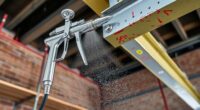
To calculate coverage when spraying, first note your sprayer’s full liquid capacity, then spray a known area while measuring the remaining liquid. Subtract the leftover from the full capacity to find out how much you used. Divide the amount applied by the area you covered to get your application rate per unit area. If you want to guarantee even and efficient coverage, understanding these steps will help you master the process smoothly.
Key Takeaways
- Measure the total area to be sprayed using appropriate tools or markings.
- Fill the sprayer to its full capacity and record the initial liquid volume.
- Spray the designated area completely, then measure the remaining liquid to determine used volume.
- Subtract the remaining volume from the initial volume to find the total liquid applied.
- Divide the applied liquid volume by the area sprayed to calculate coverage per unit area.

When spraying pesticides, fertilizers, or other liquids, understanding how much area your spray will cover is essential for effective application. If you don’t get the right coverage, you risk wasting product or leaving parts of your crop unprotected. To do this accurately, you need to focus on application techniques and ensure your equipment is properly calibrated. These two factors work hand-in-hand to make sure your spray is both efficient and effective.
Start by familiarizing yourself with your equipment. Proper calibration means adjusting your sprayer so it delivers the correct amount of liquid per unit area. For example, if your sprayer is set to dispense 10 gallons per acre, you’ll know exactly how much liquid is being applied as you work. Calibration involves measuring output, often by spraying a known area onto a catch sheet or container, then calculating the flow rate per minute. If the flow isn’t what you expect, you’ll need to adjust pressure, nozzle size, or other settings until it matches your desired rate. Accurate calibration ensures you’re applying the right amount of product, preventing over-application or under-application.
Calibrate your sprayer to apply the correct liquid amount per area, avoiding waste and ensuring effective coverage.
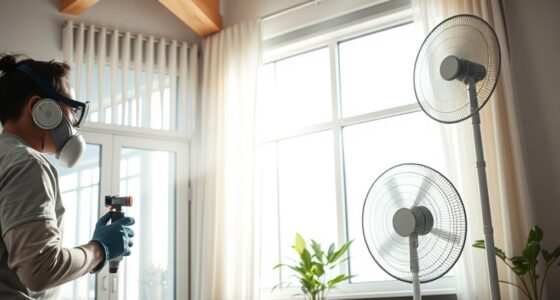
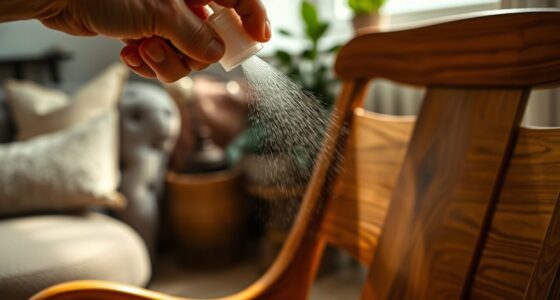
Application techniques are equally important. The way you hold and move your sprayer impacts coverage considerably. Maintain consistent speed and distance from the target surface to avoid uneven coverage. For example, moving too fast can cause areas to receive less product, while moving too slowly might lead to over-saturation. Overlapping passes slightly can help ensure no spots are missed. The choice of nozzles also affects how the liquid disperses—some produce a fine mist, others a coarser spray—so selecting the right nozzles for your task and adjusting them properly is critical for even coverage.
To accurately calculate coverage, first determine your spray volume and area. If your sprayer holds a specific amount of liquid, record how much it holds when full. When spraying, keep track of how much liquid you’ve used. Subtract the remaining volume from the initial to find out how much you’ve applied. Divide this amount by your total area in acres or square feet to get the application rate per unit area. This calculation helps you verify if you’re applying enough product for effective coverage without waste.
Keep in mind that environmental factors, such as wind, humidity, and temperature, can influence how your spray disperses. Adjust your application techniques accordingly to maintain even coverage. Regularly calibrate your equipment, especially if you change nozzles or liquids, and always measure your application to ensure your calculations stay accurate. By combining proper application techniques with meticulous equipment calibration, you can precisely calculate coverage, making your spraying efforts both efficient and effective.

TeeJet Water-Sensitive Spray Cards – for Testing The Effectiveness of Spray Nozzles
- Package Quantity: 50 spray cards
- Card Dimensions: 2 x 3 inches
As an affiliate, we earn on qualifying purchases.
As an affiliate, we earn on qualifying purchases.
Frequently Asked Questions
What Equipment Is Best for Precise Coverage Calculation?
You should choose equipment with adjustable spray nozzles and precise flow rate calibration features for accurate coverage calculation. Spray nozzle selection impacts spray pattern and droplet size, ensuring even application. Proper flow rate calibration helps you measure and control the amount of liquid dispensed, preventing over- or under-application. Together, these tools allow you to achieve consistent, precise coverage, making your spraying more efficient and effective.
How Does Spray Pattern Affect Coverage Efficiency?
Your spray pattern directly impacts coverage efficiency by determining how evenly and thoroughly the product spreads over the target area. A uniform, consistent spray pattern ensures you maximize coverage with minimal waste, reducing overspray or missed spots. To improve efficiency, adjust your spray pattern for even distribution, and maintain proper equipment calibration. This way, you’ll achieve ideal coverage, save materials, and ensure effective application every time you spray.
Can Weather Conditions Alter Coverage Estimates?
Back in the day, weather played a big role in spraying success. Today, wind effects and temperature impact your coverage estimates. Wind can blow spray off course, reducing efficiency, while high temperatures may cause rapid evaporation, limiting coverage. You should monitor weather forecasts closely, adjusting your spray timing and methods accordingly. Protect your crop by understanding how weather conditions can alter your coverage, ensuring better results and fewer repeat applications.
How Do I Adjust Calculations for Uneven Terrain?
To adjust calculations for uneven terrain, you need to account for terrain variability and slope adjustments. First, evaluate the slope of the land, as steeper slopes require more solution to maintain coverage. Use a slope correction factor, which increases the amount based on the incline. Apply this factor to your original coverage estimate, ensuring your application accounts for terrain variability and delivers consistent coverage across all slopes.
What Are Common Mistakes in Coverage Estimation?
You often underestimate how much coverage accuracy impacts your results, leading to massive estimation errors. Common mistakes include ignoring nozzle flow rates, rushing through the process, or not accounting for drift and wind. These errors can turn precise calculations into a wild guess, causing over-application or wastage. Always double-check your measurements, maintain equipment, and consider environmental factors to avoid these pitfalls and guarantee your coverage estimation is spot-on.
Conclusion
To conclude, understanding how to calculate coverage helps you spray efficiently and avoid waste. By measuring your spray area and amount used, you can verify if your application matches the recommended coverage rates. Some say more coverage means better results, but more often, it’s about precision. So, trust the numbers, stay consistent, and remember—accurate calculations lead to healthier plants and a smoother process. Keep measuring, adjust as needed, and spray confidently every time.

Franz came aboard the Paint Sprayer Zone team with a background in both journalism and home renovation. His articulate writing style, combined with a passion for DIY projects, makes him an invaluable asset. Franz has a knack for breaking down technical jargon into easy-to-understand content, ensuring that even the most novice of readers can grasp the complexities of paint sprayers.