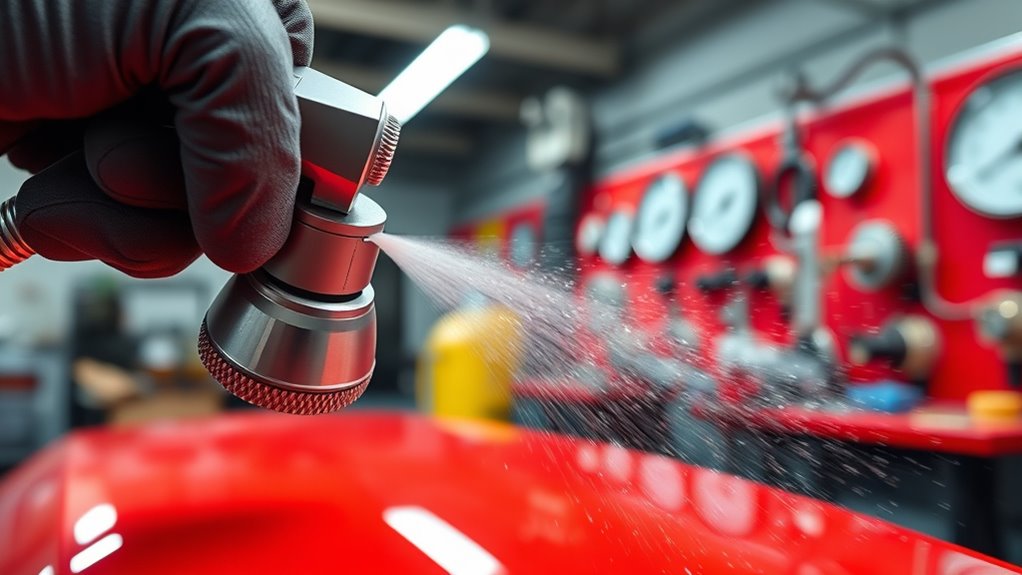

If you experience pressure loss while spraying, start by turning off the equipment and relieving pressure. Check for clogged nozzles and clean them with a needle or solvent to remove debris. Next, inspect filters and hoses for blockages or leaks. Guarantee the pump is functioning properly by listening for unusual noises and testing pressure output. Regular maintenance helps prevent these issues; continue exploring to learn more about restoring ideal spray pressure.

Get business pricing on tools and workshop supplies
- Business-only prices and quantity discounts
- Tax-exempt purchasing
- Multiple users, one account, clear invoices
Key Takeaways
- Turn off equipment and relieve pressure before inspecting nozzles or hoses for debris or clogs.
- Check and clean the nozzle to prevent blockages that cause pressure drops.
- Inspect filters, hoses, and fittings for obstructions or leaks impacting fluid flow.
- Test the pump’s pressure output using a pressure test kit to identify performance issues.
- Regularly perform system inspections and maintenance to detect and address potential pressure loss causes.
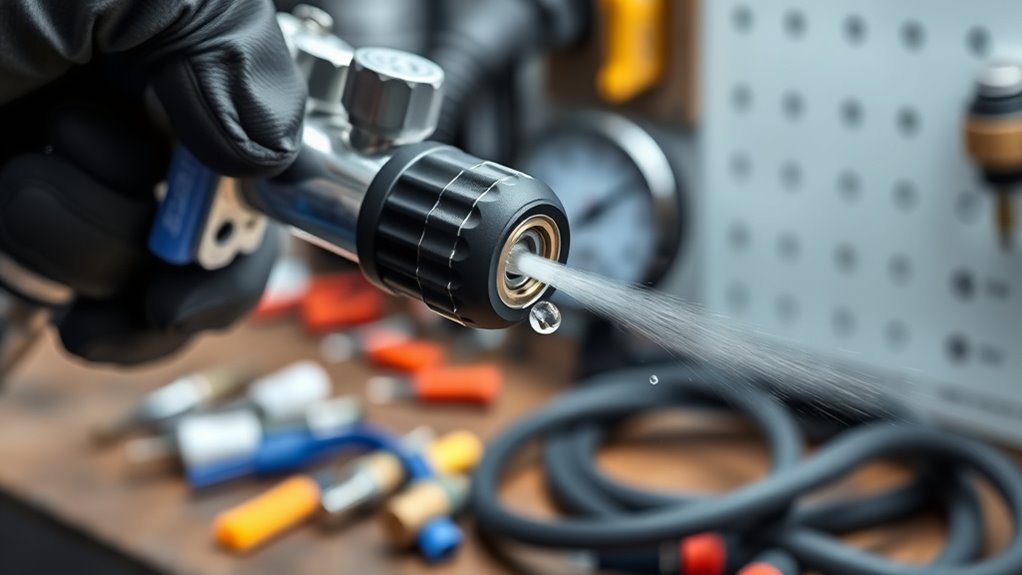
When spraying liquids or coatings, pressure loss often occurs, reducing the effectiveness of your application. One common cause is nozzle clogging, which can considerably diminish spray pressure and pattern. Clogs often happen when debris, dried paint, or dirt build up in the nozzle, restricting fluid flow. To address this, start by turning off your equipment and relieving pressure. Remove the nozzle carefully and inspect it for any blockages. Use a fine needle or a dedicated cleaning tool to clear out obstructions. Soaking the nozzle in solvent or warm water can help loosen stubborn debris. Regular maintenance prevents clogging, so make it a habit to clean and check nozzles before each use.
Another key factor that leads to pressure loss is pump malfunctions. Pumps are responsible for maintaining consistent pressure in your system, and any issue here can cause considerable drops in performance. First, verify that the pump is operating correctly—listen for unusual noises or vibrations, which may indicate internal damage or wear. Check the pump’s pressure gauge; if it reads lower than expected, the pump might be failing or needs servicing. Inspect the inlet filter for clogs, as dirt or debris can restrict fluid intake, causing the pump to strain or lose pressure. Also, examine the pump’s seals and connections for leaks, which can result in pressure drops. Sometimes, old or damaged seals can allow air into the system, leading to pump cavitation and reduced output.
If you suspect a pump malfunction, consider testing the pump’s performance with a pressure test kit. This helps determine whether the pump can sustain the required pressure. If it fails the test, replacement or professional repair may be necessary. Additionally, ensure that the pressure regulator is functioning properly; a faulty regulator can cause inconsistent pressure levels.
Throughout this process, always keep an eye on the entire spray system—clogged nozzles and pump issues often stem from or are worsened by other problems like clogged filters or blocked hoses. Regular inspections and maintenance help catch these issues early, preventing considerable pressure loss during spraying. Remember to follow the manufacturer’s guidelines for cleaning and servicing your equipment, as neglecting routine checks can lead to more serious malfunctions. Addressing nozzle clogging and pump malfunctions promptly restores ideal pressure, ensuring your spray application remains effective and efficient.
pressure spray nozzle cleaning kit
As an affiliate, we earn on qualifying purchases.
As an affiliate, we earn on qualifying purchases.
Frequently Asked Questions
What Are Common Causes of Sudden Pressure Drops During Spraying?
Sudden pressure drops during spraying often happen due to hose connection issues or a faulty pressure sensor calibration. You should check that all hose connections are secure and leak-free, as loose fittings can cause pressure loss. Additionally, verify the pressure sensor calibration to guarantee accurate readings. If these are fine, inspect for any blockages or worn-out parts that might disrupt the flow, causing unexpected pressure drops.
How Does Temperature Affect Pressure Loss in Spraying Systems?
Did you know that a 10°F temperature fluctuation can change the viscosity of your spray fluid by up to 20%? Temperature affects pressure loss by altering fluid viscosity, making it flow more easily in warmer conditions and harder in colder ones. When temperature drops, increased viscosity causes higher pressure loss, reducing spray efficiency. So, maintaining consistent temperature helps keep your spraying system operating smoothly and prevents unexpected pressure drops.
Can Improper Nozzle Selection Lead to Pressure Issues?
Yes, improper nozzle selection can lead to pressure issues. If you choose a nozzle that isn’t compatible with your system, it can cause pressure drops or surges. Ensuring nozzle compatibility helps maintain consistent spray pressure. Additionally, using the correct nozzle allows for better pressure regulation, preventing pressure loss and ensuring efficient spraying. Always verify that your nozzle matches your system’s specifications for ideal performance and minimal pressure problems.
What Safety Precautions Should Be Taken During Pressure Troubleshooting?
When troubleshooting pressure issues, always wear protective gear like gloves and goggles to prevent injury. Make certain the equipment is turned off and perform an emergency shutdown before inspecting or adjusting any parts. Keep a clear workspace, avoid distractions, and follow manufacturer safety guidelines. If you’re unsure, consult the manual or a professional. Safety first—taking these precautions helps prevent accidents and ensures safe, effective troubleshooting.
How Often Should Spraying Equipment Be Maintained to Prevent Pressure Loss?
They say “an ounce of prevention is worth a pound of cure,” so you should follow a regular maintenance schedule for your spraying equipment—at least every three to six months. During these checkups, guarantee proper equipment calibration to prevent pressure loss. Regular inspections help catch issues early, keeping your sprayer running smoothly and efficiently. Don’t wait for problems to arise; proactive maintenance saves time and money in the long run.
Conclusion
By systematically checking each component, you’ll find your spraying pressure returns to its full strength, much like a well-tuned engine runs smoothly. Remember, small issues can cause big pressure drops, so stay attentive and methodical. When you troubleshoot carefully, you’ll avoid wasting time and materials, ensuring your spraying process is efficient and effective. Keep these steps in mind, and you’ll keep your equipment performing at its best, just like a finely crafted machine.
Fall yard work Picks
leaf blowers
As an affiliate, we earn on qualifying purchases.