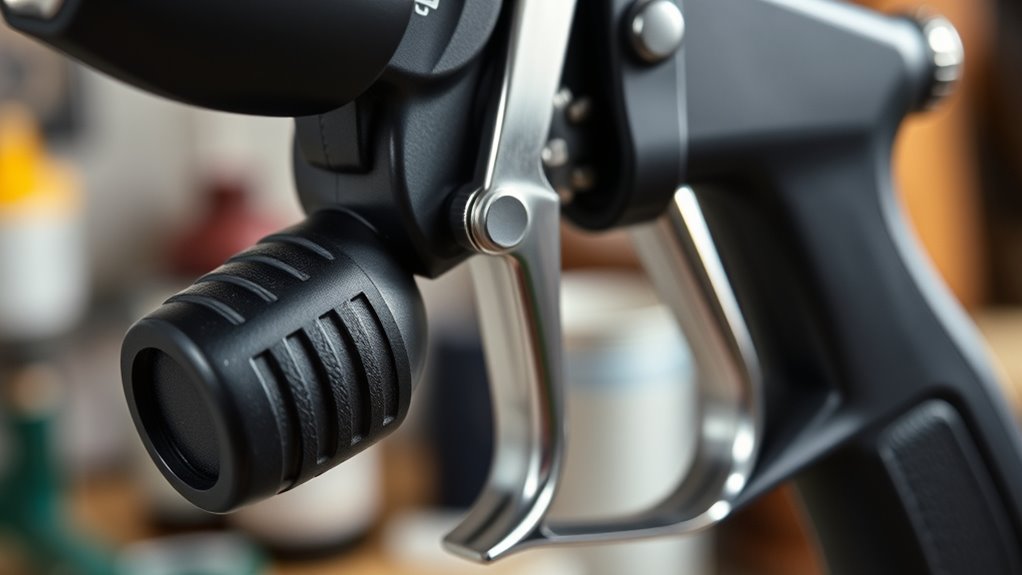

When choosing a spray gun, ergonomic grips and adjustable triggers are key to comfort and control. A well-designed grip fits your hand naturally, reducing fatigue, while textured surfaces prevent slipping during use. An adjustable trigger allows you to set the pull force for effortless operation, minimizing strain and improving precision. By focusing on these features, you’ll enjoy smoother, more efficient spraying sessions—continue exploring to discover how to select the best options for your needs.
Key Takeaways
- Ergonomic grips conform to hand shape, reducing pressure points and minimizing fatigue during extended use.
- Soft-touch coatings and textured surfaces enhance grip stability and prevent slipping.
- Adjustable trigger pull forces allow customization to user strength, reducing hand strain.
- Lightweight triggers facilitate effortless activation, improving control and comfort.
- Overall ergonomic features decrease hand soreness, improve spray accuracy, and promote safer operation.
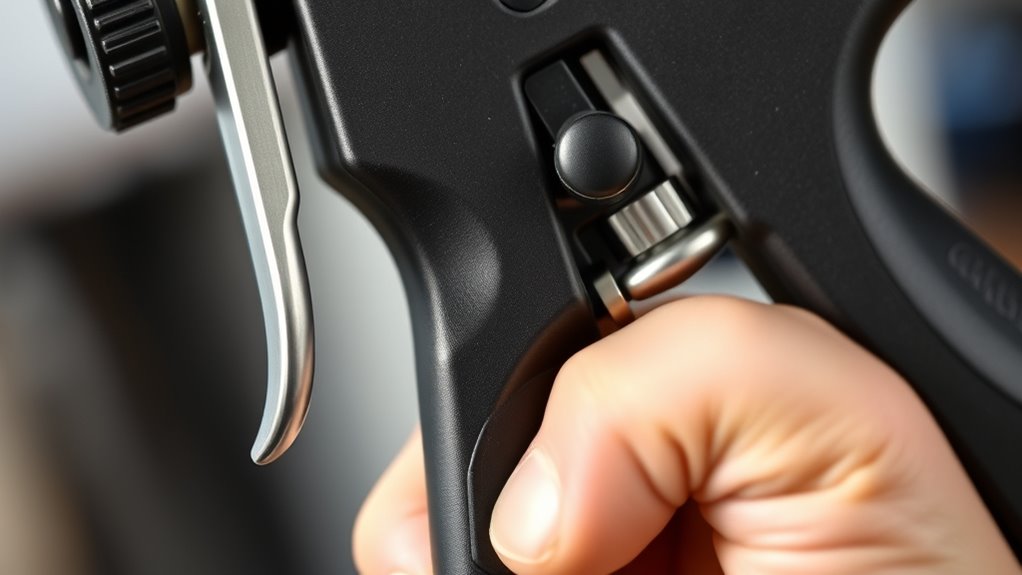
Have you ever experienced discomfort or fatigue after long hours of using a spray gun? If so, you’re not alone. Extended use can strain your hand and wrist, especially if the tool isn’t designed with ergonomics in mind. That’s where an ergonomic grip design makes a significant difference. A well-crafted grip conforms naturally to your hand’s shape, reducing pressure points and minimizing fatigue. When you hold a spray gun with an ergonomic grip, you maintain better control, which enhances both precision and comfort. This design helps prevent repetitive strain injuries that can develop over time, such as carpal tunnel syndrome or tendonitis. Additionally, selecting a spray gun with proper weight distribution can further reduce user fatigue during prolonged use.
An ergonomic spray gun grip reduces fatigue and enhances control for safer, more comfortable extended use.
The trigger pull force is equally important in guaranteeing comfortable operation. If the trigger requires excessive force to activate, you’ll find yourself squeezing harder, which quickly leads to hand fatigue. On the other hand, a spray gun with an optimized trigger pull force demands less effort, allowing for smoother, more effortless activation. This is especially vital during prolonged spraying sessions. When you don’t have to apply unnecessary pressure, you can focus on your work without worrying about discomfort or losing control. A lightweight trigger with a low pull force also improves your overall efficiency, enabling you to work more precisely and consistently.
Choosing a spray gun with an ergonomic grip design and adjustable trigger pull force can dramatically improve your experience. You’ll notice that your hand stays less sore after a day’s work, and your movements become more fluid. These features reduce the risk of fatigue, helping you maintain steady control over the spray pattern and application. Furthermore, they contribute to better accuracy and a higher-quality finish, since you’re less likely to jerk or shake due to discomfort.
In addition, modern spray guns often incorporate materials and shapes that maximize grip comfort. Soft-touch coatings or textured surfaces prevent slipping, even when your hands get sweaty. Some models even feature adjustable triggers, allowing you to tailor the trigger pull force to your strength and preference. This customization assures that you can work efficiently without overexerting your fingers. Overall, investing in a spray gun with an ergonomic grip design and an appropriately calibrated trigger pull force makes your tasks safer, easier, and more comfortable. It’s a simple upgrade that yields lasting benefits, especially if you frequently use spray guns for extended periods.
Frequently Asked Questions
How Do Grip Materials Affect Spray Gun Comfort?
Your grip material choice directly impacts spray gun comfort. Softer, rubberized grips provide better cushioning, reducing fatigue during extended use. Grip texture also matters; a textured surface offers better control and prevents slipping, especially with sweaty hands. You’ll find that selecting a grip with the right material and texture makes your spraying experience more comfortable, precise, and less tiring, ensuring you can work efficiently for longer periods without discomfort.
Are There Adjustable Trigger Positions for Different Hand Sizes?
Yes, adjustable trigger positions exist to fit different hand sizes. These features allow you to modify trigger sensitivity, reducing hand fatigue during extended use. By customizing the trigger position, you can find a comfortable grip that minimizes strain, making spray painting more precise and less tiring. This adjustability guarantees you maintain control and comfort, regardless of your hand size, helping you work efficiently without discomfort.
What Are Signs of Ergonomic Issues During Spraying?
You might notice signs of ergonomic issues during spraying if you experience hand fatigue or trigger sensitivity. If your hand tires quickly or if you feel a constant strain, it indicates the grip or trigger isn’t suited to your hand size. These discomforts suggest you should adjust your spray gun or try different models with better ergonomic features. Addressing these issues helps improve control, reduces fatigue, and guarantees a smoother spraying experience.
How Often Should Spray Gun Grips Be Replaced?
You should replace your spray gun grips when they show signs of wear, discomfort, or damage. Generally, the grip replacement frequency depends on how often you spray and your ergonomic grip design, but check regularly for cracks or looseness. An ergonomic grip design helps reduce fatigue and injury, so prioritize replacing grips to maintain comfort and control during extended spraying sessions. Stay attentive to your grip’s condition for peak performance.
Can Custom Grips Improve Spraying Accuracy?
Imagine you’re painting a car and notice improved control with a custom grip. Custom grip materials, like rubber or silicone, can decrease fatigue and enhance comfort, leading to better spraying accuracy. Adjusting the trigger position ensures you can maintain steady, precise application. These modifications help you stay consistent, especially over long sessions, ultimately improving your spray quality and efficiency.
Conclusion
So, next time you pick up that spray gun, remember it’s not just about the paint job but also how comfortably you hold it. You’d think ergonomics would be a no-brainer, right? Yet, so many overlook the importance of a good grip and trigger design. Ironically, neglecting these details might just turn your smooth finish into a shaky mess—proving that comfort isn’t a luxury, but a necessity for perfection.

Franz came aboard the Paint Sprayer Zone team with a background in both journalism and home renovation. His articulate writing style, combined with a passion for DIY projects, makes him an invaluable asset. Franz has a knack for breaking down technical jargon into easy-to-understand content, ensuring that even the most novice of readers can grasp the complexities of paint sprayers.