To feed thick paints with remote suction and hoppers, guarantee your hopper features a steep angle and smooth interior surfaces to promote consistent flow and prevent clogs. Managing paint viscosity is essential; thinning the paint with solvents or additives helps maintain steady suction and reduces blockages. Proper hopper design, combined with viscosity control, keeps the system reliable and minimizes downtime. Continuing with this guide will reveal how to optimize both for smoother, more efficient spraying.
Key Takeaways
- Proper hopper design with steep angles and smooth surfaces ensures reliable flow of thick paints.
- Managing paint viscosity through thinning or pre-dilution prevents blockages in remote suction systems.
- Agitation features like paddles or vibrators keep thick paint from settling and improve flow consistency.
- Optimized hopper and viscosity management reduce downtime by preventing clogs and maintaining steady feed.
- Maintaining proper viscosity enhances remote suction efficiency and improves spray pattern quality for thick coatings.

Feeding thick paints can be a challenging task, but understanding how to properly dilute and mix them guarantees smoother application and better results. When dealing with high-viscosity paints, your primary concern should be managing paint viscosity to facilitate consistent flow. Thick paints tend to resist movement through traditional spray systems, causing clogs, uneven coating, and increased wear on equipment. To combat this, pay close attention to the design of your hopper. A well-designed hopper can considerably improve feeding efficiency by minimizing blockages and maintaining a steady flow of paint to the spray mechanism.
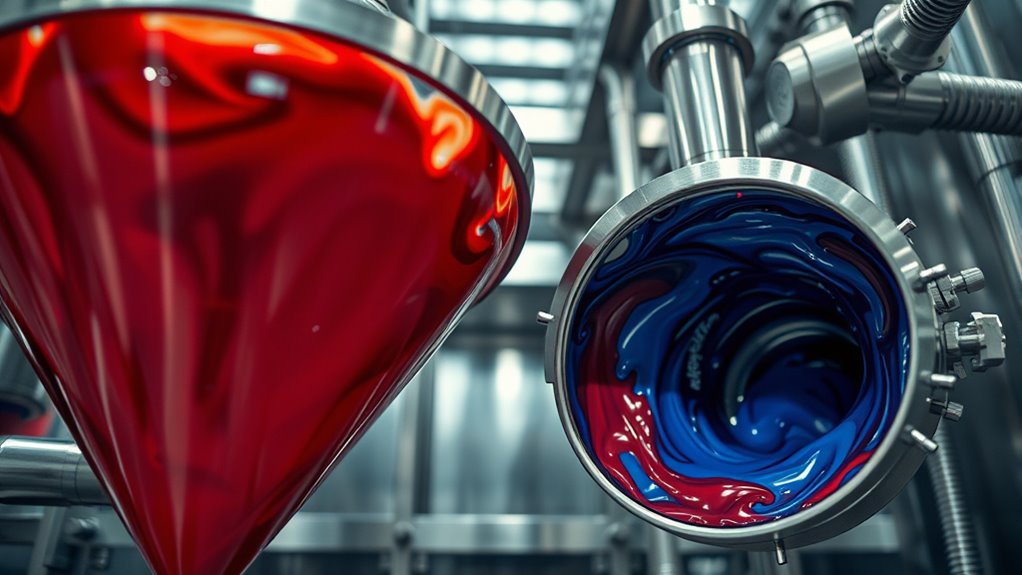
Proper hopper design ensures smooth flow and prevents clogs when feeding thick paints.
The key is guaranteeing your hopper design accommodates the viscosity of your paint. Look for hoppers with steep angles and smooth interior surfaces that prevent paint buildup and facilitate gravity-assisted flow. Some hoppers include agitation features, such as paddles or vibrators, which help keep thick paints from settling and clogging the outlet. These features are especially useful when working with highly viscous materials, as they promote continuous, uniform feeding. Additionally, a hopper with an adjustable outlet or valve allows you to control the flow rate, providing better management of thick paints during application.
Managing paint viscosity is vital because too thick a mixture can overwhelm your spray system, causing delays and uneven coverage. Before feeding paint into the hopper, consider pre-diluting it with appropriate solvents or thinning agents, but do so carefully to avoid altering the paint’s properties or finish quality. The goal is to reduce viscosity just enough to enable smooth flow without compromising the paint’s adhesion or durability. A good rule of thumb is to perform small tests to find the ideal thinning ratio for your specific materials and equipment.
Furthermore, understanding the design of your hopper and how it interacts with viscosity can help prevent common issues like clogs and inconsistent suction. When working with remote suction systems, the importance of proper hopper design and paint viscosity management becomes even more evident. Remote suction setups rely on consistent pressure and flow, which are directly affected by the viscosity of the paint and the efficiency of the hopper in feeding the pump. If the paint is too thick or the hopper isn’t designed well, you risk creating air pockets or inconsistent suction that can lead to interruptions and uneven spray patterns. Ensuring your hopper is properly configured for thick paints and that the viscosity is within the recommended range helps maintain a steady, reliable feed, reducing downtime and improving overall finish quality.
Frequently Asked Questions
How Do Remote Suction Systems Prevent Clogging With Thick Paints?
Remote suction systems prevent clogging with thick paints by maintaining ideal suction efficiency, even with high paint viscosity. You guarantee consistent flow by adjusting the vacuum settings and using appropriately designed hoses. This prevents blockages and keeps the paint moving smoothly. Regular cleaning and monitoring of the system also help, so you avoid buildup that could hinder suction efficiency and lead to clogs in feeding thick paints.
What Maintenance Is Required for Hopper Feeding Systems?
Keeping your hopper feeding system in top shape involves consistent cleaning protocols and timely wear parts replacement. You should regularly clean the hopper and suction lines to prevent buildup, especially when handling thick paints. Inspect and replace wear parts as needed to avoid downtime and ensure smooth operation. This proactive maintenance helps extend your system’s lifespan and maintains peak performance, saving you time and costly repairs down the line.
Can These Systems Handle High-Viscosity Materials Other Than Paint?
Yes, these systems can handle alternative materials with high viscosity, but you need to focus on viscosity management. Confirm your system is compatible with the specific material’s properties, and adjust the suction or hopper settings as needed. Using proper agitation or heating can also improve flow. Always test small batches first to optimize performance and prevent clogs or damage during operation.
What Safety Precautions Are Necessary During Operation?
You should always wear protective gear like gloves and goggles to safeguard against splashes or fumes. Regularly check safety features, including emergency shutdown buttons, to guarantee quick responses during malfunctions. It’s a common misconception that these systems are completely risk-free; in reality, proper precautions can prevent accidents. Always follow manufacturer guidelines, stay alert, and keep safety protocols in place to protect yourself during operation.
How Do Environmental Conditions Affect Hopper Performance?
Environmental conditions substantially impact hopper performance. Temperature fluctuations can cause the thick paint to thicken or thin unexpectedly, leading to inconsistent feeding. High humidity effects may cause moisture buildup, resulting in clogs or paint contamination. You should monitor these conditions closely, adjust your equipment settings as needed, and guarantee proper sealing to maintain smooth operation. Staying aware of environmental changes helps prevent disruptions and keeps your hopper functioning efficiently.
Conclusion
Now that you’ve got the secrets to remote suction and hoppers, feeding thick paints becomes as smooth as a gentle stream. Think of your equipment as a trusty steed, effortlessly carrying the heavy load with grace and power. With these tools, you’re the conductor of a symphony, orchestrating flawless application every time. Embrace your newfound mastery, and watch your creative ideas flow like a vibrant river, unstoppable and full of life.

Franz came aboard the Paint Sprayer Zone team with a background in both journalism and home renovation. His articulate writing style, combined with a passion for DIY projects, makes him an invaluable asset. Franz has a knack for breaking down technical jargon into easy-to-understand content, ensuring that even the most novice of readers can grasp the complexities of paint sprayers.