
Proper lighting in spray booths and job sites is vital for safety, control, and quality. Bright, consistent LED fixtures help you spot imperfections, reduce eye strain, and minimize shadows. Choosing explosion-proof or hazard-rated lights guarantees safety in fumes or flammable environments. Regular maintenance and strategic placement optimize visibility and prevent accidents. If you want to learn more about creating a safe, efficient workspace, keep exploring this essential role of lighting.
Key Takeaways
- Use bright, consistent LED lighting to enhance visibility, detect imperfections, and reduce eye strain during detailed spray booth work.
- Install explosion-proof and hazardous location-rated LED fixtures to ensure safety in environments with fumes or flammable materials.
- Properly position and adjust lighting fixtures to eliminate shadows and dark spots, ensuring comprehensive illumination of all work areas.
- Conduct regular maintenance and inspections of lighting systems to prevent electrical hazards and maintain optimal performance.
- Incorporate smart LED features like Bluetooth connectivity for remote control and troubleshooting, improving safety and operational efficiency.
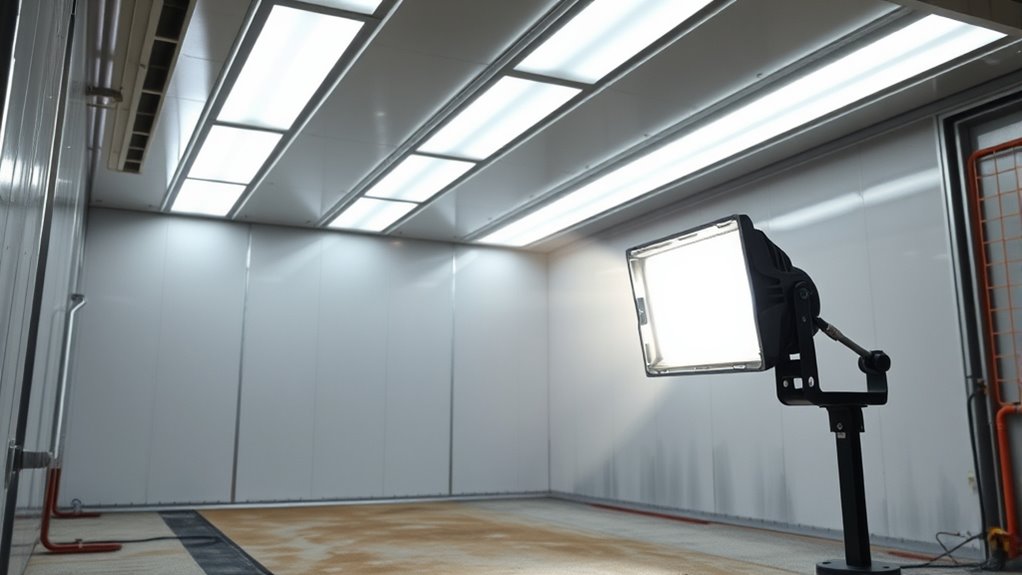
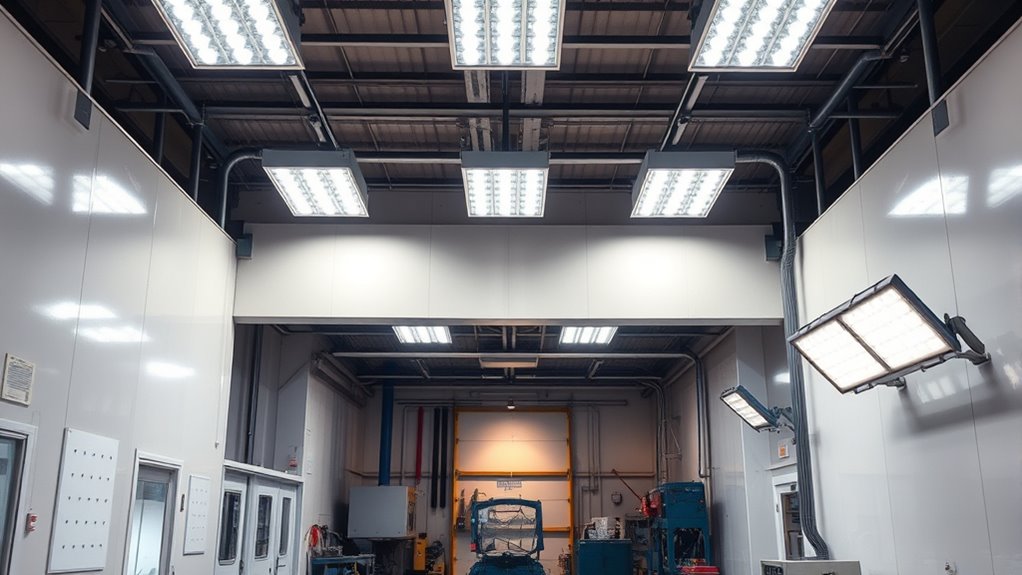
Have you ever wondered why proper lighting is vital in spray booths and job sites? The right illumination isn’t just about seeing clearly; it’s about safety, efficiency, and quality. When working with spray booths, where precision and safety are paramount, LED technology plays a significant role. LEDs provide bright, consistent light that helps you see every detail, ensuring your work meets high standards without straining your eyes. Unlike traditional lighting, LEDs emit minimal heat, which reduces the risk of heat-related hazards and prevents the buildup of fumes. Their energy efficiency also means lower power consumption, making them a smart choice for long shifts. But even with advanced technology like LEDs, safety precautions remain essential. Proper installation and regular maintenance of lighting fixtures help prevent electrical mishaps, short circuits, or accidental fires. Always make certain that your lighting setup complies with safety standards and manufacturer instructions, especially in environments where fumes, flammable materials, or volatile compounds are present. Using LED fixtures designed specifically for hazardous environments adds an extra layer of protection, as they are often built with protective casings and waterproof features. These safeguards minimize the risk of sparks or electrical faults igniting flammable substances. Additionally, positioning your lighting correctly is vital. Lights should be evenly distributed to eliminate shadows and dark spots, which can cause you to overlook imperfections or hazards. Consider installing adjustable fixtures so you can direct light precisely where needed, especially in tight corners or detailed work areas. Remember, safety precautions also include ensuring your workspace is free from clutter and that all electrical components are properly grounded. Always switch off power before installing or adjusting lighting fixtures, and use appropriate personal protective equipment to avoid electrical shocks or injuries. Regular inspections of your lighting system will catch any signs of wear, corrosion, or damage early, preventing potential accidents. Training yourself and your team on electrical safety procedures and the proper use of lighting equipment further enhances safety. In spray booths, where fumes and vapors can accumulate, using explosion-proof or hazardous location-rated LED lights is a wise precaution. These specialized fixtures help prevent ignition sources, safeguarding your entire operation. Additionally, choosing LED lights with Bluetooth connectivity can facilitate remote management and troubleshooting, further enhancing safety and efficiency. Overall, combining modern LED technology with diligent safety measures creates a safer, more productive work environment. Proper lighting not only improves visibility but also reduces accidents, enhances the quality of your work, and guarantees compliance with safety standards. By investing in high-quality, well-installed LED lighting and following safety protocols, you set yourself up for success in any spray booth or job site.
Frequently Asked Questions
What Are the Best LED Lighting Options for Spray Booths?
You should choose LED lighting options with a high CRI for accurate color representation, especially in spray booths. Opt for LEDs with adjustable LED color to match your needs, whether white or specialized hues. A narrow beam angle provides focused illumination, while a wider angle covers larger areas effectively. This combination ensures ideal visibility, reduces shadows, and enhances safety and precision during spraying tasks.
How Do I Calculate the Required Lighting Intensity for My Job Site?
To calculate the required lighting intensity for your job site, start with lighting calculations that consider the work area size and tasks. Check illuminance standards relevant to your industry to determine the necessary lux levels. Measure the existing light levels using a light meter, then adjust your lighting setup to meet or exceed those standards, ensuring safety and efficiency while aligning with recommended illuminance guidelines.
Are There Specific Safety Standards for Spray Booth Lighting?
You must follow strict safety standards for spray booth lighting, as neglecting them is like risking your life on a tightrope without a safety net. Guarantee proper electrical grounding to prevent shocks and fires, and install emergency exit lighting that shines brighter than a supernova during power outages. These standards are essential to protect workers, ensure safe operations, and meet OSHA and NFPA regulations. Always prioritize safety and consult relevant codes for compliance.
How Often Should Lighting Fixtures in Spray Booths Be Maintained or Replaced?
You should inspect and maintain your spray booth lighting fixtures regularly, ideally following the manufacturer’s recommended maintenance schedules. Typically, lamp longevity is around 1,000 to 2,000 hours of use, so replacing lamps before they burn out guarantees safe, effective lighting. Additionally, check fixtures for any damage or dirt buildup that could impact performance. Regular maintenance keeps your workspace safe, compliant, and well-lit for maximum job site conditions.
Can Portable Lighting Be Effectively Used in Large Job Sites?
Yes, portable lighting can be effectively used in large job sites. It provides flexibility, allowing you to easily illuminate different areas as needed. Make sure to select durable, weather-resistant fixtures that deliver adequate brightness and eliminate shadows. Proper placement and secure installation are essential for safety and efficiency. With the right portable lighting, you can guarantee consistent visibility across large, complex work environments, helping you work safely and productively.
Conclusion
Just as Icarus relied on the sun’s rays to guide him, your choice of lighting illuminates your workspace’s safety and precision. With the right lighting, you can avoid the pitfalls of shadows and poor visibility, ensuring every project reaches new heights—without the fall. Remember, in the domain of spray booths and job sites, good lighting isn’t just a tool; it’s your guiding star, helping you achieve excellence while safeguarding your team.
Franz came aboard the Paint Sprayer Zone team with a background in both journalism and home renovation. His articulate writing style, combined with a passion for DIY projects, makes him an invaluable asset. Franz has a knack for breaking down technical jargon into easy-to-understand content, ensuring that even the most novice of readers can grasp the complexities of paint sprayers.