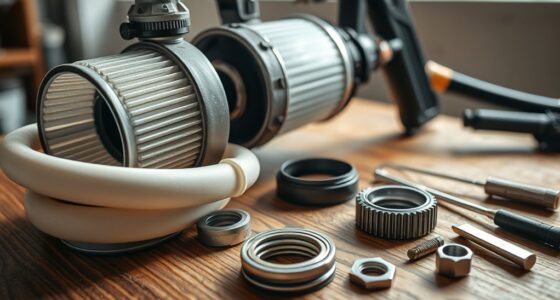

If you notice your system feels spongy, sluggish, or has uneven pressure, trapped air might be the culprit. Common causes include leaks, worn seals, or contamination allowing air to enter your fluid lines. To fix it, check for leaks, tighten fittings, replace damaged seals, and bleed the lines to release air. Monitoring your system regularly helps prevent future issues, and more tips on troubleshooting and maintenance await to keep your system running smoothly.
Key Takeaways
- Symptoms include spongy operation, inconsistent pressure, and sluggish performance.
- Common causes are leaks, worn seals, damaged hoses, and system contamination.
- Inspect for leaks by checking for fluid drips, wet spots, and loose fittings; tighten or replace as needed.
- To remove trapped air, bleed lines at low pressure, open bleed screws, and monitor fluid levels.
- Prevent future air ingress by maintaining proper sealing, using clean fluid, and conducting regular system inspections.

Have you ever noticed a spongy feel or inconsistent operation in your hydraulic or pneumatic systems? If so, air in the fluid line could be the culprit. Air bubbles or pockets can cause uneven pressure and sluggish performance, leading to frustration and potential equipment damage. One common cause of air ingress is hydraulic leaks, which allow air to enter the system along with the fluid. These leaks can develop from worn seals, loose fittings, or damaged hoses. Once air gets into your fluid lines, it can be carried throughout the system, creating a cycle of ongoing issues. System contamination is also a key factor; dirt, debris, or moisture can compromise seals and fittings, making it easier for air to infiltrate. Proper fluid maintenance, including regular fluid checks and replacement, can help prevent air entry and maintain system efficiency.
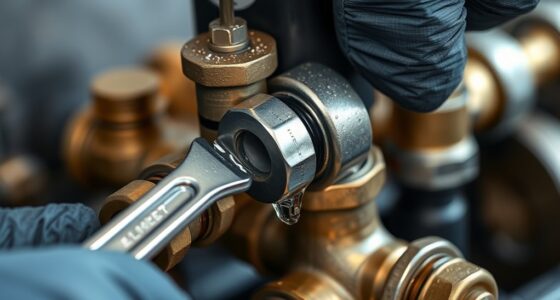
If you’re experiencing these symptoms, the first step is to identify and eliminate the source of air entry. Inspect all fittings, hoses, and seals for leaks or damage. Hydraulic leaks may be subtle but can often be spotted by visual signs like fluid drips, wet spots, or a drop in fluid levels. Tightening fittings or replacing worn seals can often resolve these issues. It’s essential to ensure all connections are secure and properly sealed to prevent further air ingress. Additionally, checking for contamination in the fluid is crucial because contaminated fluid can cause seals to deteriorate faster, allowing air to enter more easily. Always use clean, filtered fluid and replace it regularly to minimize the risk of system contamination.
Once you’ve addressed leaks and contamination, you might need to remove trapped air from the system. Bleeding the lines is a straightforward process—simply run the system at low pressure and open bleed screws or vents to allow air to escape. Some systems have automatic bleeding mechanisms, but manual bleeding is often necessary for thorough removal. Keep an eye on the fluid level during this process, as trapped air can cause fluctuations. Remember, persistent air problems indicate underlying issues, so don’t ignore recurring symptoms. Regular maintenance, including inspecting fittings and replacing filters, helps prevent air from re-entering the system.
Frequently Asked Questions
How Do I Prevent Air From Entering the Fluid Line Initially?
To prevent air from entering the fluid line initially, you should guarantee proper installation by securely tightening all fittings and checking seal integrity. Use high-quality seals and gaskets to create a tight, leak-proof connection. Avoid cross-threading or over-tightening, which can damage components. Regularly inspect the line for wear or damage, and always follow manufacturer instructions for installation. Proper maintenance and careful assembly are key to keeping air out of the fluid line.
Can Air in the Fluid Line Cause Equipment Damage?
Did you know that air cavitation can cause up to 30% more wear on equipment? When air enters your fluid line, it can lead to damage by causing fluid contamination and cavitation, which erodes components over time. Yes, air in the line can markedly harm your equipment, leading to costly repairs and downtime. Preventing air entry and addressing it promptly helps maintain your system’s longevity and performance.
What Tools Are Needed to Remove Air From the System?
To remove air from the system, you’ll need a wrench to loosen the bleed screws and pressure gauges to monitor the pressure. Start by attaching the gauges to the designated ports and slowly open the bleed screws to let out trapped air. Keep an eye on the gauges, ensuring the pressure stays within recommended levels. Once the air escapes and pressure stabilizes, tighten the bleed screws and check for proper operation.
How Often Should I Check for Air in the Fluid Line?
You should check for air in the fluid line during your regular maintenance schedule, ideally every 6 to 12 months. Incorporate troubleshooting techniques like inspecting for inconsistent fluid flow or spongy pedal feel, which can indicate trapped air. Regular checks help prevent issues and guarantee system efficiency. If you notice problems, promptly bleed the system to remove air and keep everything functioning smoothly.
Are There Different Methods for Different Types of Fluid Lines?
Yes, you should use different methods for various fluid lines based on fluid compatibility and line maintenance. For hydraulic lines, check for air bubbles by observing fluid movement and perform bleed procedures if needed. For brake lines, use specialized tools to guarantee no air remains, and for fuel lines, focus on ensuring airtight seals. Always follow manufacturer guidelines, adjust your approach based on fluid type, and regularly inspect lines for peak performance.
Conclusion
So, next time you notice your fluid line acting up, remember that air might just be the sneaky culprit. Coincidentally, many vehicle issues start with something as simple as trapped air—yet fixing it can restore smooth operation. Don’t overlook these small signs; addressing air in your fluid lines now can save you time and money later. Sometimes, the tiniest detail makes a big difference in keeping your system running perfectly.