To guarantee your air sprayers perform at their best, you need effective air dryers and moisture traps that remove water vapor, oil aerosols, and particulates. Proper filtration prevents corrosion, tool damage, and inconsistent finishes by keeping the air dry and clean. Regular maintenance, like draining moisture traps and replacing filters, is essential for reliable operation. Investing in quality equipment and routine upkeep will help you achieve consistent spray results—continue further to discover how to maximize your system’s efficiency.
Key Takeaways
- Use high-efficiency air dryers and moisture traps to remove water vapor, oil aerosols, and particulates for clean, dry compressed air.
- Regularly inspect and drain moisture traps to prevent water buildup and maintain filtration effectiveness.
- Choose filters and dryers that specify moisture removal capacity to ensure optimal spray quality and equipment protection.
- Perform routine maintenance, including filter replacement and desiccant regeneration, to prevent system clogging and efficiency loss.
- Proper moisture management extends equipment lifespan, improves spray finish consistency, and reduces costly repairs.
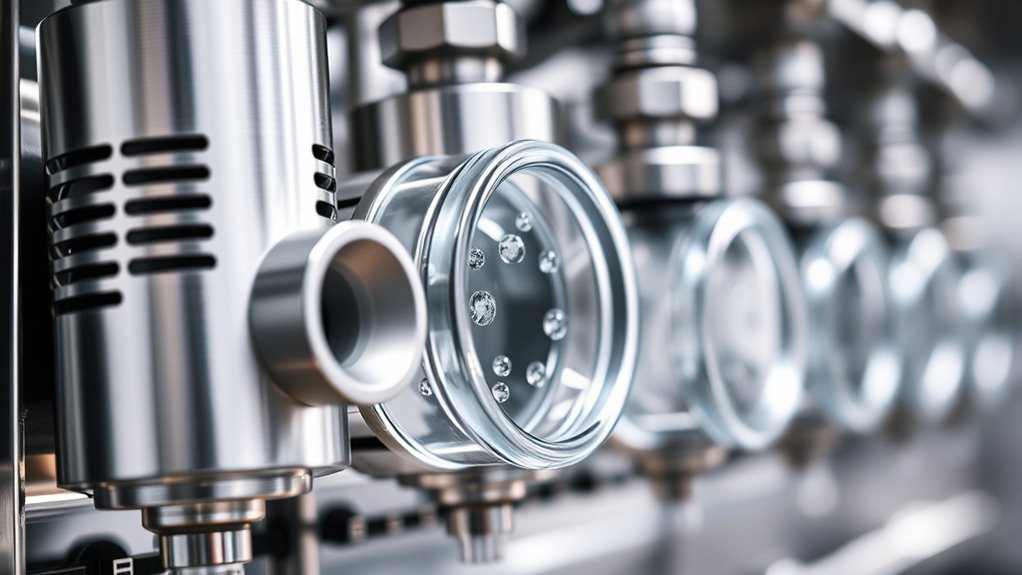
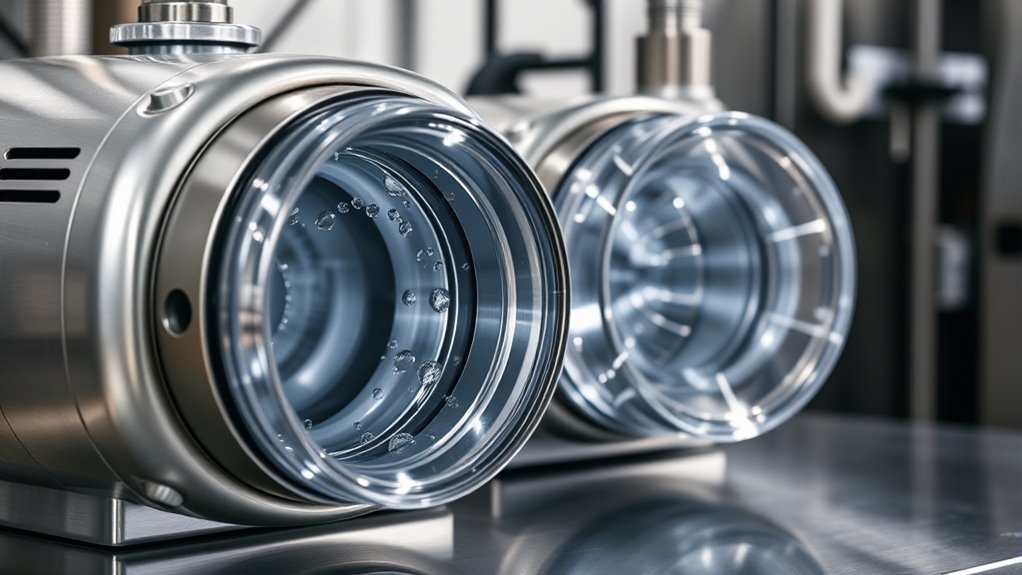
Air dryers and moisture traps play an essential role in maintaining the efficiency and longevity of your compressed air systems. Without proper moisture management, water vapor can cause corrosion, damage to tools, and inconsistent spray quality. To keep your air sprayers performing at their best, understanding how to maximize filtration efficiency and adhere to proper maintenance procedures is fundamental.
Filtration efficiency is critical because it directly impacts the quality of the compressed air you use. High-quality filters can effectively remove water vapor, oil aerosols, and particulates from the air stream. When selecting moisture traps or air dryers, look for units that specify high filtration efficiency, especially for moisture removal. This ensures that the air you deliver to your spray gun is as dry and clean as possible, resulting in smoother finishes and less clogging. Regularly inspecting filters and replacing them as recommended prevents buildup that can compromise filtration efficiency. Over time, filters can become clogged or saturated, reducing their ability to trap moisture effectively. Neglecting these replacements not only diminishes filtration efficiency but can also strain your compressor, leading to increased wear and potential breakdowns.
High-quality filters ensure dry, clean air for smoother finishes and reduced clogging. Regular inspection prevents efficiency loss.
In terms of maintenance procedures, establishing a routine is key to guaranteeing your moisture traps and air dryers work effectively. Start by checking moisture traps daily if you operate continuously, or at least weekly for intermittent use. Drain any accumulated water from the traps to prevent flooding and ensure they function properly. For refrigerated or desiccant dryers, periodic inspection and replacement of desiccant media or refrigerant components are necessary. Always follow the manufacturer’s guidelines for maintenance intervals and procedures, and keep a log of service activities. This proactive approach helps catch issues early before they affect your spray quality. Additionally, verify that drain valves are functioning properly and are free of obstructions, as malfunctioning drains can lead to water bypassing the filtration system. Properly maintained moisture traps and dryers help prevent water vapor buildup, which can otherwise compromise your spray finish and damage your tools.
Adhering to proper maintenance procedures and ensuring high filtration efficiency not only extends the lifespan of your equipment but also guarantees consistent, high-quality results in your projects. Regular checks and timely replacements reduce downtime, improve air quality, and protect your tools from moisture-related damage. By integrating these practices into your routine, you ensure your compressed air system remains reliable, efficient, and capable of delivering the pristine finishes you demand. Ultimately, investing in good filtration and diligent maintenance pays off through smoother operation, fewer repairs, and superior spray results.
Frequently Asked Questions
Can Air Dryers Be Used With Any Air Compressor?
Yes, you can use air dryers with most air compressors, but compatibility concerns matter. Check your compressor’s output pressure and flow rate to confirm the dryer fits. Using an appropriate air dryer improves energy efficiency by reducing moisture and maintaining consistent airflow. Always verify the specifications before installation to prevent potential issues. Properly matched equipment helps you get the best performance and prolongs the lifespan of your compressor and tools.
How Often Should Moisture Traps Be Maintained or Replaced?
Think of your moisture trap as a loyal guardian against water chaos. You should check it weekly and follow the manufacturer’s guidance for a maintenance schedule. Usually, you’ll need to replace the moisture trap every 6 to 12 months, depending on usage. Regular upkeep guarantees your system stays dry and efficient, preventing water from sneaking into your air sprayer. Stay vigilant, and your equipment will thank you with smooth operation.
Do Moisture Traps Remove Oil and Other Contaminants?
Moisture traps primarily remove water, not oil or other contaminants. While they excel at moisture filtration, they don’t effectively handle oil removal or filtering out other impurities. To guarantee your air sprayer performs at its best, use specialized filters that target contaminant filtration, including oil removal. Combining moisture traps with these filters helps keep your equipment clean and prevents clogging, ensuring smoother operation and better finish quality.
What Size Air Dryer Is Suitable for My Spray System?
Imagine you’re wielding a lightsaber—precision matters. For your spray system, choosing the right size air dryer is vital. You need to take into account size selection based on your system’s airflow demand, typically measured in CFM, and compatibility considerations to guarantee a perfect fit. A too-small dryer won’t keep moisture out, while an oversized one wastes energy. Match the dryer to your system’s specs for ideal performance and dry, flawless finishes.
Are There Portable Options for Moisture Removal in Fieldwork?
Yes, portable solutions are available for moisture removal during fieldwork applications. You can opt for compact, handheld moisture traps or small air dryers designed for portability. These devices effectively reduce humidity and moisture in your air supply, ensuring ideal spray performance on-site. Look for models with rechargeable batteries or easy-to-carry power sources, so you can maintain dry, clean air wherever your project takes you.
Conclusion
Using air dryers and moisture traps is crucial to keep your air sprayers working smoothly. Did you know that over 70% of spray gun problems are caused by moisture buildup? By investing in these accessories, you’ll reduce clogs, extend your equipment’s lifespan, and achieve flawless finishes. So, don’t overlook this small but essential step—your projects will thank you for it, and you’ll enjoy better results every time.

Franz came aboard the Paint Sprayer Zone team with a background in both journalism and home renovation. His articulate writing style, combined with a passion for DIY projects, makes him an invaluable asset. Franz has a knack for breaking down technical jargon into easy-to-understand content, ensuring that even the most novice of readers can grasp the complexities of paint sprayers.