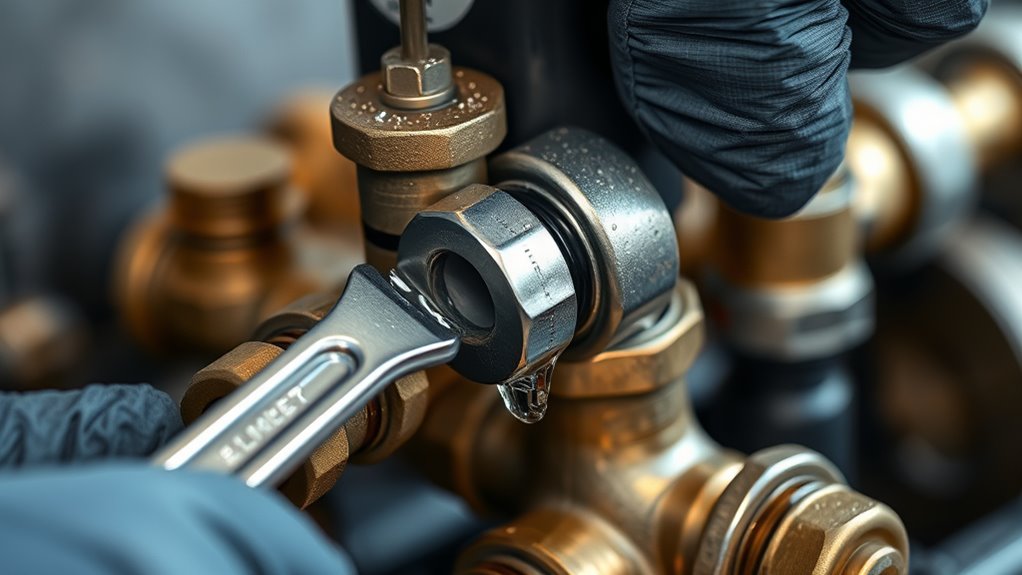

To fix leaks at the pump manifold, start by inspecting your connections, seals, and fittings for wear, corrosion, or looseness. Tighten fittings carefully—avoiding overtightening—and replace worn-out gaskets or seals with high-quality parts designed for your pump. Check for corrosion and damaged fittings, replacing them as needed. Maintain proper system pressure, and if issues persist, seeking professional help guarantees a lasting fix. Keep learning to better prevent future leaks.
Key Takeaways
- Conduct a thorough visual inspection to locate the exact leak source at the pump manifold.
- Tighten loose fittings carefully, avoiding overtightening to prevent damage.
- Replace worn seals, gaskets, or corroded fittings with compatible, high-quality parts.
- Ensure proper system pressure and address fluctuations that may cause leaks.
- Regularly maintain and inspect the pump and connections to prevent future leaks.
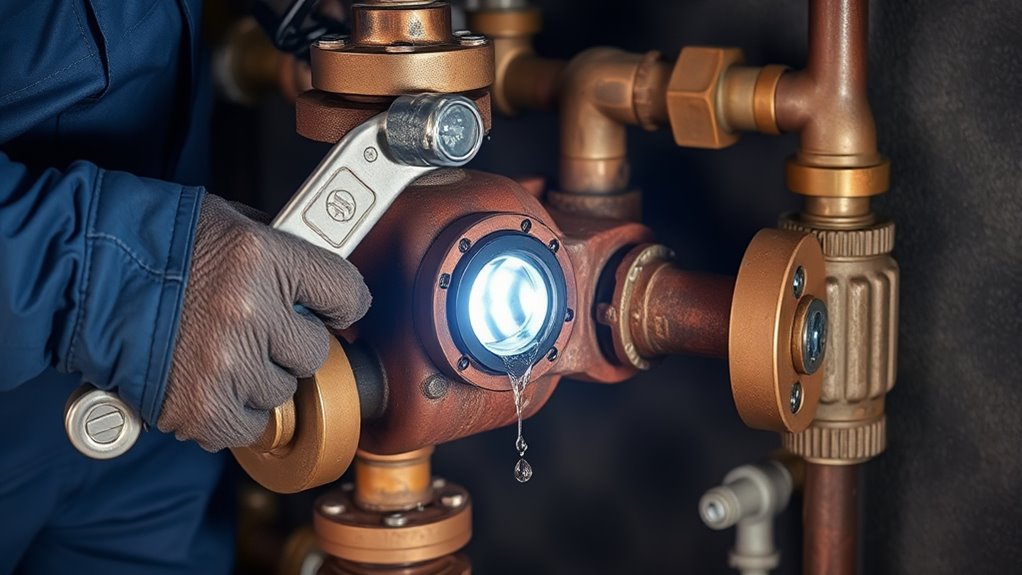
Leaks at the pump manifold can disrupt your system’s efficiency and cause costly damage if not addressed promptly. When you notice a leak, it’s a clear sign that your pump maintenance routines need attention. Ignoring these leaks can lead to decreased performance, increased energy consumption, and even complete system failure. To prevent these issues, you must understand how to identify the source of the leak and take immediate steps to fix it. Regular pump maintenance isn’t just about routine inspections; it’s about proactively preventing leaks before they turn into major problems.
Detect and fix pump manifold leaks promptly to prevent costly damage and maintain system efficiency.
Leak prevention starts with thorough inspection. Check for visible signs of fluid pooling or drips around the pump manifold. Keep an eye on the connections and fittings, as these are common areas where leaks can develop due to wear, corrosion, or improper installation. Tightening loose fittings can often stop minor leaks, but be careful not to overtighten, which could damage the threads or seals. If tightening doesn’t solve the problem, it’s time to consider replacing worn-out seals or gaskets. Using high-quality replacement parts designed for your specific pump model ensures better leak prevention and longevity. Additionally, understanding the importance of professional maintenance can help you address issues before they escalate.
Another critical aspect of pump maintenance is maintaining proper pressure levels. Excessive pressure can stress the seals and joints, leading to leaks over time. Invest in pressure gauges and monitor system pressure regularly to catch anomalies early. If you notice pressure fluctuations, investigate and address the root cause promptly — whether it’s a blockage, a worn valve, or other system issues. Keeping the system operating within recommended parameters considerably reduces the risk of leaks and prolongs the lifespan of your pump components.
Lubrication also plays a vital role in leak prevention. Proper lubrication minimizes wear and tear on moving parts, ensuring that seals and joints remain intact and functional. Follow the manufacturer’s guidelines for lubrication intervals and types of lubricants. Over-lubricating can sometimes cause leaks, so precision is key. Additionally, cleaning the pump and its surrounding area regularly helps prevent debris and corrosion, which can compromise seals and fittings.
In essence, effective pump maintenance involves a combination of routine inspections, timely replacements, pressure management, and proper lubrication. By staying vigilant and proactive, you can prevent leaks at the pump manifold from occurring in the first place. When leaks do happen, addressing them immediately with the right tools and parts saves you money and prevents system downtime. Remember, leak prevention is always better than repair, and maintaining your pump properly ensures ideal system performance and longevity.

VEVOR 750W Stand Airless Paint Sprayer, 3000PSI High Efficiency Electric Airless Sprayer, Fine and Even Painting Effect, Handheld Paint Sprayers for Home Interior and Exterior Furniture and Fences
Efficient Painting: Our stand airless paint sprayer is equipped with a powerful 750W motor, capable of delivering up...
As an affiliate, we earn on qualifying purchases.
Frequently Asked Questions
What Tools Are Best for Detecting Leaks at the Pump Manifold?
For leak detection at the pump manifold, you should use a combination of tools for accurate results. A ultrasonic leak detector quickly pinpoints leaks by listening for high-frequency sounds. Soapy water spray helps visually identify leaks by bubbling at the source. A pressure gauge allows you to monitor pressure drops indicating leaks. Selecting the right tools guarantees efficient detection, saving you time and preventing further damage during the repair process.
How Often Should the Pump Manifold Be Inspected for Leaks?
A stitch in time saves nine, so you should inspect your pump manifold regularly—at least monthly—for leaks. Routine pump maintenance and leak detection help prevent costly repairs and downtime. Keep an eye out for signs like unusual noises or pressure drops, and use your tools efficiently. Consistent inspections guarantee your system runs smoothly, saving you time and money in the long run. Don’t wait for a problem to escalate—stay proactive!
Can Leaks at the Pump Manifold Cause System-Wide Failures?
Leaks at the pump manifold can indeed cause system-wide failures if left unchecked. Corrosion often worsens leaks, and without proper leak detection sensors, you might not notice the issue early. These leaks can disrupt pressure and flow, leading to equipment damage or shutdowns. Regular inspections and monitoring with leak detection sensors help you catch leaks early, preventing costly failures and maintaining your system’s integrity.
Are There Preventive Measures to Avoid Future Pump Manifold Leaks?
Your pump manifold’s seal integrity is vital—you don’t want leaks turning into a catastrophe. To prevent future issues, regularly inspect seals for wear and tear, and guarantee material compatibility with your system’s fluids. Use high-quality, compatible sealing materials and follow proper installation procedures. These simple steps act like a fortress, guarding your system against leaks and prolonging pump life. Stay vigilant and proactive—your system’s reliability depends on it.
What Safety Precautions Should Be Taken During Leak Repairs?
When repairing leaks, you should always conduct a hazard assessment first to identify potential risks. Wear appropriate personal protective equipment like gloves, goggles, and respirators to protect yourself from harmful substances and pressure hazards. *Make certain* the area is well-ventilated and shut off the pump before starting repairs. Follow safety protocols strictly, and be cautious of hot surfaces or residual pressure to prevent accidents.

InoKraft MaXpray M1 Airless Paint Sprayer, 3000 PSI 550W Corded Electric, Thinning-Free for Latex & Stain, DIY Home Interior Exterior Walls Fences Decks, Includes Spray Gun Kit & 12" Tip Extension
5X FASTER THAN ROLLING, 12X FASTER THAN BRUSHING - The 550W motor delivers up to 3000 PSI and...
As an affiliate, we earn on qualifying purchases.
Conclusion
To keep your pump pristine and prevent persistent leaks, prioritize prompt repairs and proper procedures. Regularly review your repair routines, remain vigilant for vulnerabilities, and verify your work thoroughly. Remember, maintenance makes mastery, and meticulousness minimizes messes and mishaps. By being diligent and detail-oriented, you’ll defeat drips and defeat downtime. Stay sharp, stay sustained, and safeguard your system’s performance—because proactive prevention pays off in peace of mind and productivity.

InoKraft NEO Airless Paint Sprayer Kit for House Painting, DIY Beginners' Choice with Accessories Storage Space, Lightweight Design, Quick Clean for Home Interior and Exterior Furniture and Fences
【Your DIY Partner】Upgrade your DIY projects with the NEO airless paint sprayer-significantly faster than handheld electric HVLP paint...
As an affiliate, we earn on qualifying purchases.

3600 PSI High Airless Paint Sprayer Gun with Nozzle Guard and with 5 Spray Nozzle Tips and 5 Airless Paint Sprayer Gun Filters and 16Inch(40CM) Spray Painted Extension Pole (211, 313, 415, 517, 623)
Complete Painting Kit: This airless spray gun set includes one spray gun, five reversible nozzles (211, 313, 415,...
As an affiliate, we earn on qualifying purchases.

Franz came aboard the Paint Sprayer Zone team with a background in both journalism and home renovation. His articulate writing style, combined with a passion for DIY projects, makes him an invaluable asset. Franz has a knack for breaking down technical jargon into easy-to-understand content, ensuring that even the most novice of readers can grasp the complexities of paint sprayers.